

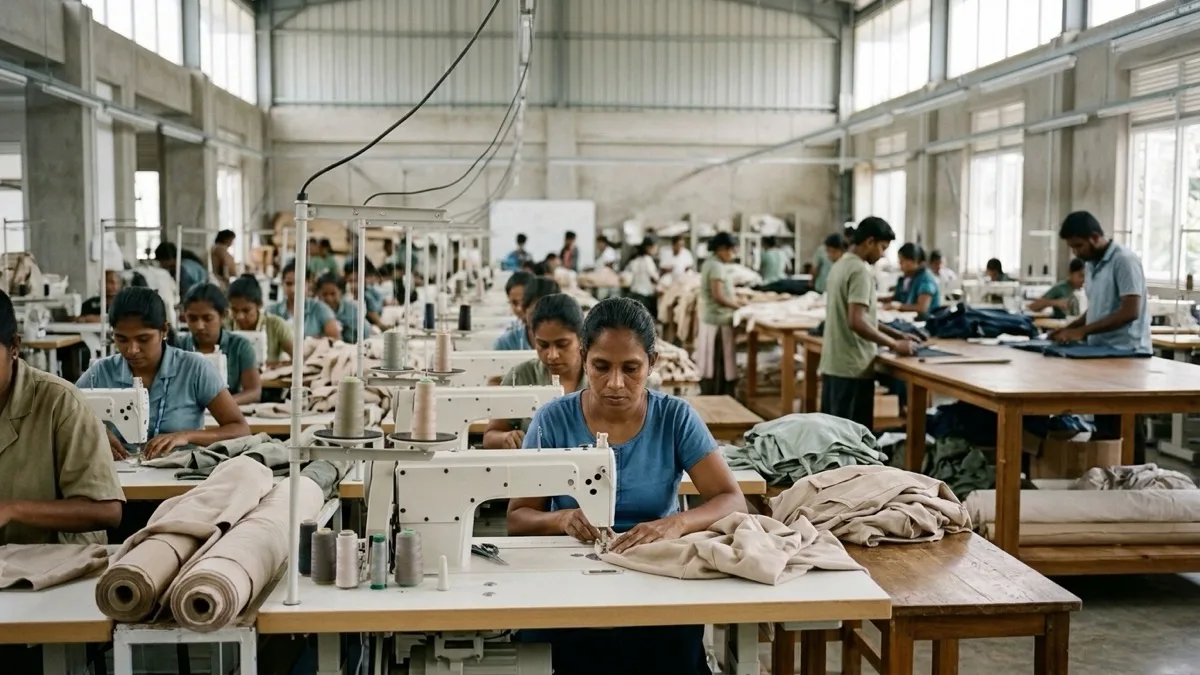
Key Highlights at a Glance
- Capital Allowance: 200 percent tax deduction on export factory capital expenditures exceeding 3 million USD.
- Trade Automation: 1.99 billion LKR allocated for National Single Window roll-out by mid-2027.
- Input Relief: 25 percent reduction in CESS rates across roughly 800 textile and accessory HS codes.
- Order Momentum: September apparel exports rebounded 3.47 percent to 416.99 million USD.
COLOMBO (SriLankaBiz): The Joint Apparel Association Forum (JAAF) has endorsed the policy direction of Budget 2027 for Apparel Export Manufacturing, welcoming aggressive capital allowances, import tariff rationalizations, and accelerated funding for the National Single Window for Trade.
Addressing member factories on Wednesday, JAAF Chairman Felix Fernando emphasized that the proposed 200 percent capital allowance on investments over 3 million USD will incentivize domestic manufacturers to upgrade robotic cutting tables and automated fabric inspection equipment.
Structural Reforms for Apparel Export Manufacturing
The association highlighted that maintaining global cost competitiveness in Apparel Export Manufacturing requires immediate legislative passage of planned customs and trade facilitation bills.
Budget 2027 allocated 1,990 million LKR toward the full implementation of the National Single Window, scheduled to connect port terminals, customs clearance points, and export regulatory agencies by the first half of 2027. This digital consolidation will eliminate redundant documentation checks, shortening maritime dwell times at the Port of Colombo.
Furthermore, the phased reduction of CESS levies by 25 percent across approximately 800 tariff lines reduces duty friction on specialized synthetic yarns, functional membranes, and garment embellishments, lowering landed production costs for domestic sewing facilities.
| Policy Measure | Fiscal Provision | Target Industry Beneficiary | Projected Operational Impact |
|---|---|---|---|
| Capital Expenditure Allowance | 200 percent deduction for 3M USD+ spend | BOI export manufacturing plants | Accelerates factory automation and green retrofits |
| National Single Window | 1,990 million LKR state allocation | Export and import logistics operators | Reduces cargo clearance lead times by 35 percent |
| Input Tariff Rationalization | 25 percent reduction across 800 CESS lines | Apparel and textile mills | Lowers raw material import cost overheads |
| SME Modernization Window | Proposed lower investment thresholds | Tier-2 and tier-3 subcontractor units | Expands access to energy-efficient sewing assets |
Business and Economic Impact for Sri Lankan Exporters
The policy stability provided by Budget 2027 comes at a critical juncture as Western consumer brand purchasing rebounds.
Official trade data confirms that Sri Lankan apparel exports recovered to 416.99 million USD in September, up 3.47 percent year on year, driven by a 7.17 percent surge in shipments to the United States and a 6.5 percent rise to the European Union. While cumulative nine-month earnings reached 3.59 billion USD, industry leaders stressed that swift implementation of port reforms is vital to protect market share against regional peers.
By combining tax incentives for high-technology machinery with expedited trade corridors, the fiscal package strengthens Apparel Export Manufacturing capabilities, ensuring Sri Lanka remains an essential high-value sourcing partner for global activewear and intimate apparel brands.