
Inflation Trajectory at a Glance
- Current Headline Print: Colombo Consumer Price Index (CCPI) recorded at 8.3% year-on-year in October 2026.
- Near-Term Outlook: Projected to test or exceed 9.0% by late November or December.
- Statutory Target Band: 4.0% to 6.0% (5.0% midpoint target under the Central Bank Act).
- Policy Countermeasures: Overnight Policy Rate raised to 9.00%; Statutory Reserve Ratio lifted to 3.00%.
- External Catalyst: Protracted regional warfare in West Asia sustaining elevated global oil and maritime freight costs.
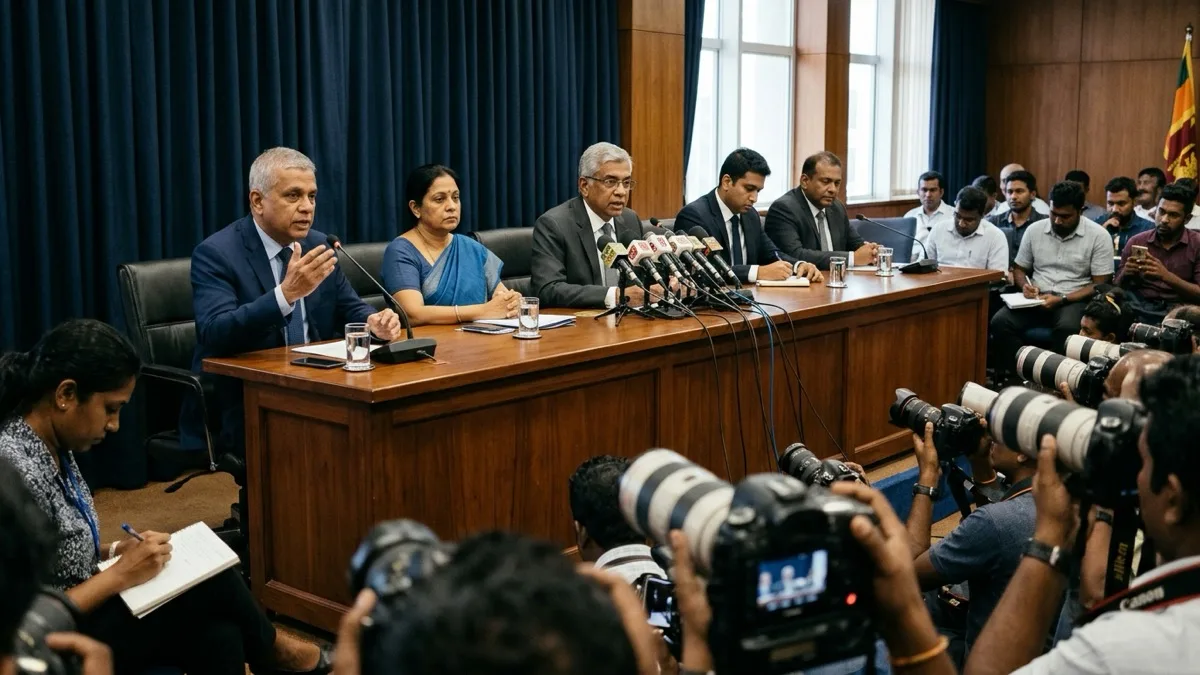
COLOMBO (SriLankaBiz): The Sri Lanka inflation rate could climb to 9.0% by the end of November as prolonged Middle East conflicts keep global energy prices elevated, Central Bank Governor Dr. Nandalal Weerasinghe warned following the monetary authority’s latest policy review.
Addressing an economic press conference at Central Bank headquarters in Colombo, Dr. Weerasinghe explained that consumer price pressures have persisted longer than baseline forecasting models suggested earlier this year. With headline inflation already accelerating to 8.3% year-on-year in October, price growth has breached the upper boundary of the bank’s statutory 4.0% to 6.0% inflation target range.
External Supply Shocks and Middle East Conflict Pressures
The primary catalyst forcing the upward revision in consumer price indices stems from prolonged geopolitical instability across the Middle East. When the Central Bank calibrated policy interest rates in May 2026, baseline economic projections anticipated that inflation would peak between 7.0% and 8.0% before steadily easing toward the desired 5.0% midpoint.
However, extended regional hostilities have kept international crude oil prices, refined fuel benchmarks, and cross-border container freight rates elevated for several consecutive months. Because Sri Lanka remains a net importer of fossil fuels, fertilizer, and staple food commodities, elevated global distribution costs translate directly into domestic retail price adjustments. Transport logistics costs and food supply chain tariffs have consequently outpaced earlier disinflationary assumptions.
| Inflation Indicator or Policy Metric | Prior Baseline / Target | Current / Near-Term Position | Macroeconomic Significance |
|---|---|---|---|
| Headline CCPI Inflation | 7.2% (September 2026) | 8.3% (October 2026) | Upward acceleration of 1.1 percentage points |
| Near-Term Inflation Peak | 7.0% to 8.0% peak projected in May | Approaching 9.0% by November/December | Prolonged imported energy cost pass-through |
| Statutory Target Tolerance | 5.0% Midpoint Target | Breaching 6.0% Upper Tolerance Limit | Triggers statutory monetary policy intervention |
| Overnight Policy Rate (OPR) | 8.75% | 9.00% (+25 basis points) | Preemptive tightening to anchor price expectations |
| Statutory Reserve Ratio (SRR) | 2.00% | 3.00% (+100 basis points) | Sterilizes LKR 140Bn in commercial bank cash |
How the Sri Lanka Inflation Rate Influenced Central Bank Tightening
The prospect of consumer inflation nearing 9.0% served as the primary trigger behind the Central Bank’s unexpected monetary tightening on Friday. The Monetary Policy Board raised the benchmark Overnight Policy Rate by 25 basis points to 9.00% and increased the Statutory Reserve Ratio on commercial banks by 100 basis points to 3.00%.
Central Bank officials emphasized that allowing the Sri Lanka inflation rate to hover above the statutory band for an extended period risks generating second-round price spirals. When imported fuel and energy tariffs rise, domestic transportation providers, food distributors, and industrial manufacturers adjust end-consumer prices upward to protect operating margins.
By raising the policy rate and permanently draining LKR 140 Billion in excess market liquidity through the reserve ratio hike, the central bank aims to cool domestic demand-side pressures. Restricting excess liquidity discourages speculative lending and realigns money market interest rates, dampening domestic consumer spending that could otherwise amplify imported price shocks.
Medium-Term Price Trajectory and Household Impact
Governor Weerasinghe underscored that containing the Sri Lanka inflation rate is paramount for preserving national economic stability and protecting household living standards. Sustained price increases erode real wages, reduce consumer purchasing power, and introduce uncertainty into business investment decisions.
Central Bank econometric projections indicate that while the Sri Lanka inflation rate will remain elevated through the fourth quarter of 2026, headline figures should gradually re-converge toward the 5.0% target by mid-2027. This anticipated disinflation path assumes that global crude benchmarks stabilize and that cumulative domestic monetary tightening curbs private credit expansion. For domestic businesses, maintaining tight working capital management and monitoring interest rate revisions will remain essential as financial conditions firm.