

Key Highlights at a Glance
- Fiscal Allocation: 16 billion LKR treasury grant authorized for agricultural input support.
- Per-Hectare Entitlement: 30,000 LKR per hectare, capped at a maximum of two hectares per farmer.
- Crop Scope Extension: Extended to twelve supplementary crops cultivated on non-paddy agricultural tracts.
- Disbursement Method: Direct digital bank deposits to eliminate intermediary handling delays.
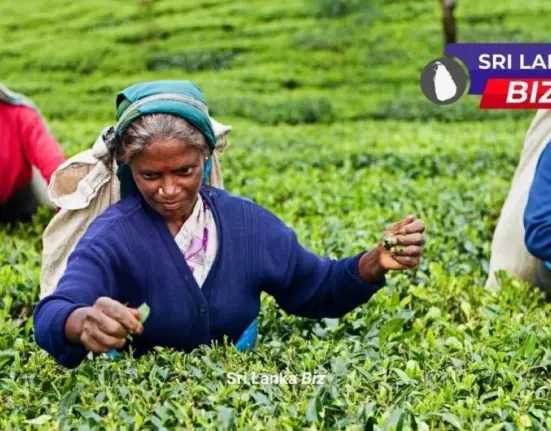
COLOMBO (SriLankaBiz): The Cabinet of Ministers has formally approved an allocation of 16 billion LKR for the Maha Season Fertilizer Subsidy, authorizing direct financial payments of 30,000 LKR per hectare to empower paddy farmers across major agricultural districts ahead of intensive cultivation cycles.
Submitted by the Minister of Agriculture, Livestock, Land and Irrigation K.D. Lalkantha, the fiscal framework expands input assistance beyond conventional rice farming to support domestic food sovereignty and curb cereal import expenditure.
Operational Reach of the Maha Season Fertilizer Subsidy
Under the approved regulations for the Maha Season Fertilizer Subsidy, eligible agricultural landowners will receive up to 60,000 LKR for a maximum holding of two cultivated hectares.
In a significant policy departure from previous seasons, the state has authorized equivalent cash allowances for farmers cultivating twelve certified supplementary crops on lands unsuited for seasonal paddy. These crops include maize, green gram, black gram, soybeans, chilies, and red onions.
Department of Agrarian Development officials confirmed that payments will bypass paper voucher systems, transferring directly into verified farmer bank accounts through state commercial lenders, including Bank of Ceylon and People’s Bank. Farmers can allocate funds flexibly toward organic soil conditioners, chemical nutrients, or mechanical land preparation.
| Cultivation Category | Subsidy Rate Per Hectare | Maximum Farmer Ceiling | Eligible Geographic Zones |
|---|---|---|---|
| Irrigated Lowland Paddy | 30,000 LKR | 60,000 LKR (2 hectares) | Polonnaruwa, Anuradhapura, Ampara, Mahaweli areas |
| Rainfed Highland Paddy | 30,000 LKR | 60,000 LKR (2 hectares) | Kurunegala, Monaragala, Hambantota |
| Supplementary Field Grains | 30,000 LKR | 60,000 LKR (2 hectares) | Maize, green gram, cowpea producing clusters |
| Condiments and Commercial Pulses | 30,000 LKR | 60,000 LKR (2 hectares) | Chili and red onion agrarian divisions |
Business and Economic Impact for Food Security
For Sri Lanka’s macroeconomic stability and agricultural supply chains, the structured disbursement of the Maha Season Fertilizer Subsidy anchors domestic food price moderation during the first half of 2027.
Agricultural economists estimate that timely input application across 800,000 hectares of Maha cultivation land will produce over 2.7 million metric tons of rough paddy, securing self-sufficiency in table rice and protecting central bank inflation targets from volatile food price spikes.
Furthermore, subsidizing alternative grain crops diminishes reliance on imported animal feed ingredients, relieving foreign exchange pressure on the national current account. By delivering predictable fiscal support directly into rural bank accounts, the Maha Season Fertilizer Subsidy sustains smallholder farming livelihoods while stabilizing wholesale commodity supply chains in Colombo.