

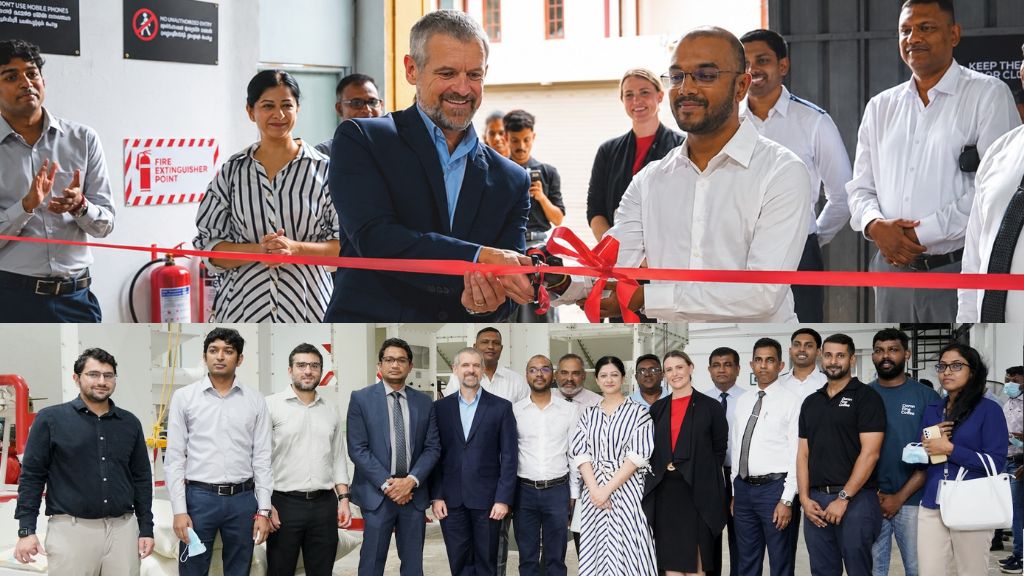
Damn Fine Coffee has opened Sri Lanka’s first dedicated coffee dry mill for green bean sorting, marking a significant development for the country’s specialty coffee industry and strengthening its ability to produce consistent, export-ready coffee.
Damn Fine Coffee and Australia’s MDF strengthen Sri Lanka’s specialty coffee supply chain
The facility is a joint initiative between Damn Fine Coffee and Australia’s Market Development Facility (MDF), introducing advanced sorting, grading and quality-control processes to an important stage of the coffee value chain.
Sri Lanka has a long history of coffee cultivation, but the competitiveness of its coffee industry has been influenced by challenges extending beyond cultivation and primary processing. How beans are handled, sorted, graded and prepared after harvest can have a direct impact on consistency and the quality of the final product.
The new dry mill is designed to address this gap by providing dedicated infrastructure for green coffee processing. By improving the consistency of coffee lots before they reach international buyers, the facility is expected to help local producers meet the increasingly demanding requirements of specialty markets.
The launch also reflects growing efforts to strengthen agricultural value chains and create greater opportunities for Sri Lankan agricultural products in premium international markets. The involvement of Australia through MDF adds an international development dimension to the initiative, with the partnership focused on improving local processing capacity and market access.
Australian High Commissioner H.E. Matthew Duckworth said Australia was pleased to support the launch, noting that the country’s strong coffee culture had created an appreciation for initiatives that can improve quality and competitiveness.
He said the dry mill represented an important step for Sri Lanka’s specialty coffee sector, while investment in local processing could raise quality, create new pathways to premium markets and support more sustainable, export-ready production. He also highlighted the potential for stronger value chains to create opportunities for businesses while supporting the livelihoods of coffee producers across the country.
For Damn Fine Coffee, the facility addresses a critical weakness in the coffee supply chain. Yasas Kodituwakku, CEO of Damn Fine Coffee, said producing high-quality coffee requires attention at every stage, from cultivation and harvesting to processing and export preparation.
He noted that farmers and processors remain central to producing exceptional coffee, but achieving greater uniformity at the green bean stage is equally important. The new facility will allow the company to improve sorting standards, produce more consistent coffee lots and prepare export-quality green beans for international markets.
The initiative has also received support from the Ministry of Industry and Entrepreneurship Development. Chathuranga Abeysinghe, Deputy Minister of Industry and Entrepreneurship Development, described the investment as a bold move to take the sector to its next stage, while encouraging regional plantation companies (RPCs) and farmers to improve their own value chains.
The importance of the facility extends beyond processing infrastructure. Coffee quality can be affected by bean size, density, moisture content, defects and storage conditions, making post-harvest handling a critical part of maintaining quality. Professional sorting and grading can help separate beans according to quality characteristics and reduce inconsistencies between lots.
For Sri Lankan coffee, this creates a stronger pathway from farms to international buyers. Buyers in the global specialty coffee market increasingly look for reliable quality, traceable supply chains and distinctive origins. A dedicated dry mill can help producers respond to these requirements by creating a more structured and controlled process for preparing green coffee.
The development could also encourage greater investment in quality at the farm level. When producers have access to infrastructure capable of recognising and preserving differences in bean quality, there is a stronger commercial incentive to improve cultivation, harvesting and post-harvest practices.
For Damn Fine Coffee, the dry mill therefore represents more than an expansion of processing capacity. It provides an opportunity to build greater consistency into the company’s sourcing and export operations while helping establish systems that could support the wider coffee sector.
Sri Lanka’s diverse growing regions also offer the country an opportunity to develop a stronger identity in the international specialty coffee market. Differences in elevation, climate, soil and processing practices can contribute to distinctive flavour profiles, potentially giving Sri Lankan origins greater visibility among international coffee buyers.
The launch of the new dry mill comes at a time when specialty coffee markets continue to place greater emphasis on quality, transparency and origin. For Sri Lanka, improving the infrastructure surrounding coffee production could be an important step towards converting the country’s coffee heritage into stronger commercial opportunities.
The facility ultimately positions Damn Fine Coffee and its partners to contribute to a more quality-driven coffee industry, where consistency and traceability become central to competitiveness. If supported by continued improvements among farmers, processors and other stakeholders, the initiative could help Sri Lankan coffee move beyond its historical reputation and establish a stronger presence in premium international markets.