
Industrial Snapshot at a Glance
- Priority Scope: 16 industrial zones targeted for Eco-Industrial Park conversion
- National Industrial Base: 75 parks hosting 1,200+ enterprises and 126,000+ workers
- International Backing: EU Green Recovery Facility, Expertise France, and NCPC
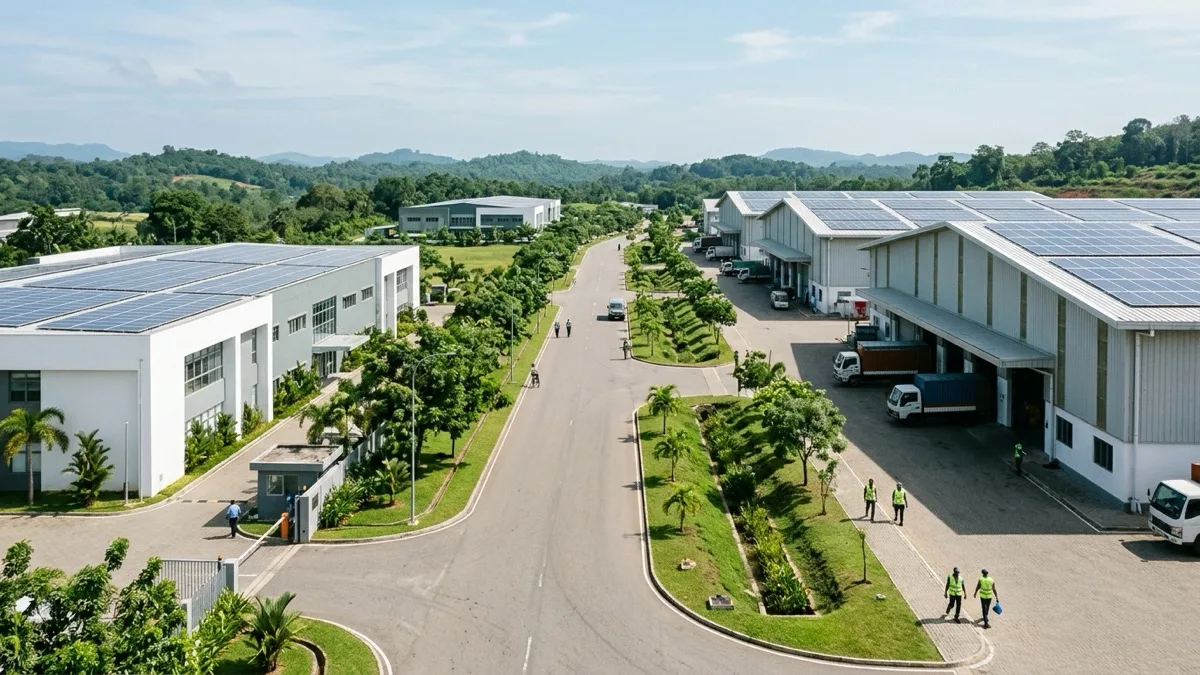
COLOMBO (SriLankaBiz): Sri Lanka is advancing a national framework to transform 16 priority industrial zones into Eco-Industrial Parks, backed by the European Union Green Recovery Facility and Expertise France to boost resource efficiency and export compliance across manufacturing estates.
Priority Zones Under the Eco-Industrial Parks Framework
The Ministry of Industry and Entrepreneurship Development is coordinating the transition with the National Cleaner Production Centre (NCPC) Sri Lanka, the Central Environmental Authority, and the Urban Development Authority. Target sites include Board of Investment (BOI) zones in Biyagama, Katunayake, Seethawaka, and Koggala alongside ministry and Industrial Development Board (IDB) estates in Ekala, Kalutara, Dankotuwa, and Trincomalee.
Following a two-day leadership workshop in Panadura on November 20 and 21, regulators and park operators aligned technical guidelines on wastewater treatment, shared energy systems, and green financing. Nationally, Sri Lanka operates roughly 75 industrial parks housing over 1,200 manufacturing firms and employing more than 126,000 workers.
| Program Parameter | Scale / Institutions | Core Objective |
|---|---|---|
| Priority Zones Selected | 16 BOI and MOI/IDB parks | Convert legacy zones to Eco-Industrial Parks |
| National Industrial Footprint | 75 parks, 1,200+ factories | Supports over 126,000 manufacturing jobs |
| Technical Partners | EU, Expertise France, NCPC | Wastewater, air quality, and carbon cuts |
Business Impact for Exporters and Industrial CapEx
Transitioning to Eco-Industrial Parks directly addresses tightening European Union supply-chain and carbon-border compliance requirements that govern apparel, rubber, and electronics orders. Factories operating inside certified green zones can lower shared utility costs while qualifying for concessional multilateral credit lines.
As exporters adjust to a revised US$18.5 billion national export target for 2026, green zone certification strengthens Sri Lanka’s pitch for higher-value European manufacturing contracts. Investors tracking industrial output and factory expansion can follow sector updates in our Sri Lanka manufacturing news hub.
Sustained execution will depend on pairing regulatory standards with targeted capital upgrades for central effluent treatment and industrial rooftop solar across older IDB estates.