

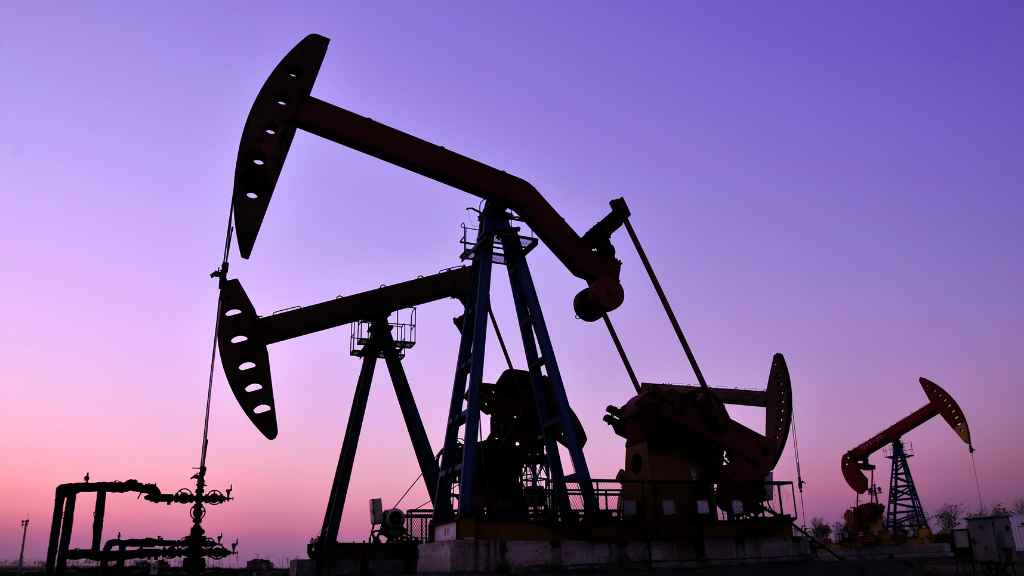
Global oil prices surge sharply as escalating conflict involving Iran triggered fears of supply disruptions across the Middle East energy corridor. Benchmark crude prices jumped about 25 percent, reaching their highest levels since mid-2022.
Global oil prices surge as Middle East conflict threatens supply routes
The sharp spike in global energy markets came as the intensifying conflict involving Iran raised concerns about the stability of oil supplies from one of the world’s most critical producing regions.
Brent crude futures surged to as high as 119.50 US dollars per barrel, while U.S. West Texas Intermediate (WTI) climbed to approximately 119.48 dollars per barrel, according to international market reports. The surge represents one of the most significant single-day movements in crude prices in recent years and reflects growing fears that the conflict could disrupt global supply chains.
Market analysts say the global oil prices surge is being driven largely by geopolitical risk rather than purely economic demand. The widening conflict involving the United States, Israel, and Iran has created uncertainty across energy markets, particularly due to the strategic importance of the Middle East in global oil production and transportation.
Traders have reacted strongly to concerns that oil exports from several major producing countries could be interrupted. The region accounts for a large share of the world’s crude supply, and even limited disruptions can quickly influence international prices.
A major concern among energy traders is the potential disruption to shipping routes through the Strait of Hormuz, one of the most strategically important maritime chokepoints for global oil transport. Roughly a fifth of the world’s oil shipments pass through the narrow waterway each day, connecting Gulf producers with global markets.
The possibility of shipping disruptions in the strait has amplified fears across energy markets. Any prolonged closure or restriction in the route could severely affect crude supply flows to Asia and Europe, forcing import-dependent countries to compete for limited shipments.
Energy analysts say the global oil prices surge also reflects the risk of production cuts from key oil producers in the region. Reports indicate that several major exporters, including Iraq, Kuwait, and the United Arab Emirates, have reduced production levels amid the growing conflict and security concerns.
The combined effect of lower production and potential shipping disruptions has significantly tightened expectations around future supply availability. Traders often price in such geopolitical risks rapidly, leading to sudden increases in oil futures prices.
Political developments inside Iran have further intensified uncertainty in global energy markets. Iranian authorities recently announced that Mojtaba Khamenei has been named successor to his father, Ali Khamenei, as the country’s Supreme Leader. Analysts interpret the move as a signal that political power in Tehran remains firmly under the control of hardline factions.
Regional analysts say the leadership decision suggests that the conflict may not ease in the near term. Instead, it could prolong geopolitical tensions across the Middle East, which remains one of the most sensitive regions for global oil supply stability.
The continuing escalation has already triggered widespread volatility across commodity markets. Oil traders are closely monitoring developments in the region, as further military activity or diplomatic breakdowns could trigger additional price spikes.
For countries heavily dependent on fuel imports, the impact of the global oil prices surge could be immediate and significant. Higher crude prices generally translate into increased costs for refined fuel products such as petrol, diesel, and aviation fuel.
In Sri Lanka, analysts say the rise in international oil prices could eventually force adjustments to domestic fuel prices if the trend persists. The country imports nearly all of its petroleum requirements, making it particularly vulnerable to fluctuations in global energy markets.
Higher oil prices can also affect broader economic conditions by increasing transportation and production costs. These cost pressures often flow through supply chains, contributing to inflation and affecting consumer spending.
Governments and central banks in emerging economies are therefore monitoring energy price developments closely. Sustained increases in oil prices can place pressure on foreign exchange reserves, particularly for countries that rely heavily on imported fuel.
Despite the immediate surge, some market observers caution that energy markets remain highly sensitive to diplomatic developments. If tensions ease or shipping routes remain open, prices could stabilize after the initial shock.
However, for now, traders remain cautious as geopolitical uncertainty continues to dominate market sentiment. The latest global oil prices surge highlights how rapidly energy markets can react when supply security in major producing regions appears threatened.
As the conflict evolves, global markets will likely remain volatile, with oil traders closely watching developments in the Middle East for signs of escalation or de-escalation that could influence supply expectations and pricing trends.