

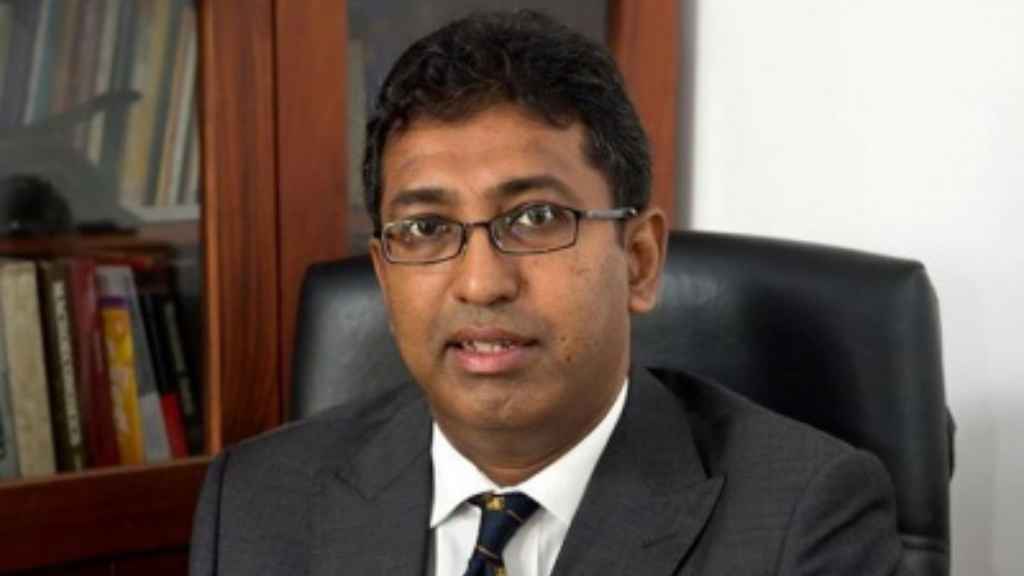
Harsha faults lack of basic controls in $ 2.5 m Treasury breach as Opposition MP Dr. Harsha de Silva raises concerns over financial governance failures and calls for a Parliamentary investigation into the incident.
Harsha faults lack of basic controls in $ 2.5 m Treasury breach, seeks probe
Harsha de Silva has strongly criticised the reported $ 2.5 million Treasury fund breach, arguing that the lapse points to fundamental weaknesses in financial oversight rather than a sophisticated cyber intrusion. His remarks have intensified scrutiny around Sri Lanka public finance oversight and the robustness of Treasury payment systems Sri Lanka.
Speaking on the issue, Dr. de Silva emphasised that standard financial controls appear to have been overlooked, raising questions about the procedural integrity of the transaction. He noted that even routine financial operations typically involve multiple layers of verification before significant sums are transferred.
A key concern highlighted by the MP was the apparent absence of a preliminary verification step, such as a small test payment to confirm the authenticity of the destination account. Such measures, he said, are widely recognised as basic safeguards in financial management and could have prevented the loss.
Dr. de Silva further pointed out that payment instructions and bank account details should have been cross-checked against original contractual agreements before executing the transfer. He argued that adherence to these standard practices is essential in maintaining accountability and preventing errors or fraud within public financial systems.
The Opposition MP rejected any suggestion that the incident could be dismissed as funds “going missing,” stressing that public money had been lost and that responsibility must be clearly identified. His comments underscore growing concern over the effectiveness of Treasury payment systems Sri Lanka, particularly in the context of large-scale financial transactions.
The breach has triggered calls for greater transparency and accountability, with Dr. de Silva urging that the matter be formally taken up in Parliament. He highlighted that oversight of public finances is a constitutional responsibility, and that such incidents warrant thorough examination at the highest levels of governance.
According to him, the Committee on Public Finance is expected to play a central role in investigating the issue, ensuring that all aspects of the transaction are scrutinised and that appropriate corrective measures are implemented. This process is seen as critical to reinforcing Sri Lanka public finance oversight and restoring public confidence.
The incident comes at a time when Sri Lanka is undergoing significant fiscal adjustments and institutional reforms, making the integrity of financial management systems particularly important. Analysts note that any perceived weaknesses in internal controls could have broader implications for governance and investor confidence.
Dr. de Silva’s intervention has also reignited debate over the adequacy of existing internal control frameworks within Government institutions. Experts suggest that while digital systems and automation can enhance efficiency, they must be supported by strong procedural checks and human oversight to minimise risk.
The Treasury breach has highlighted the need for a comprehensive review of existing processes, including verification protocols, authorisation procedures, and risk management mechanisms. Strengthening these areas is considered essential to preventing similar incidents in the future.
Observers point out that effective Treasury payment systems Sri Lanka rely not only on technological infrastructure but also on disciplined adherence to established procedures. Any deviation from these standards can create vulnerabilities, particularly in high-value transactions.
Dr. de Silva reiterated that the issue should not be viewed in isolation but as part of a broader need to improve governance standards across public financial institutions. He stressed that accountability must be enforced to ensure that such lapses are not repeated.
The Harsha faults lack of basic controls in $ 2.5 m Treasury breach narrative has therefore become a focal point in discussions around financial discipline and institutional reform. It highlights the importance of maintaining rigorous checks and balances, particularly when managing public funds.
As investigations proceed, the outcome is expected to shape future policy decisions and reforms aimed at strengthening financial governance. Ensuring that robust controls are in place will be critical to safeguarding public resources and maintaining confidence in the country’s financial systems.
The Harsha faults lack of basic controls in $ 2.5 m Treasury breach case ultimately serves as a reminder that even basic procedural lapses can have significant consequences, reinforcing the need for vigilance, accountability, and continuous improvement in public financial management.