

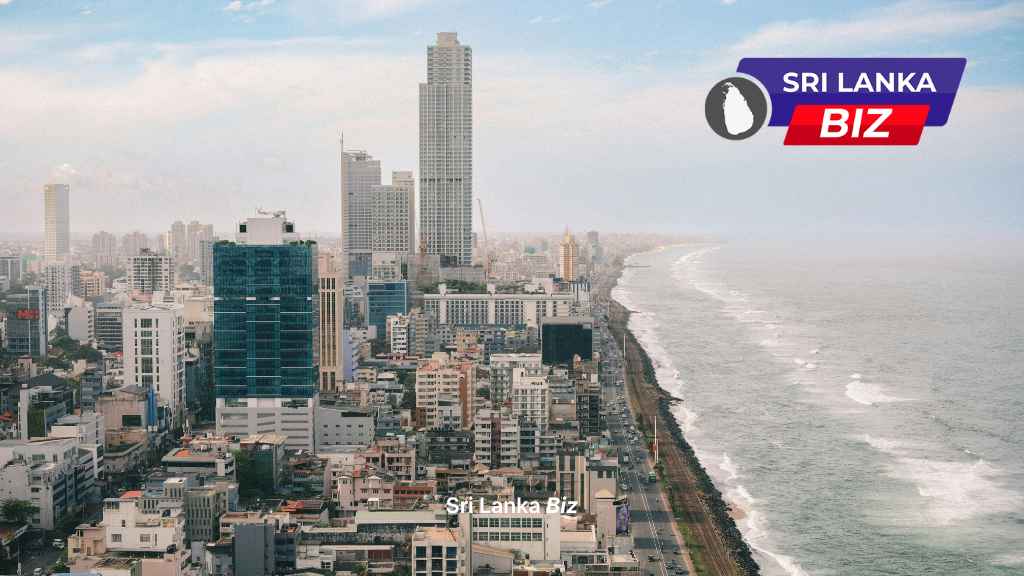
Sri Lanka economic outlook remains weak amid Middle East crisis as external shocks, rising oil prices, and reserve constraints continue to pressure recovery prospects and limit policy flexibility.
Sri Lanka economic outlook remains weak amid Middle East crisis, warns Dr. Wijewardena
Sri Lanka economic outlook remains weak amid Middle East crisis, with mounting external pressures and structural vulnerabilities continuing to weigh on the country’s fragile recovery path. Former Central Bank Deputy Governor Dr. W.A. Wijewardena has cautioned that the current global environment, particularly developments in the Middle East, has significantly reduced Sri Lanka’s ability to sustain its recent economic gains.
Speaking at a recent webinar organised by the International Chamber of Commerce Sri Lanka and the Association of Chartered Certified Accountants, Dr. Wijewardena stressed that the country’s recovery trajectory remains highly exposed to unpredictable global shocks. He noted that while Sri Lanka recorded around 5 percent economic growth in 2025, such performance is unlikely to be repeated in 2026 and beyond under current conditions.
Sri Lanka economic outlook remains weak amid Middle East crisis, particularly due to rising geopolitical uncertainty and volatile energy markets. Dr. Wijewardena warned against overly optimistic assumptions that crises automatically create economic opportunities. He specifically rejected the notion that Sri Lanka could transform itself into a regional aviation or maritime hub comparable to Dubai, stating that not all crises translate into structural economic advantages.
According to him, only predictable, one-off disruptions—such as Cyclone Ditwah—can be leveraged for targeted recovery planning. In contrast, ongoing geopolitical tensions in the Middle East are highly unpredictable and introduce sustained uncertainty into trade, energy pricing, and financial stability.
A key concern highlighted by Dr. Wijewardena relates to Sri Lanka’s foreign reserve position. He noted that although official figures indicate relatively strong reserve levels, a significant portion is not fully usable for immediate economic needs. Sri Lanka’s reserves reportedly include around US$1.4 billion received through a swap arrangement with the People’s Bank of China, which cannot be freely deployed.
Sri Lanka economic outlook remains weak amid Middle East crisis, as Dr. Wijewardena explained that these swap funds are denominated in yuan, while most of the country’s import obligations are settled in US dollars. This currency mismatch further limits the practical usability of reserves during periods of external stress.
He further cautioned that the remaining usable reserves—estimated at around US$5.6 billion—may not be sufficient to manage emerging risks, particularly if global oil prices continue to rise. With Brent crude reaching approximately US$107 per barrel as of April 27, 2026, pressure on import bills is expected to intensify in the coming months.
Sri Lanka economic outlook remains weak amid Middle East crisis, especially as rising oil prices directly impact transportation costs, electricity generation, and overall inflation. Dr. Wijewardena warned that sustained high energy prices will make it increasingly difficult for the government to maintain fuel subsidies, potentially forcing a policy shift that could affect household costs and business operations.
He emphasized that fiscal space is already constrained and that continued reliance on subsidies may not be sustainable without broader revenue adjustments. In this context, he suggested that the government should consider reallocating part of its recent revenue gains to cushion the impact of rising fuel costs on the public.
Sri Lanka recently exceeded the International Monetary Fund’s revenue target of 15 percent of GDP, achieving over 16 percent in government revenue last year. However, Dr. Wijewardena argued that such gains must be strategically deployed to strengthen resilience rather than simply offset short-term pressures.
Sri Lanka economic outlook remains weak amid Middle East crisis also due to structural vulnerabilities in policy response mechanisms. Dr. Wijewardena urged policymakers to focus on internal adjustments rather than relying on external conditions or speculative growth narratives. He stressed the importance of disciplined fiscal management, improved reserve utilization, and realistic planning in navigating external shocks.
He further highlighted that while headline indicators may suggest stability, underlying risks remain elevated. External debt exposure, import dependency, and energy vulnerability continue to constrain policy flexibility, making the economy highly sensitive to global price fluctuations.
Dr. Wijewardena’s remarks reflect growing concern among economists that Sri Lanka’s recovery remains uneven and heavily dependent on external conditions. While recent growth figures offer some optimism, structural weaknesses and external dependencies continue to limit long-term resilience.
Sri Lanka economic outlook remains weak amid Middle East crisis, with analysts increasingly calling for a more cautious and internally focused policy approach. Strengthening domestic capacity, improving energy efficiency, and ensuring more effective reserve management are seen as key priorities in the current environment.
As global uncertainty persists, particularly in energy and geopolitical markets, Sri Lanka’s ability to maintain stability will depend heavily on timely policy decisions and prudent economic management. Dr. Wijewardena’s warning underscores the urgency of addressing these challenges before external shocks further constrain recovery prospects.