

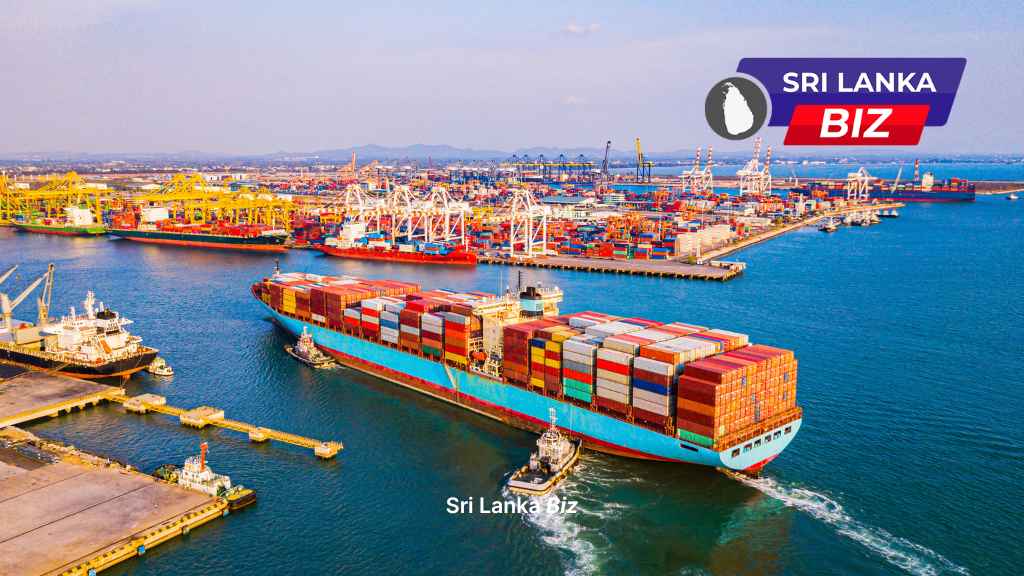
Cabinet clears National Export Development Plan 2026-2030 as Sri Lanka moves to formalise a long-term strategy aimed at strengthening export competitiveness and driving sustainable, export-led economic growth. The plan sets a clear roadmap for expanding both goods and services exports.
Cabinet clears National Export Development Plan 2026-2030 to boost exports
The Cabinet of Ministers has approved the recognition of the Sri Lanka National Export Development Plan 2026–2030 as the country’s official strategic framework for export development and promotion. The initiative marks a significant policy step aligned with broader efforts to stabilise the economy and enhance foreign exchange earnings through structured and targeted export expansion.
The National Export Development Plan was first proposed in the 2025 Budget as a national priority, reflecting the Government’s focus on revitalising the export sector. Developed by the Sri Lanka Export Development Board (EDB), the framework was formulated in collaboration with key stakeholders across the public and private sectors, ensuring a comprehensive and inclusive approach to policy design and implementation.
Technical support for the plan was provided under the Policy-Based Loan Program of the Asian Development Bank (ADB), highlighting the role of international development partners in supporting Sri Lanka’s economic reform agenda. The involvement of the ADB is expected to strengthen the credibility and technical robustness of the framework, particularly in areas such as policy alignment, monitoring mechanisms and performance evaluation.
According to Cabinet Spokesman and Minister Dr. Nalinda Jayatissa, the plan establishes a structured pathway for guiding and monitoring Sri Lanka’s export development trajectory over the next five years. A central target of the framework is to achieve $ 36 billion in foreign exchange earnings from both merchandise and services exports by 2030.
The approval of the plan comes at a time when Sri Lanka is actively pursuing Sri Lanka export strategy initiatives to diversify its export base and reduce reliance on a narrow range of products and markets. Policymakers have increasingly emphasised the need to move up the value chain, promote innovation and improve productivity across export-oriented industries.
The framework is expected to focus on several priority sectors, including manufacturing, agriculture, information technology and services, while also addressing cross-cutting issues such as trade facilitation, logistics, skills development and regulatory efficiency. These measures are critical to improving the country’s global competitiveness and positioning Sri Lanka as a reliable trading partner.
In addition, the plan aligns closely with broader export-led economic growth Sri Lanka objectives, which have gained prominence in recent years as the country seeks to rebuild its external sector. Export-led growth is widely viewed as a sustainable pathway to generating foreign exchange, creating employment and supporting long-term economic stability.
Industry analysts note that achieving the ambitious $ 36 billion export target will require not only policy consistency but also strong execution and coordination among multiple agencies. Effective implementation mechanisms, including performance tracking and stakeholder engagement, will be essential to translating strategic goals into measurable outcomes.
The role of the private sector is expected to be central to the success of the National Export Development Plan. By fostering closer collaboration between government institutions and industry players, the framework aims to create an enabling environment that supports business expansion, innovation and market diversification.
Minister of Industry and Entrepreneurship Development Sunil Handunneththi, who submitted the proposal to Cabinet, has emphasised the importance of aligning national policies with global trade dynamics. As international markets continue to evolve, Sri Lanka’s export sector must adapt to changing demand patterns, technological advancements and sustainability requirements.
The plan is also likely to incorporate measures aimed at enhancing digital trade capabilities, improving access to international markets and strengthening branding and marketing efforts for Sri Lankan products and services. These elements are increasingly critical in a globalised economy where competitiveness is driven by both quality and market positioning.
Furthermore, the framework is expected to address structural challenges that have historically constrained export growth, including supply chain inefficiencies, high production costs and limited access to finance for exporters. By tackling these issues, the Government aims to create a more resilient and dynamic export ecosystem.
The approval of the National Export Development Plan signals a renewed commitment to long-term economic planning, particularly in the context of post-crisis recovery. It also reflects a shift towards evidence-based policymaking, supported by data-driven analysis and international best practices.
As Sri Lanka moves forward with implementation, the focus will likely shift to ensuring that policy objectives are effectively translated into actionable programmes. Continuous monitoring, periodic review and adaptive policy adjustments will be critical to maintaining momentum and achieving the desired outcomes.
In this context, Cabinet clears National Export Development Plan 2026-2030 represents a foundational step in redefining the country’s export trajectory. By establishing clear targets, strengthening institutional coordination and prioritising competitiveness, the plan aims to position Sri Lanka for sustained growth in the global marketplace.