

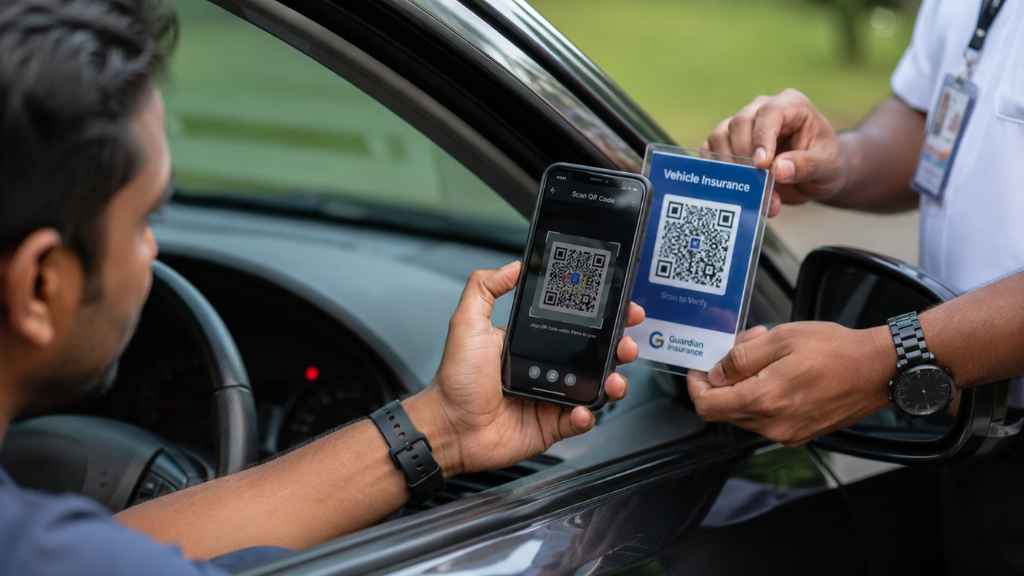
Digital Vehicle Insurance Cards are set to be introduced in Sri Lanka as part of the Government’s ongoing digitalisation efforts aimed at modernising insurance verification and improving convenience for motorists nationwide.
Digital Vehicle Insurance Cards to replace physical documents
According to the Insurance Association of Sri Lanka, the country plans to gradually phase out physical vehicle insurance cards and replace them with fully digital alternatives accessible through mobile phones, online platforms and QR code-based systems.
Chairman of the General Insurance Forum Dinusha Thilanka stated that the initiative forms part of broader efforts to streamline insurance-related services while enhancing accessibility and operational efficiency within the industry.
The transition to Digital Vehicle Insurance Cards is expected to significantly simplify the process of carrying and verifying insurance documentation for vehicle owners. Under the proposed system, motorists will be able to access insurance details digitally at any time without relying on physical cards or printed certificates.
Industry analysts noted that the move aligns with wider Digital transformation Sri Lanka initiatives currently underway across both public and private sectors. The country has increasingly prioritised digitalisation in areas such as banking, telecommunications, public administration and financial services as part of efforts to improve efficiency, accessibility and transparency.
According to officials, insurance verification will also become more convenient through a dedicated 1338 hotline service. Vehicle insurance information can be verified around the clock using multiple channels including USSD, SMS and Interactive Voice Response (IVR) systems.
Experts within the Sri Lanka insurance sector believe the introduction of digital insurance verification systems could help reduce administrative inefficiencies, minimise document fraud and improve the speed of law enforcement and roadside verification procedures.
The use of QR code technology is also expected to strengthen authentication capabilities by allowing authorities and relevant stakeholders to instantly confirm the validity of insurance coverage through secure digital platforms.
Industry observers noted that Digital Vehicle Insurance Cards could play an important role in supporting Sri Lanka’s broader smart governance and digital infrastructure ambitions. As smartphone penetration and internet accessibility continue to improve nationwide, digital service adoption across industries has accelerated rapidly in recent years.
The insurance industry has increasingly embraced digital technologies to improve customer engagement, policy management and claims processing. Analysts believe digital insurance systems can enhance operational efficiency while reducing paperwork and administrative costs for both insurers and policyholders.
The Sri Lanka insurance sector has also witnessed growing demand for digital-first services as consumers become more accustomed to online banking, e-commerce and mobile-based financial transactions. Insurers are under increasing pressure to modernise service delivery and offer more accessible customer experiences through digital channels.
Officials noted that the transition away from physical cards will likely occur gradually to ensure smooth adoption among consumers, insurers and enforcement authorities. Public awareness campaigns and system integration efforts are expected to support the implementation process once the digital platform is fully operational.
Industry experts further pointed out that digital insurance verification systems could improve road safety compliance and reduce disputes related to invalid or expired insurance documentation. Real-time access to verified insurance data may also assist traffic authorities and insurers in improving regulatory oversight.
The move toward Digital transformation Sri Lanka initiatives has gained momentum following increased demand for technology-driven public services and paperless systems across multiple sectors. Policymakers continue to encourage digital innovation aimed at strengthening efficiency, transparency and customer convenience.
Observers believe the introduction of Digital Vehicle Insurance Cards represents another important milestone in Sri Lanka’s ongoing digital modernisation agenda, particularly within financial and insurance services.
As the country continues to expand digital infrastructure and technology adoption, industry stakeholders expect more sectors to transition toward integrated digital platforms capable of improving service delivery while enhancing operational resilience and consumer accessibility.