

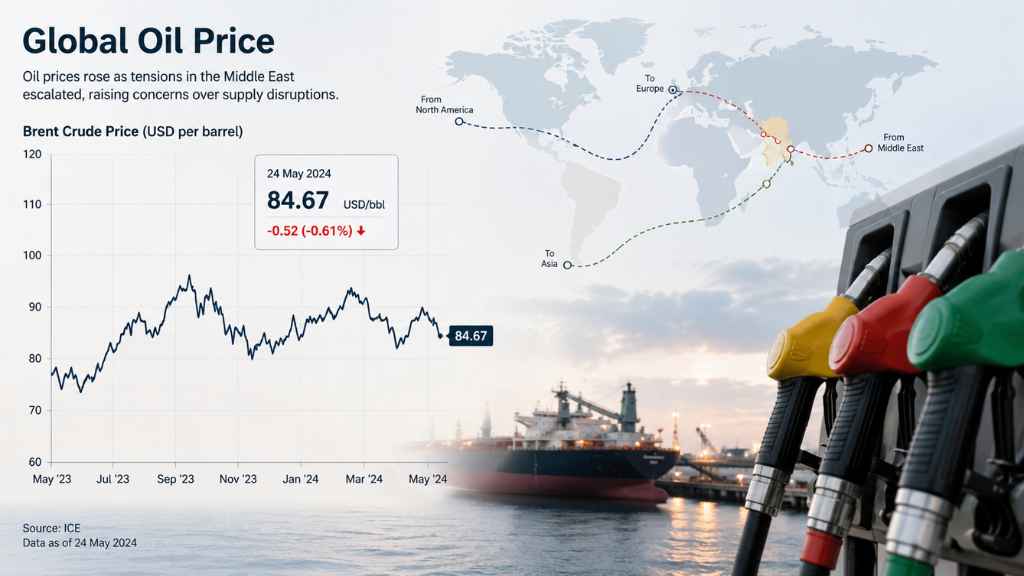
Sri Lanka CPC Oil Import Bill has surged to US$521 million in May 2026 as escalating tensions in the Middle East continue to push global energy prices higher, placing renewed pressure on the country’s external finances and fuel supply management.
Sri Lanka CPC Oil Import Bill climbs amid global oil price surge
Deputy Finance Minister Anil Jayantha stated that the oil import expenditure of the Ceylon Petroleum Corporation increased significantly compared to December 2025, when the monthly import bill stood at US$152 million.
Officials attributed the sharp increase primarily to the ongoing geopolitical conflict in the Middle East and the resulting spike in Global oil prices. International crude oil markets have experienced severe volatility following the escalation involving the United States, Israel and Iran, with benchmark oil prices crossing US$100 per barrel for the first time in several years.
Minister Jayantha noted that although the Sri Lanka CPC Oil Import Bill has risen sharply in May, authorities expect some easing in the coming months if market conditions stabilise. Current projections indicate the monthly import bill could decline to around US$332 million in June and further reduce to approximately US$241 million by July.
Sri Lanka’s energy vulnerability has become increasingly visible due to the country’s limited fuel and crude oil storage capacity, which restricts its ability to manage prolonged periods of price volatility in global markets. Analysts note that the country remains highly dependent on imported petroleum products to sustain transportation, power generation and industrial activity.
According to a Central Bank official, the CPC spent approximately US$1 billion on oil imports during the first four months of 2026 compared to US$1.5 billion spent throughout the entirety of 2025. The rapid increase in expenditure has intensified concerns over foreign exchange outflows and import financing pressures.
The situation worsened after the strategic Strait of Hormuz was officially closed in March 2026 amid escalating regional tensions. The maritime route is one of the world’s most critical oil shipping corridors, carrying a substantial share of global crude oil trade.
The closure disrupted supply chains and accelerated the surge in Global oil prices, directly impacting energy-importing economies such as Sri Lanka. Industry analysts noted that the sharp rise in fuel costs has significantly strained the country’s fragile post-crisis economic recovery.
Data show that cumulative energy import expenditure by all three fuel retailers in Sri Lanka reached approximately US$1.28 billion during the first quarter of 2026, accounting for nearly 20 percent of the country’s total import bill.
The rapid increase in Sri Lanka fuel imports also triggered public concerns over fuel availability, reviving memories of the severe shortages experienced during the country’s 2022 economic crisis. Panic buying and fuel hoarding were reported in several areas, prompting authorities to temporarily reintroduce QR-code-based fuel rationing systems and restrict container sales.
To reduce supply risks and cushion domestic fuel pricing pressures, the Ministry of Energy moved to diversify procurement channels by securing emergency bilateral arrangements for crude oil imports from Russia during April.
Government officials have repeatedly assured the public that uninterrupted fuel and electricity supply will be maintained despite higher import costs. However, economists warn that prolonged elevated oil prices could continue to place pressure on inflation, public finances and foreign reserve management.
Market observers also note that sustained increases in Sri Lanka fuel imports could complicate broader macroeconomic stabilisation efforts, particularly as the country continues debt restructuring and external financing negotiations.
Despite these challenges, authorities maintain that fuel procurement operations remain stable and that contingency measures are being implemented to safeguard energy security during ongoing global market uncertainty.