

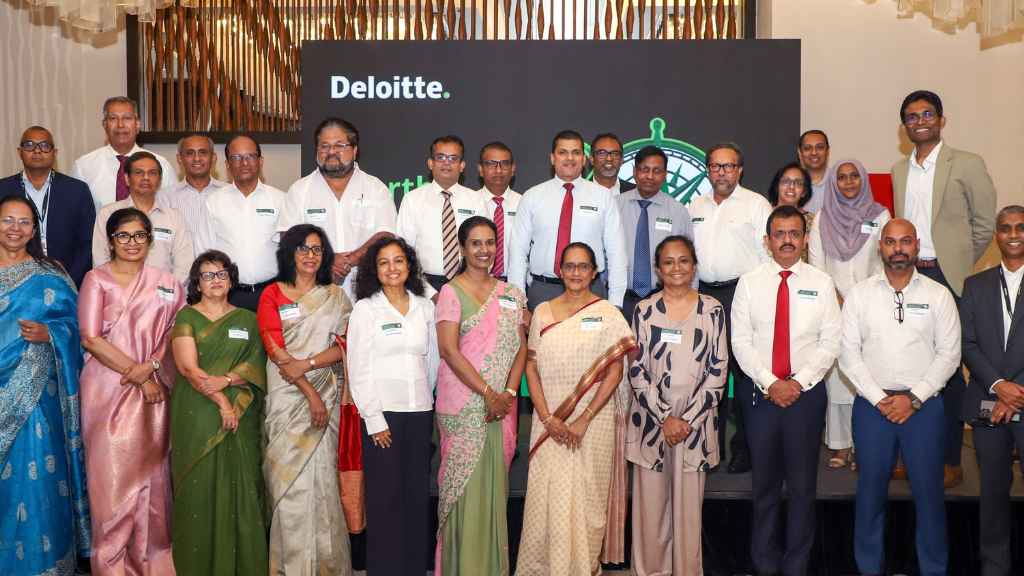
Sri Lankan board members explore governance at Deloitte Saarthi Program as directors and business leaders gathered in Colombo to discuss the evolving responsibilities of modern boards amid growing technological, regulatory and governance challenges.
Sri Lankan board members explore governance at Deloitte Saarthi Program on boardroom priorities
Hosted by Deloitte Sri Lanka in collaboration with Deloitte India at the Sheraton Colombo, the Saarthi Programme for Independent Directors brought together independent directors and board members to examine the future of effective corporate governance. The programme focused on equipping boards with practical insights to strengthen oversight, manage emerging risks and create long-term organisational value.
With businesses operating in an increasingly complex environment shaped by artificial intelligence, digital transformation, geopolitical uncertainty and heightened stakeholder expectations, the programme highlighted how governance must evolve beyond traditional compliance and financial reporting responsibilities.
Speaking during the event, Malinda Boyagoda, Partner – Assurance Leader and Industry Leader for Financial Services at Deloitte Sri Lanka and Maldives, said boards are now expected to serve as active stewards of organisational resilience rather than simply reviewing historical performance.
He noted that governance has become a strategic function requiring directors to oversee risks associated with emerging technologies, cyber threats and increasingly sophisticated business models. According to Boyagoda, fraud, cybersecurity and technology-related risks are now boardroom priorities that demand informed oversight, proactive decision-making and constructive engagement with management.
He further stressed that organisations are more likely to earn long-term stakeholder trust when boards possess the right mix of expertise, maintain an independent mindset and are willing to challenge management before potential risks develop into larger crises.
During his presentation on fraud risk management, Boyagoda outlined the growing responsibilities of directors in protecting organisations against theft, corruption and financial reporting fraud. He encouraged boards to move beyond reactive governance by fostering ethical leadership, strengthening prevention, detection and response mechanisms, and adopting continuous transaction monitoring supported by data analytics to identify emerging threats at an early stage.
The programme also featured a series of virtual sessions led by senior professionals from Deloitte India and members of the Saarthi Advisory Board, offering participants global perspectives on modern governance practices.
One of the key sessions examined boardroom priorities relating to cyber and technology risks. Discussions explored how artificial intelligence, cloud computing and rapidly evolving cyber threats are reshaping board oversight and strategic decision-making. Speakers emphasised that cybersecurity is no longer solely an operational concern but a strategic business issue requiring active board engagement.
The session also examined AI governance, data protection, third-party cyber risks, regulatory compliance and the importance of incident response planning. Participants were encouraged to engage management on cyber preparedness while recognising that artificial intelligence presents both significant opportunities and new sources of enterprise risk.
Another session focused on fraud risk management from a governance perspective, highlighting global fraud trends, cyber-enabled financial crime, AI-driven scams and risks arising from third-party relationships. Presenters stressed the value of maintaining ethical corporate cultures, implementing effective whistleblower mechanisms, establishing robust fraud governance frameworks and ensuring independent investigation protocols to safeguard enterprise value and stakeholder confidence.
A major highlight of the event was a panel discussion titled “Expectations from Boards in the Areas of Cyber, Technology and Fraud Risks.” Members of the Saarthi Advisory Board and experienced business leaders shared practical insights from their boardroom experience, discussing the increasing expectations placed on directors to balance innovation with accountability while strengthening governance frameworks and organisational resilience.
The programme concluded with a session on social media governance, examining the growing importance of digital communications oversight as a board-level responsibility. Discussions covered governance frameworks for social media, regulatory compliance, influencer engagement, crisis communication and brand reputation management.
Presenters also demonstrated how AI-powered social media monitoring and continuous digital listening can help organisations identify reputational risks early, enabling boards to respond proactively while strengthening stakeholder confidence in an increasingly digital business environment.
Through the Saarthi Programme, Deloitte Sri Lanka continues to provide a platform for independent directors and business leaders to exchange ideas, learn from industry experts and strengthen corporate governance practices. As governance expectations continue to evolve, initiatives such as Saarthi aim to equip boards with the knowledge and practical tools needed to oversee emerging risks, support sustainable growth and build resilient organisations prepared for long-term success.