

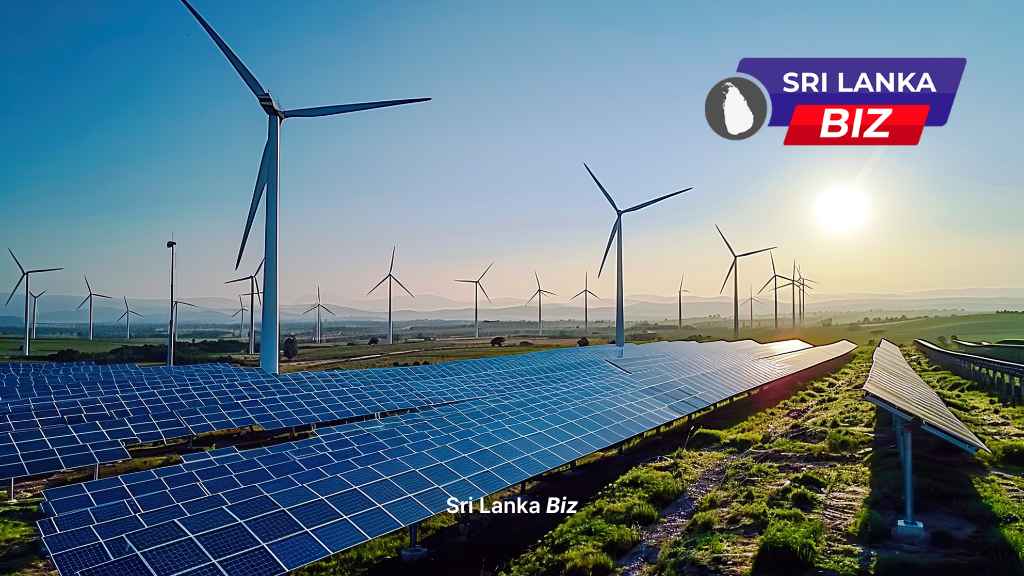
Sri Lanka 250 MW battery storage project has been launched through an international competitive tender, marking one of the country’s largest investments in grid-scale energy storage as the Government accelerates its transition towards a cleaner and more resilient electricity system.
Sri Lanka 250 MW battery storage project targets stronger renewable energy integration
The National System Operator Ltd. (NSO), operating under the Ministry of Energy, has invited international bids for the development of a 250 MW/1,000 MWh Standalone Battery Energy Storage System (BESS). The initiative is expected to strengthen Sri Lanka’s electricity grid, improve renewable energy integration and support the country’s long-term energy security objectives.
Issued under tender reference TR/REP&PM/ICB/2026/001/C, the project will be implemented through an International Competitive Bidding (ICB) process. Successful developers will construct 10 MW/40 MWh battery storage blocks across 25 grid substations located in areas including Ambalangoda, Ampara, Bolawatta, Chunnakam, Hambantota, Kurunegala, Matara, Galle and Monaragala.
The projects will operate under a Build, Own and Operate (BOO) model, with developers entering into 15-year Energy Storage Agreements with the NSO. All facilities will be connected to the national grid at the 33kV voltage level, while developers will be responsible for financing, designing, constructing, commissioning, operating and maintaining the storage systems.
Under the tender conditions, developers must also bear the full cost of grid interconnection and obtain all required environmental and statutory approvals before their proposals are considered by the Cabinet Appointed Negotiation Committee.
The Request for Proposal (RFP) documents are available until 13 August 2026 for a non-refundable fee of Rs. 150,000 for local bidders and US$500 for overseas proponents. Bid submissions will close at 10:00 a.m. on 14 August 2026.
The Sri Lanka 250 MW battery storage project reflects a growing international trend towards deploying large-scale Battery Energy Storage System infrastructure to improve electricity reliability and maximise the use of renewable power. As solar and wind generation expand, battery storage plays an increasingly important role in balancing electricity supply and demand while maintaining grid stability.
According to the International Energy Agency (IEA), global battery storage capacity expanded by 108 gigawatts in 2025, representing a 40 percent increase over the previous year. Installed storage capacity worldwide is now approximately 11 times higher than in 2021, highlighting the rapid growth of the sector.
The IEA’s Electricity 2026 report estimates that global storage capacity will need to increase nearly six-fold to around 1,500 gigawatts by 2030 to support international efforts to triple renewable electricity generation.
Industry analysts also note that reliable grid infrastructure backed by energy storage is becoming an increasingly important factor in attracting foreign direct investment. Many multinational companies are seeking countries capable of supplying stable renewable electricity as they pursue corporate sustainability commitments.
The RE100 initiative, whose members include global companies such as Apple, Google, Infosys, Tata Motors and TSMC, has highlighted growing demand for renewable electricity among export-oriented manufacturers. Access to dependable renewable power supported by energy storage is increasingly viewed as a competitive advantage for investment destinations.
The Sri Lanka 250 MW battery storage project aligns with the country’s broader renewable energy strategy. Under the National Energy Policy, Sri Lanka aims to reduce dependence on imported fossil fuels while increasing the share of domestically generated clean energy. The Government has set a target of generating 70 percent of electricity from renewable sources by 2030, while the Carbon Net Zero 2050 Roadmap outlines the country’s pathway towards achieving carbon neutrality.
Officials believe grid-scale battery storage will be a critical component in achieving these national objectives by enabling higher levels of renewable generation without compromising grid reliability. As Sri Lanka continues expanding solar and wind capacity, investments in battery storage infrastructure are expected to play a central role in ensuring a secure, efficient and sustainable electricity system.