

Key Project Metrics at a Glance
- Capital Expenditure: USD 16 Million private equity and credit commitment
- Target Market Share: Up to 25 percent of national finished medicine demand
- Output Scope: Oral solids, injectables, hormonal lines, and specialized oncology formulations
- Regulatory Standard: Designed to meet WHO Good Manufacturing Practice (GMP) standards
COLOMBO (SriLankaBiz): Synergy Pharmaceuticals has reached the final construction phase of its 16 million dollar pharmaceutical manufacturing facility in the Bingiriya Export Processing Zone, preparing to produce 25 percent of Sri Lanka’s domestic finished pharmaceutical formulations while curbing national foreign exchange import drains, Ministry of Health and Board of Investment records confirmed.
The venture represents the single largest Western medicine manufacturing complex currently under development in the island, addressing a critical vulnerability where Sri Lanka historically imports roughly 85 percent of its annual medicinal requirements.
Pharmaceutical Manufacturing Facility Scale and Production Portfolio
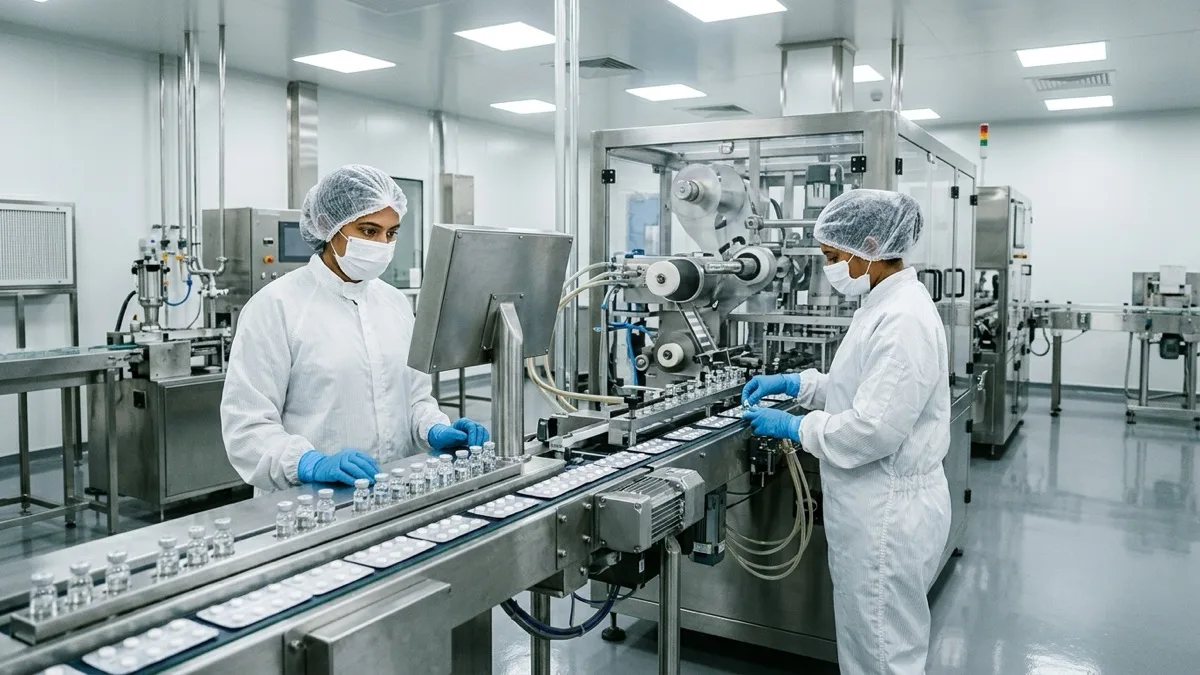
The high-technology pharmaceutical manufacturing facility is engineered to manufacture a wide variety of essential treatments. The plant features specialized isolated cleanroom zones dedicated to oral solid dosages, injectables, hormonal medicines, and complex oncology pharmaceuticals.
According to technical filings approved by the National Medicines Regulatory Authority (NMRA), the site complies with stringent World Health Organization Good Manufacturing Practice criteria. This standard enables Synergy Pharmaceuticals to supply both the domestic public health tenders through the State Pharmaceuticals Corporation (SPC) and commercial retail pharmacies, while creating a foundation for regional pharmaceutical exports across South Asia and East Africa.
The Bingiriya complex operates in parallel with other state-backed initiatives, including a Rs. 3 billion joint venture between the State Pharmaceuticals Manufacturing Corporation (SPMC) and Premium International Injectable at the Koggala Export Processing Zone to manufacture human insulin and 32 injectable drugs locally by 2027.
| Strategic Pillar | Operating Metric | Economic Impact |
|---|---|---|
| Total Capital Investment | USD 16.0 Million | Direct private foreign exchange mobilization |
| Domestic Market Coverage | Up to 25 Percent | Reduces reliance on imported finished products |
| Import Bill Displacement | Estimated USD 45M to 60M annually | Retains liquidity within the local banking system |
| Location & Infrastructure | Bingiriya Export Processing Zone | BOI industrial utilities and export zone incentives |
Import Substitution Economics and National Drug Security
Sri Lanka spends roughly USD 500 million to USD 600 million each year on imported pharmaceuticals and related active pharmaceutical ingredients. During the macroeconomic crisis of 2022, severe shortages of hard foreign currency triggered acute disruptions in hospital supply chains, illustrating the danger of total import dependency for critical medical supplies.
Establishing an operational pharmaceutical manufacturing facility inside the country shields the national treasury from exchange rate volatility. When finished medicines are compounded and packaged locally, the foreign currency outflow is restricted to basic chemical active pharmaceutical ingredients, which represent roughly 20 to 30 percent of the cost of fully imported finished formulations.
Furthermore, long-term buyback agreements facilitated through the SPMC and the Ministry of Health ensure predictable revenue streams for private operators while giving public hospitals guaranteed supply timelines unaffected by international container shipping bottlenecks.
Strategic Value-Add for Sri Lankan Healthcare Procurement
The commissioning of modern pharmaceutical manufacturing facility infrastructure alters the competitive landscape for Sri Lankan pharmaceutical procurement. The state health system gains greater fiscal leeway to negotiate transparent volume pricing, while local distributors lower their working capital exposure to import letters of credit and currency hedging costs.
For institutional investors, the development signals growing maturity in Sri Lanka’s healthcare industrial policy. By expanding high-yield manufacturing hubs in Bingiriya and Koggala, the country is converting a chronic foreign currency liability into a potential regional export asset, strengthening pharmaceutical self-sufficiency without sacrificing international quality compliance.