

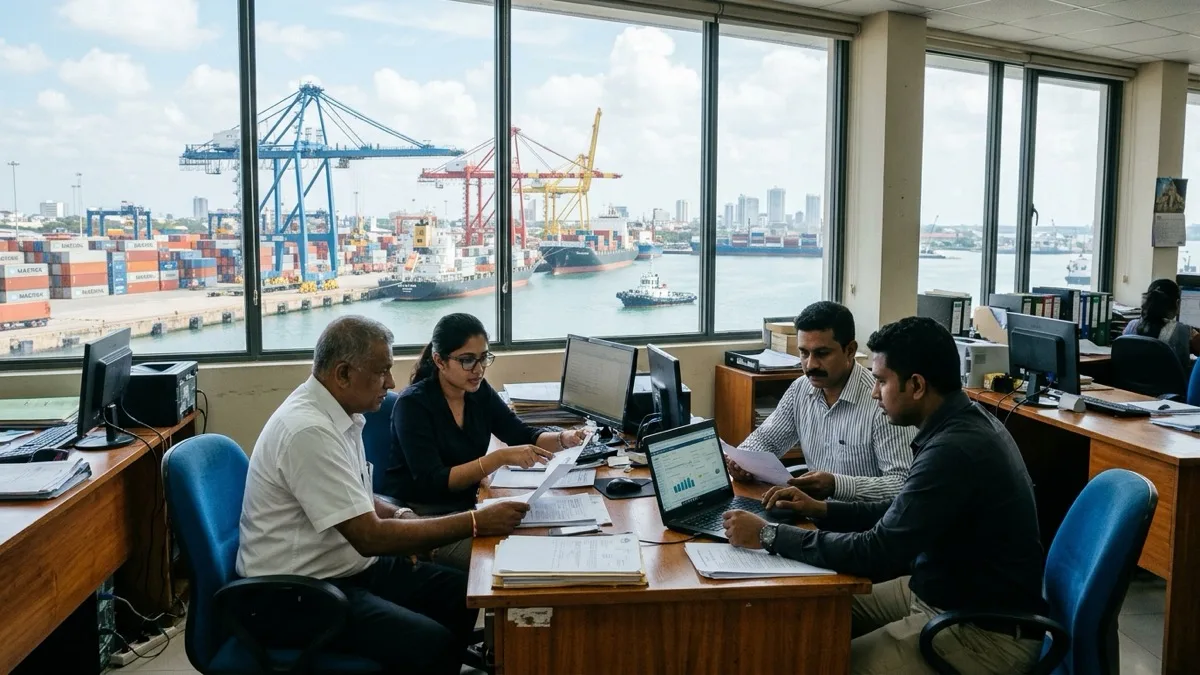
Port Performance Snapshot
- 10-Month Transshipment Volume: 6,406,363 TEUs (+10.0 percent YoY)
- 2025 Comparative Baseline: 5,825,909 TEUs in Jan-Oct 2025
- Global Port Ranking: Advanced 6 positions to rank 20th globally
- Transshipment Dominance: Accounts for roughly 85 percent of total port operations
COLOMBO (SriLankaBiz): Port of Colombo transshipment container handling expanded 10.0 percent to 6,406,363 twenty-foot equivalent units (TEUs) during the first ten months of 2026, Sri Lanka Ports Authority (SLPA) operational data confirmed, underscoring resilient maritime transit traffic connecting South Asia to major global shipping corridors.
The volume compared with 5,825,909 TEUs handled in transshipment during the identical ten-month period in 2025. Supported by this steady operational momentum, Colombo climbed six positions to rank 20th among the world’s busiest container ports in Alphaliner global port rankings, advancing from 26th at the close of 2025.
Expansion Dynamics of Port of Colombo Transshipment Traffic
The acceleration in Port of Colombo transshipment throughput reflects heavy hub-and-spoke feedering from the Indian subcontinent. Major maritime terminals across western and southern India, as well as Chittagong in Bangladesh, continue to route international deep-sea container volumes through Colombo to access main-line east-west services.
Transshipment activities comprise roughly 84 to 85 percent of all container traffic moving across the port’s public and private terminals. The remaining volumes consist of domestic import and export containers supporting Sri Lankan commercial trade.
Collaborative operational agreements between the state-run Jaya Container Terminal (JCT), South Asia Gateway Terminals (SAGT), and the Colombo International Container Terminals (CICT) have improved berth productivity and vessel turnaround times, allowing the harbor to absorb regional shipping diversions triggered by global maritime disruptions.
| Metric Indicator | Jan-Oct 2026 | Jan-Oct 2025 | Net Variance |
|---|---|---|---|
| Transshipment Volume | 6,406,363 TEUs | 5,825,909 TEUs | +580,454 TEUs (+10.0%) |
| Alphaliner Global Rank | Rank 20 | Rank 26 | Up 6 spots globally |
| Transshipment Share | 84.8 Percent | 84.2 Percent | +60 basis points |
| Total 2026 Run-Rate | On track for >7.8M TEUs | 7.2M TEUs (Full Year) | Record annual throughput |
Geopolitical Realities and Regional Port Competition
The steady performance in Port of Colombo transshipment comes amid heightened competitive posturing across the Indian Ocean rim. Neighboring transshipment hubs, including the newly commissioned Vizhinjam port in Kerala, seek to capture direct Indian gateway cargo.
However, Colombo maintains clear structural advantages in established line-haul carrier connectivity, international bunkering logistics, marine engineering services, and deep-draft berthing capability. Furthermore, ongoing terminal automation and the planned completion of the East Container Terminal (ECT) ensure that shipping alliances can schedule mega-container vessels exceeding 24,000 TEUs without encountering berthing delays.
Marine revenue earned in hard foreign currencies from vessel port dues, pilotage fees, and terminal handling charges serves as a crucial balance of payments buffer for the Central Bank of Sri Lanka.
Strategic Outlook for Maritime Logistics Infrastructure
To sustain this competitive edge, the Ministry of Ports and Civil Aviation is accelerating regulatory reforms under the National Single Window initiative. Harmonizing customs electronic declarations and streamlining marine logistics permits will reduce vessel port turnaround times even further.
For logistics providers and shipping lines, Colombo’s rise into the world’s top 20 container ports reinforces its role as the indispensable transshipment crossroad of South Asia. Continued private and public investment across deep-water quays positions the maritime sector to reach its long-term objective of 13 million TEUs in annual throughput before 2030.