

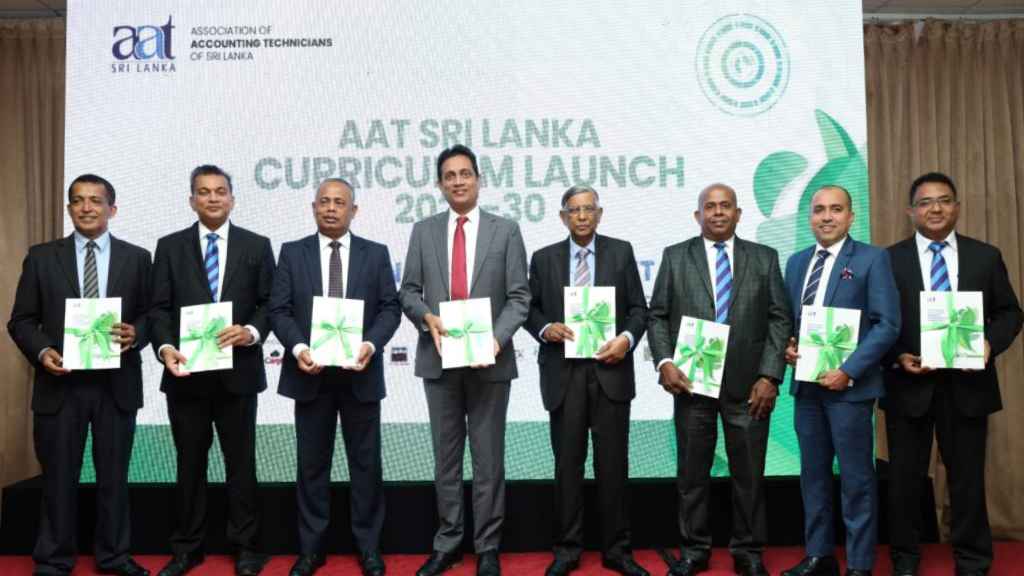
AAT Sri Lanka unveils Curriculum 2025-2030, marking a strategic transformation in accounting education aimed at future-ready careers. The initiative focuses on technological competence, sustainability, and employability in an increasingly digital global economy.
AAT Sri Lanka unveils Curriculum 2025-2030 for tech-driven careers
AAT Sri Lanka unveils Curriculum 2025-2030 as a forward-looking reform designed to align professional accounting education with the demands of a rapidly evolving, technology-driven global economy. Effective from the July 2026 examinations, the new framework replaces the 2020–2025 syllabus and introduces a comprehensive shift in how accounting professionals are trained and prepared for the future workplace.
The updated curriculum is built on a central theme—“Sustainable Employment through Technological Competence”—which reflects a broader transformation taking place across industries. As digital technologies reshape business operations, accounting professionals are expected to move beyond traditional roles and develop capabilities in data analysis, digital systems, and strategic decision-making. This curriculum aims to address that shift by integrating both technical and analytical competencies into its structure.
AAT Sri Lanka unveils Curriculum 2025-2030 not merely as a syllabus revision but as a strategic initiative to future-proof careers. The programme explicitly incorporates emerging technologies such as artificial intelligence, automation, blockchain, enterprise resource planning systems, and cybersecurity frameworks. These elements are increasingly relevant in modern accounting practices, where digital tools are central to financial reporting, auditing, and risk management.
In addition to technological integration, the curriculum also places significant emphasis on sustainability and global reporting standards. As businesses face growing pressure to disclose environmental, social, and governance (ESG) metrics, accounting professionals must be equipped to handle sustainability disclosures and integrated reporting. By embedding these concepts into the curriculum, AAT ensures that graduates are prepared to meet international expectations and contribute to responsible business practices.
The structure of the curriculum is organised into four key pillars: Accounting and Finance, Performance Analysis and Management, Legal, Taxation and Auditing, and Digital Transformation and Communication. This integrated approach ensures that students develop a balanced skill set, combining technical knowledge with analytical thinking and communication abilities. The programme is further divided into three progressive levels comprising thirteen courses, allowing students to build expertise systematically.
AAT Sri Lanka unveils Curriculum 2025-2030 with a strong focus on digital literacy and professional readiness. Students are introduced to practical concepts such as IoT applications, cybersecurity risks, and ethical considerations in digital environments. This holistic approach ensures that graduates are not only technically competent but also capable of navigating complex, technology-driven business landscapes.
A key differentiator of the programme is its mandatory one-year Professional Training Programme, which must be completed in a digital working environment. This requirement bridges the gap between academic learning and real-world application, ensuring that students gain hands-on experience before entering the workforce. Such industry-aligned training is critical in enhancing employability, as employers increasingly seek candidates with both theoretical knowledge and practical skills.
AAT Sri Lanka unveils Curriculum 2025-2030 while maintaining strong alignment with global professional bodies and academic institutions. Graduates continue to benefit from exemptions offered by leading organisations such as the Institute of Chartered Accountants of Sri Lanka, CIMA, ACCA, CMA Sri Lanka, IPA Australia, and IFA UK. This creates a clear pathway for students to pursue advanced qualifications and international career opportunities.
Notably, under the new curriculum structure, AAT-qualified students are exempted from all four technical subjects at the Business Level of CA Sri Lanka, enabling them to progress directly to the Corporate Level after completing the required capstone component. This streamlined progression enhances professional mobility and reduces the time required to achieve higher qualifications, making the programme more attractive to aspiring accountants.
Accessibility and inclusivity are also central to the curriculum’s design. AAT Sri Lanka has ensured that students across the country can access the qualification, with courses offered in Sinhala, Tamil, and English. Additionally, students who complete their A/L or O/L examinations can register with the programme pending their results, allowing them to begin their professional journey without delay.
The academic component of the qualification can be completed within 12 to 18 months, followed by structured professional training. This accelerated pathway is particularly appealing in a competitive job market, where early entry into the workforce can provide a significant advantage. By combining speed, flexibility, and quality, the programme positions itself as a practical and efficient route to professional success.
AAT Sri Lanka unveils Curriculum 2025-2030 as a response to the growing need for skilled middle-level accounting professionals who can support both corporate and SME sectors. Since its establishment in 1987, AAT Sri Lanka has played a critical role in developing accounting talent in the country. The new curriculum builds on this legacy while adapting to contemporary challenges and opportunities.
From a broader perspective, the initiative reflects a shift in education systems toward competency-based learning. Traditional models that focus solely on theoretical knowledge are increasingly being replaced by frameworks that emphasise skills, adaptability, and continuous learning. By adopting this approach, AAT Sri Lanka is aligning itself with global best practices in professional education.
In conclusion, AAT Sri Lanka unveils Curriculum 2025-2030 as a transformative step in redefining accounting education in Sri Lanka. By integrating technology, sustainability, and practical training, the programme equips students with the tools needed to succeed in a dynamic and competitive environment. As the demand for digitally skilled professionals continues to rise, this curriculum positions AAT graduates at the forefront of the future workforce.