

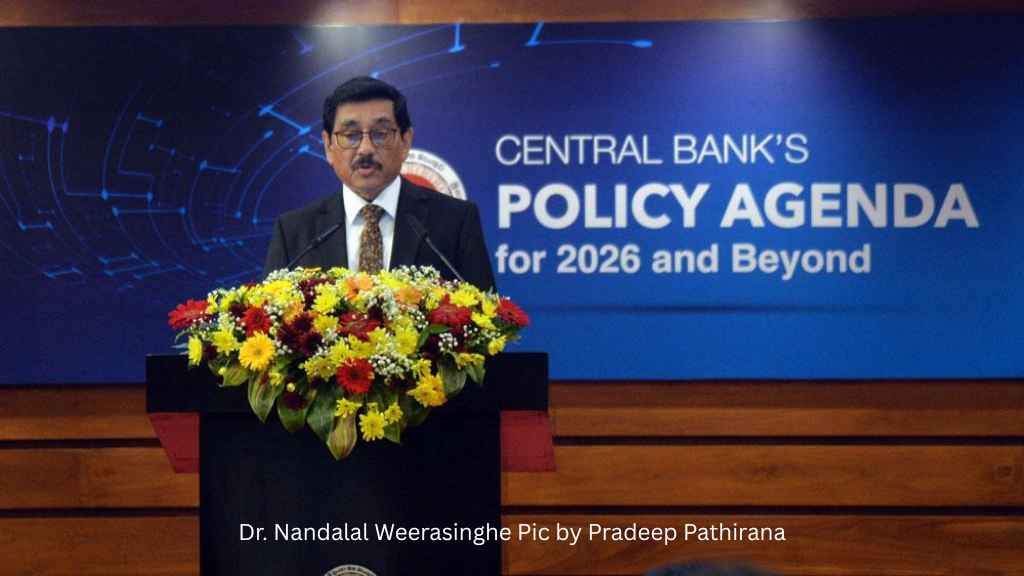
Sri Lanka 2026 growth is projected at 5 percent, Central Bank Governor Dr. Nandalal Weerasinghe announced. The projection reflects both public and private sector momentum and underscores the economy’s resilience following last year’s floods.
Sri Lanka 2026 growth expected at 5% as Central Bank signals resilience
Central Bank Governor Dr. Nandalal Weerasinghe opened 2026 with an upbeat assessment of Sri Lanka’s economic outlook, highlighting policy initiatives designed to transition from recovery to enhanced growth while reinforcing macroeconomic resilience. At a function unveiling the Central Bank’s policy agenda for the year, the governor expressed confidence that the economy will expand by around 4 to 5 percent in 2026, driven by both private consumption and public spending, which is expected to be relatively higher than in recent years.
“Continuing the growth momentum reported over the last two years, the economy is expected to grow by 4–5 percent in 2026,” Dr. Weerasinghe stated, emphasizing a sustained recovery path supported by solid fiscal, external, and monetary buffers. He noted that these measures have strengthened the economy’s ability to recover more quickly from shocks, including last year’s floods, which temporarily disrupted economic activity in affected regions.
Despite the setbacks caused by the floods, the Sri Lankan economy was estimated to have grown by around 5 percent in 2025. Consumer prices increased by only 2.1 percent during the 12 months through December 2025, reflecting effective inflation management and allowing households and businesses to plan with greater certainty. The governor attributed this stability to prudent monetary policies and careful monitoring of price developments.
Dr. Weerasinghe also expressed optimism regarding the Central Bank’s capacity to maintain price stability, a prerequisite for sustaining the 5 percent growth target over the medium term. He noted that the bank may review its current agreement with the government on the inflation target to reflect structural shifts in the economy and ongoing improvements in economic resilience.
The Central Bank’s inflation framework allows for a 5 percent target with a plus or minus 2 percent band. Since mid-2024, actual inflation has remained below the lower band of 3 percent, providing additional room for economic expansion without triggering price pressures. This undershooting of targets has contributed to a faster recovery while maintaining stability in household incomes and business planning.
“The Central Bank will conduct a thorough review of macroeconomic developments and structural changes, followed by an analytical assessment of the target,” Dr. Weerasinghe said. This statement signals the bank’s commitment to adaptive policy measures, reflecting both domestic conditions and global economic developments.
On financial sector stability, the governor highlighted improvements in asset quality, profitability, and operational efficiency. These enhancements have strengthened confidence in the banking system, contributing to a more robust economic foundation. By promoting sound lending practices and risk management, the Central Bank aims to support sustained credit growth without compromising stability.
Looking ahead, the Central Bank has scheduled its first monetary policy meeting of 2026 for January 27, with a total of six meetings planned for the year. These sessions will provide opportunities to assess macroeconomic indicators, review inflation trends, and adjust policy instruments to ensure continued growth and stability. Analysts suggest that these measures, combined with fiscal discipline and private sector investment, position Sri Lanka for steady expansion in the coming year.
Dr. Weerasinghe concluded that maintaining macroeconomic resilience and encouraging growth requires a coordinated approach between public policy, financial institutions, and private sector actors. The 5 percent growth target for 2026 represents not only a numerical goal but also a reflection of confidence in Sri Lanka’s economic recovery strategy and the ability of the country to navigate challenges effectively.