

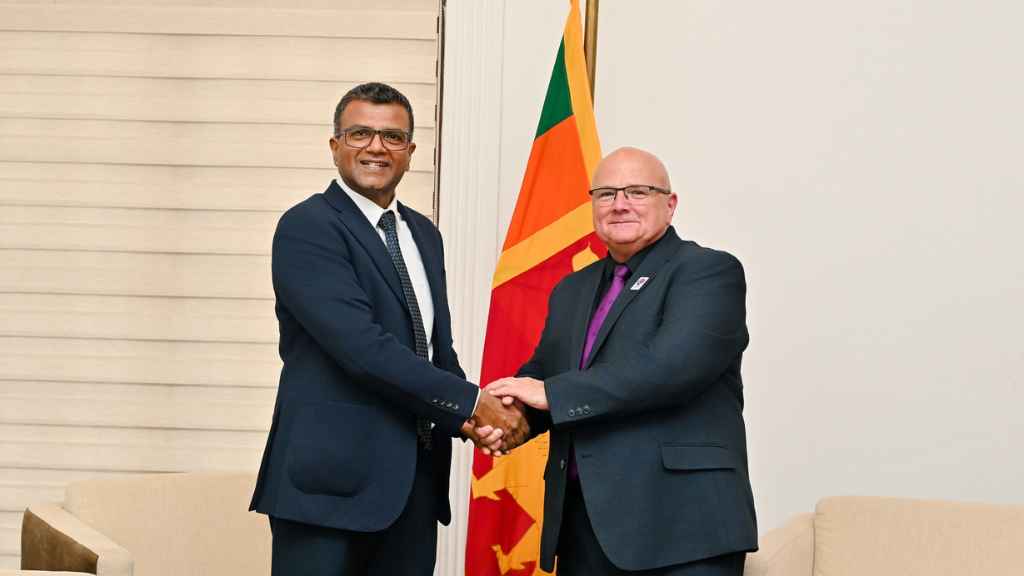
CIMA President meets Treasury Secretary on skills, economic growth as Sri Lanka steps up engagement with global professional bodies to strengthen human capital and support long-term economic recovery strategies.
CIMA President meets Treasury Secretary on skills, economic growth and reforms
CIMA President meets Treasury Secretary on skills, economic growth, highlighting a renewed focus on aligning professional development with national economic priorities. The meeting between John Graham, President of the Chartered Institute of Management Accountants, and Harshana Suriyapperuma, Secretary to the Treasury, reflects an increasing emphasis on skills-driven growth in Sri Lanka’s economic policy framework.
Discussions centred on advancing workforce capabilities, particularly in areas that support financial management, governance, and strategic decision-making. As Sri Lanka navigates a complex economic recovery phase, the importance of building a highly skilled and adaptable workforce has come into sharper focus. Management accountants, in particular, are seen as playing a pivotal role in shaping business resilience and long-term value creation.
The engagement also underscores the broader relevance of management accounting professionals in translating financial data into actionable insights. In an environment marked by economic uncertainty and structural adjustments, the ability to interpret financial information effectively has become critical for both public and private sector decision-making.
CIMA President meets Treasury Secretary on skills, economic growth discussions further explored how professional education and certification frameworks can be aligned with evolving industry needs. This includes equipping professionals with competencies that go beyond traditional accounting functions, such as risk management, sustainability reporting, and strategic planning.
Participants highlighted that modern management accountants are increasingly involved in guiding organisations through transformation, helping to optimise performance while maintaining strong governance standards. Their role extends to supporting policy implementation, enhancing transparency, and contributing to sustainable development objectives.
The meeting also emphasised the importance of inclusive growth, ensuring that skills development initiatives reach a broader segment of the population. By fostering access to high-quality professional education, stakeholders aim to create opportunities for upward mobility while addressing skill gaps that may hinder economic progress.
Sri Lanka economic growth remains closely tied to its ability to strengthen human capital and improve productivity. In this context, partnerships with global professional organisations such as CIMA are viewed as instrumental in introducing best practices and international standards into the local workforce. These collaborations can help bridge the gap between academic education and industry requirements, ensuring that graduates are better prepared for real-world challenges.
The discussion also reflected on the need for continuous professional development to keep pace with technological advancements and changing business models. Digital transformation, in particular, is reshaping the accounting and finance landscape, requiring professionals to adapt to new tools, data analytics capabilities, and integrated reporting frameworks.
Senior representatives from CIMA who attended the meeting included Venkkat Ramanan, Tharindu Wijewardana, and Channa Gunawardena. Their presence highlighted the organisation’s regional and local commitment to supporting Sri Lanka’s development agenda.
CIMA President meets Treasury Secretary on skills, economic growth also signals a recognition that sustainable economic recovery requires more than fiscal and monetary interventions. Strengthening institutional capacity, improving governance frameworks, and enhancing workforce skills are equally critical components of a resilient economy.
The dialogue between policymakers and professional bodies is expected to contribute to more effective policy formulation and implementation. By leveraging the expertise of management accountants, the government can benefit from data-driven insights that support evidence-based decision-making.
Looking ahead, such engagements are likely to play a key role in shaping Sri Lanka’s long-term development trajectory. As the country continues its recovery journey, the integration of global knowledge, local expertise, and forward-looking policies will be essential in achieving sustainable and inclusive growth.
The meeting ultimately reinforces the growing importance of skills development as a cornerstone of Sri Lanka economic growth, with management accounting professionals positioned at the intersection of finance, strategy, and governance.