

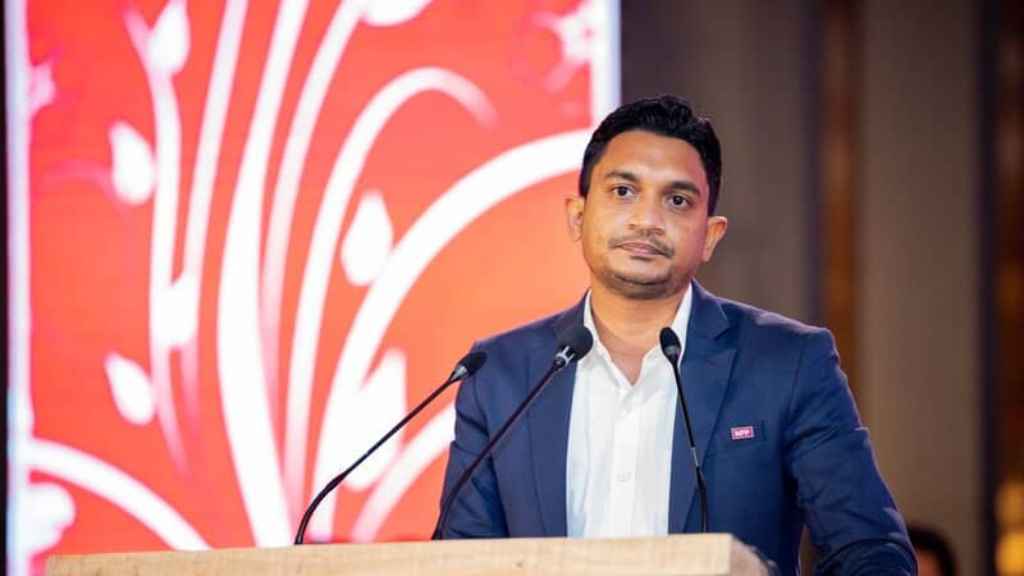
Deputy Minister accuses banks of self-interest as concerns grow over delays in disbursing concessional loans under government-backed MSME financing schemes, raising questions about lending practices and access to credit.
Deputy Minister accuses banks of self-interest over MSME loans
Deputy Minister accuses banks of self-interest, highlighting growing tensions between policymakers and the banking sector over the slow rollout of concessional credit programs aimed at supporting micro, small and medium enterprises (MSMEs). The issue has come into focus following public remarks by Chathuranga Abeysinghe, who expressed frustration over what he described as bottlenecks at the bank level.
According to the Deputy Minister, government-backed financing schemes worth approximately 95 billion rupees have seen limited progress in terms of actual disbursement. Data shared publicly indicate that only 17.49 billion rupees has been released so far, representing around 18 percent of the total allocation. This gap between allocation and utilisation has raised concerns about the effectiveness of policy measures designed to stimulate small business growth.
The Deputy Minister accuses banks of self-interest, alleging that some bank branches are prioritizing their own profitability over the objectives of state-funded lending programs. He claimed that applicants seeking concessional loans are often redirected toward higher-interest internal credit products or informed that allocated quotas have already been exhausted.
Within the government-funded MSME loan window, the figures show a similarly uneven performance. Of the 22.2 billion rupees allocated to participating financial institutions, only 7.18 billion rupees has been disbursed across 630 loans, reflecting a utilisation rate of just over 32 percent. These figures suggest that while funding is available, access remains constrained at the implementation stage.
Data also reveal a divergence in performance between state-owned and private sector banks. State banks, which account for a significant share of the allocated funds, have recorded relatively low utilisation rates ranging from 11 to 18 percent. In contrast, several private banks have either met or exceeded their assigned limits. Commercial Bank of Ceylon, for example, has disbursed more than its allocation, while Hatton National Bank and NDB Bank have also achieved full utilisation of their quotas.
The Deputy Minister accuses banks of self-interest in this context, arguing that such disparities reflect differing incentives and operational priorities within the sector. He pointed to instances where branch-level decisions appear to favor higher-margin lending products, potentially undermining the intended impact of concessional schemes.
At the same time, broader financial sector data provide additional context. The Central Bank of Sri Lanka reported that the banking sector recorded strong profitability in 2025, with cumulative profits after tax rising by 19.3 percent year-on-year to 369 billion rupees. Growth was driven by higher interest income and a significant increase in non-interest income, even as operating costs continued to rise.
Despite this profitability, banks have maintained a relatively conservative lending stance. The credit-to-deposit ratio stood at 69.9 percent by end-December, indicating that a substantial portion of deposits remains invested in liquid assets rather than being deployed as loans. Analysts suggest that this reflects cautious risk management, but it also implies that there is capacity for increased lending if conditions improve.
The Deputy Minister accuses banks of self-interest against this backdrop, emphasizing that greater participation in government-backed lending programs could help bridge financing gaps faced by MSMEs. These enterprises are widely regarded as a critical component of economic recovery, particularly in terms of employment generation and regional development.
To address operational challenges, authorities have encouraged applicants facing difficulties to seek assistance from Industrial and Entrepreneurship Officers at Divisional Secretariat offices. Once applications are submitted by banks, approvals from the Finance Ministry are typically processed within two weeks, according to official guidance.
The MSME financing framework itself represents a consolidated approach, bringing together multiple loan schemes under a unified structure. Funds are channelled through a network of 16 public and private banks, with applications undergoing field-level verification and digital approval processes managed by the Development Finance Department.
While the policy framework is designed to streamline access to credit, the current data suggest that execution remains uneven. The Deputy Minister accuses banks of self-interest as part of a broader call for improved accountability and alignment between financial institutions and national economic priorities.
As the government continues to prioritize MSME development as a pillar of economic recovery, ensuring efficient disbursement of allocated funds will be critical. Stakeholders across the financial system are likely to face increasing scrutiny as policymakers seek to translate financial commitments into tangible support for businesses on the ground.