
Key Highlights at a Glance
- Waste Diversion: Over 90 percent of industrial fabric scrap diverted from landfills across premier mills.
- Net-Zero Milestones: Brandix expands net-zero carbon certified manufacturing footprints in Batticaloa.
- Circular Fabric Mills: Teejay Lanka scales closed-loop synthetic fiber recovery and water recycling.
- Regulatory Readiness: Compliance aligned with European Union Eco-Design for Sustainable Products regulations.
COLOMBO (SriLankaBiz): Sri Lanka’s leading export manufacturers MAS Holdings, Brandix, and Teejay Lanka have expanded capital investments in Circular Textiles and Apparel, executing comprehensive closed-loop fabric processing and renewable power programs to satisfy tightening European and North American environmental sourcing standards.
The strategic push reinforces Sri Lanka’s positioning as an ethical sourcing capital, transitioning the sector from standard assembly manufacturing toward verified cradle-to-gate circularity ahead of mandatory European Union supply chain disclosure directives.
Industrial Scale Deployment of Circular Textiles and Apparel
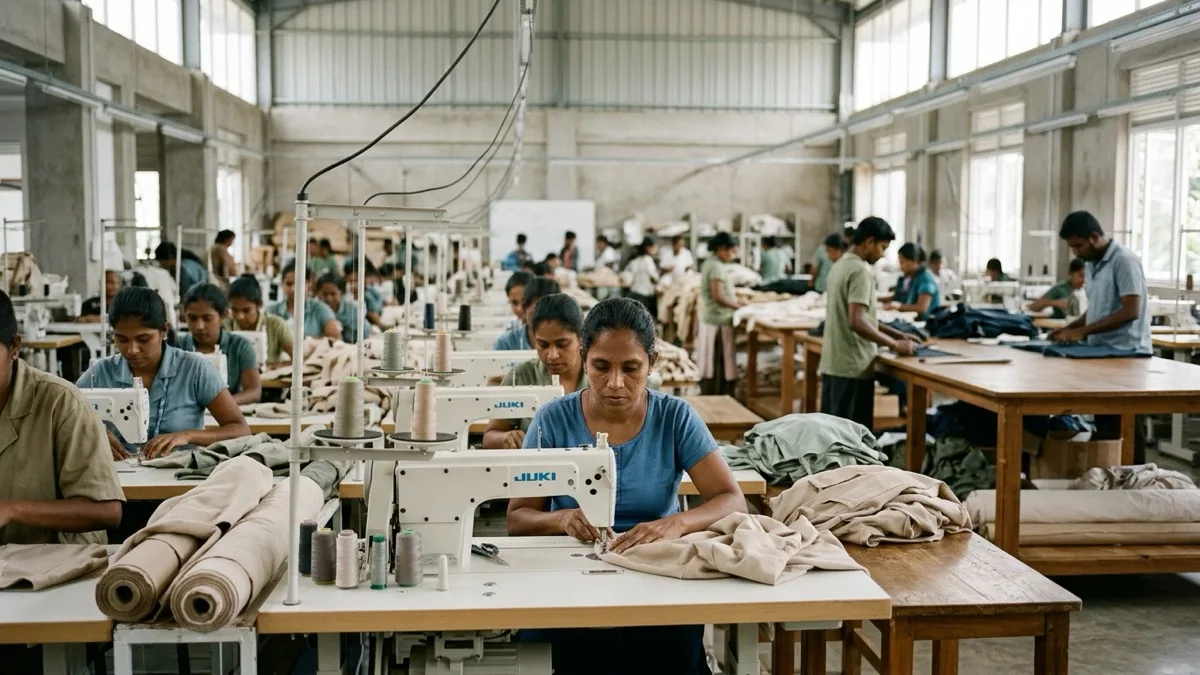
Under their dedicated sustainability roadmaps, Sri Lanka’s apex garment conglomerates are restructuring fabric supply chains to establish permanent closed-loop ecosystems for Circular Textiles and Apparel.
MAS Holdings achieved a 99 percent solid waste diversion rate across its domestic production plants under its Plan for Change framework, redirecting post-cutting fabric remnants into recycled yarn extruders. Simultaneously, Brandix has broadened operations across its net-zero carbon certified manufacturing plants, deploying rooftop solar photovoltaics and rainwater harvesting to lower the embedded carbon footprint of exported garments.
Upstream, circular-knit multinational Teejay Lanka accelerated water conservation and low-temperature chemical dyeing across its manufacturing facilities in Sri Lanka and India. By recycling thousands of metric tons of synthetic waste and processing traceable cellulosic fibers, Teejay provides apparel exporters with verified eco-compliant raw materials that fulfill international buyer specifications.
| Manufacturing Enterprise | Circularity Target | Core Environmental Metric | Key International Benchmark |
|---|---|---|---|
| MAS Holdings | Zero landfill waste and sustainable materials | 99 percent manufacturing waste diverted | Plan for Change 2030 roadmap |
| Brandix Apparel Limited | Net-zero carbon operations by 2030 | 90 percent material recovery and recycling | World Green Building Council Net-Zero certification |
| Teejay Lanka PLC | Closed-loop knit fabric manufacturing | Automated biological wastewater recycling | Bluesign and OEKO-TEX Standard 100 |
| Hirdaramani Group | Energy efficiency and chemical neutrality | Zero discharge of hazardous chemicals (ZDHC) | LEED Platinum certified factory footprint |
Business and Economic Impact for Ethical Fashion Exports
For Sri Lanka’s external accounts, pioneering Circular Textiles and Apparel creates strong commercial insulation against aggressive low-cost Asian garment producers.
Global retail giants in the European Union and the United Kingdom are facing strict statutory penalties under upcoming corporate sustainability due diligence regulations. Exporters that can document verified recycled content, audited worker safety, and renewable factory energy can defend premium price points and retain multi-year vendor contracts.
Industry economists point out that building backward-integrated circular fabric capabilities within Sri Lanka retains more foreign exchange locally, raising the domestic value-addition ratio of garment exports above 60 percent. As international brands prioritize supply chain traceability, Sri Lanka’s structured circular transformation secures long-term stability for the nation’s premier industrial export earner.