

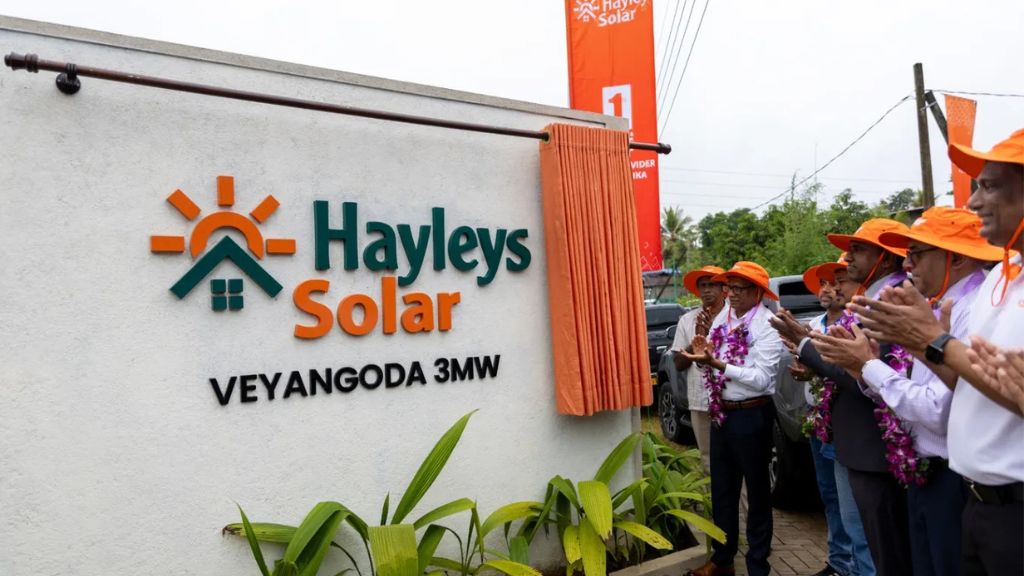
Hayleys Solar opens 3MW Veyangoda plant, marking the first project in its planned 300MW portfolio of ground-mounted solar facilities across Sri Lanka and introducing a climate-resilient approach to renewable energy development.
The 3MW facility combines flood-resilient design, solar generation and agrivoltaic cultivation.
The 3MW Veyangoda Ground-Mounted Solar Project was commissioned at an opening attended by Energy Minister Anura Karunathilake. Developed by Hayleys Solar, the facility combines large-scale solar generation with an elevated mounting structure designed to address flood risks and support more efficient land utilisation.
The project has an installed DC capacity of 4,143.36 kWp and an AC capacity of 3MW. It uses 640W bifacial solar panels, a technology that can capture sunlight from both sides of the panel and improve energy generation by making use of direct and reflected light.
The facility is expected to generate approximately 6,351,770.88 kilowatt-hours of electricity annually. According to the project’s stated estimates, this output is sufficient to power around 2,700 households. It is also expected to avoid approximately 4,339.53 tonnes of carbon dioxide emissions each year, supporting Sri Lanka’s broader transition towards lower-carbon energy generation.
Located adjacent to the Aththanagalla Oya, the Veyangoda plant has been designed with the environmental conditions of its location in mind. Rather than relying on a conventional ground-mounted configuration, the project uses an elevated mounting structure with approximately 2.7 metres of clearance beneath the panels.
The elevated design was developed to withstand flooding, using historical data from the Irrigation Department to inform the engineering approach. This feature is particularly relevant for renewable energy infrastructure located near waterways, where extreme weather and changing rainfall patterns can create operational and maintenance challenges.
The project also introduces an agrivoltaic initiative, allowing agricultural cultivation beneath the elevated solar panels. Vegetables including Scotch bonnet pepper and brinjal are planned to be grown in the available space. Agrivoltaics refers to the combined use of land for solar energy generation and agriculture, creating an opportunity to support food production while generating renewable electricity.
This approach reflects a broader shift in solar project development, where land use, environmental resilience and energy production are increasingly considered together. By raising the panels above ground level, the project creates space for cultivation while maintaining the primary function of the site as a solar power facility.
Hayleys Fentons Limited Managing Director Hasith Prematillake said the project demonstrates the potential of climate-resilient engineering and innovative land utilisation. His comments highlight the intention to develop renewable energy infrastructure that responds not only to electricity demand but also to the environmental conditions in which such projects operate.
Deputy Managing Director – Energy Roshane Perera said the elevated design improves flood resilience while enhancing airflow around the panels. He also noted that the use of bifacial technology allows the project to benefit from reflected sunlight, supporting the efficiency of the installation.
The Veyangoda project represents the first step in Hayleys Solar’s planned 300MW portfolio of ground-mounted solar projects across Sri Lanka. While the commissioning of a single 3MW facility is relatively modest in comparison with the proposed portfolio, it establishes a practical example of how future projects could incorporate site-specific engineering and multiple-use land strategies.
Sri Lanka’s renewable energy expansion is expected to require investment in generation capacity, grid infrastructure and technologies capable of operating reliably under local environmental conditions. Ground-mounted solar projects can contribute to this effort by adding utility-scale generation capacity, while innovations such as elevated structures and agrivoltaic cultivation may help address land-use and climate-related considerations.
The Veyangoda facility therefore combines three elements: renewable electricity generation, flood-resilient infrastructure and agricultural land utilisation. Its annual generation target and projected emissions reduction demonstrate the energy and environmental benefits of the installation, while its design offers a model for considering resilience in future solar developments.
As Hayleys Solar advances its wider ground-mounted solar portfolio, the Veyangoda project provides an early indication of how the company intends to combine renewable energy investment with engineering solutions tailored to Sri Lanka’s geographic and climatic conditions.