

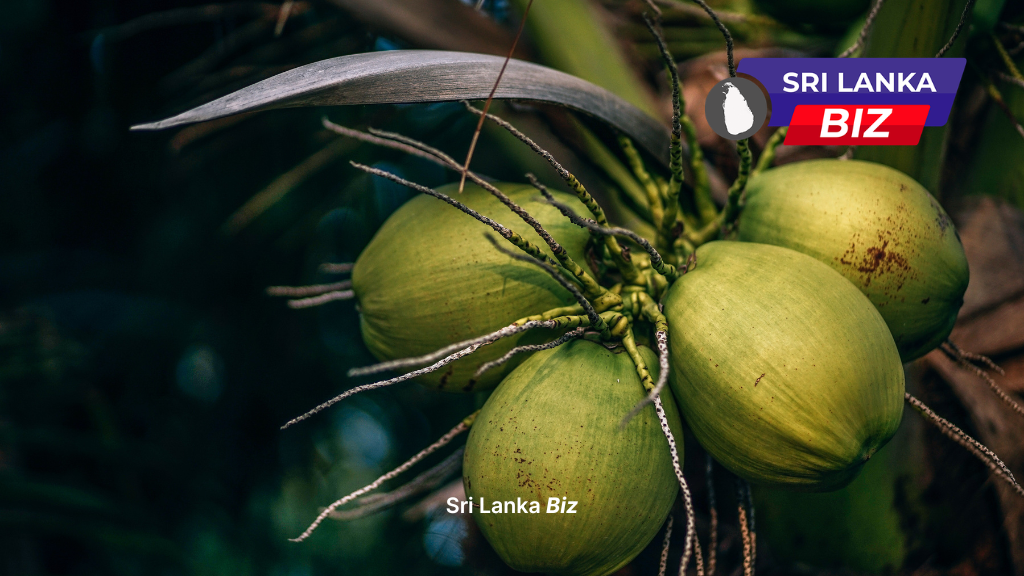
Sri Lanka’s king coconut export industry is set for expansion, with the Government targeting more than US$12 million in additional export revenue by 2030 through increased cultivation, value addition and a nationwide village development programme.
Sri Lanka plans to expand king coconut export revenue through a national village programme
Sri Lanka is stepping up efforts to develop its king coconut industry as a higher-value agricultural export, with the Government launching the ‘Ceylon King Coconut Village’ national programme to expand production, strengthen the supply chain and create new opportunities for rural communities.
The programme, launched on 2 September by the Ministry of Plantation and Community Infrastructure at the Mahayaya Estate premises of the Coconut Cultivation Board in Kurunegala District, aims to increase the country’s annual king coconut production by 25 million nuts by 2030.
The Government also expects the initiative to generate more than US$12 million in additional export revenue from king coconut and related products, reflecting a broader push to move beyond the export of raw agricultural commodities and develop greater value-added opportunities.
Plantation and Community Infrastructure Minister Samantha Vidyarathna said the sector had already recorded growth in recent years. According to figures cited at a media briefing held at the Department of Government Information, king coconut export revenue increased from US$6.75 million in 2024 to US$8.48 million in 2025.
Exports also increased during the same period, rising from around eight million nuts in 2024 to more than nine million nuts in 2025.
The Government now intends to take that growth further, with a target of exporting 25 million king coconuts by 2030 through value addition. The strategy is intended not only to increase the volume of exports but also to improve the economic return generated from Sri Lanka’s distinctive king coconut variety.
A central component of the programme will be the establishment of 250 king coconut villages across the country over a three-year period. The Government plans to establish 75 villages in 2026, followed by 80 in 2027 and another 95 in 2028.
The cultivation programme is expected to significantly expand the availability of raw material for the industry. In 2026 alone, plans call for the rehabilitation of 20,300 existing king coconut trees and the planting of 37,500 new seedlings.
Between 2026 and 2028, the programme is expected to support the planting of approximately 212,500 new seedlings while rehabilitating around 221,500 existing trees. This expansion is designed to create a stronger production base capable of supporting both domestic processing and export growth.
Financial assistance is also being introduced to encourage farmers to participate. Under the programme, farmers will receive a Rs.700 subsidy for the rehabilitation of an existing king coconut tree. New seedlings valued at Rs.750 will be provided to farmers at a subsidised price of Rs.150.
The focus on farmers is significant because the Government sees the initiative as more than an export promotion programme. It is also intended to strengthen rural livelihoods by creating additional income and employment opportunities across the king coconut supply chain.
Approximately 21,250 family units involved in cultivation, collection, transportation, processing and export are expected to become direct participants in the programme. A stronger supply chain could therefore provide benefits beyond growers, extending to small-scale collectors, transport operators, processors and exporters.
The development of the Sri Lanka king coconut sector will also involve improving industry organisation and information systems. The programme plans to establish a formal database covering king coconut growers, collectors and exporters, providing the authorities with a clearer picture of the sector and its participants.
Irrigation infrastructure is another area identified for development. Plans include providing irrigation facilities for 500 acres of king coconut cultivation, helping address one of the key requirements for maintaining reliable agricultural production and supporting the expansion of cultivated areas.
For Sri Lanka, the longer-term opportunity lies in combining higher production with value-added processing and stronger market access. Rather than relying solely on increased nut volumes, the industry could potentially capture greater export value through processed and branded king coconut products.
The Government’s 2030 targets therefore represent an attempt to build a more integrated king coconut industry, linking farmers with collection, transportation, processing and export activities.
If implemented as planned, the Ceylon King Coconut Village programme could give Sri Lanka’s king coconut industry a larger role in agricultural exports while creating new economic opportunities in rural areas. The challenge will be translating the planned expansion in cultivation into consistent quality, reliable supply and competitive value-added products for international markets.
With production, infrastructure, farmer support and export development being pursued together, the programme places king coconut among the agricultural products Sri Lanka hopes can contribute more significantly to export earnings and rural economic growth by 2030.