

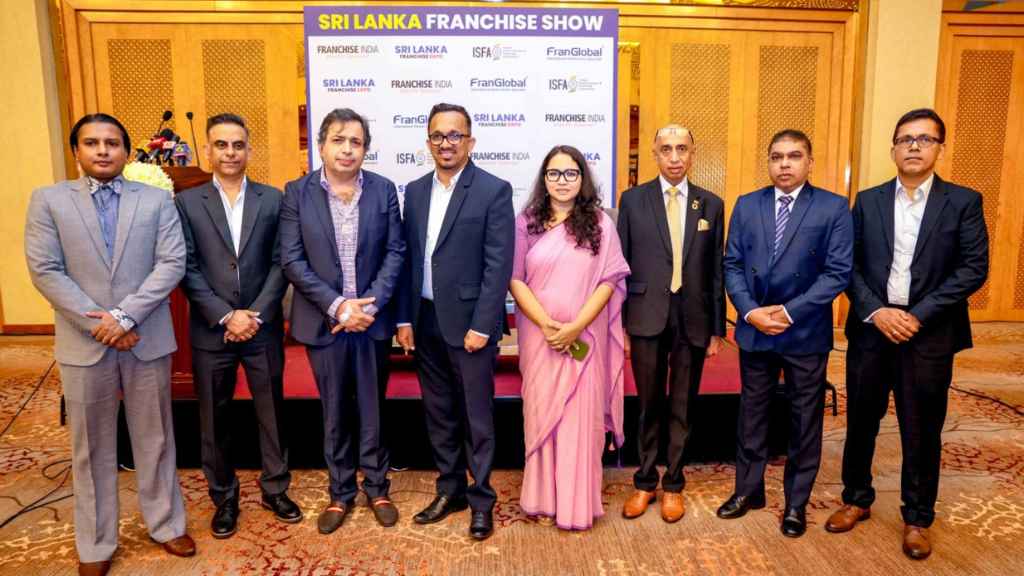
Sri Lanka franchise growth captured global attention at the 2026 Franchise Expo, drawing international brands eager to tap into the island’s strategic market. Delegates highlighted opportunities for scalable investment, structured expansion, and enhanced economic collaboration.
International brands explore Sri Lanka franchise opportunities amid rising investor confidence
Sri Lanka’s franchise sector emerged as a focal point for international investors during the Sri Lanka Franchise Expo 2026, held on February 14 at Colombo’s Marino Beach Hotel. The event showcased the island’s potential as South Asia’s strategically positioned franchise hub, attracting more than a dozen global brands exploring expansion possibilities.
A notable highlight included the partnership agreement between Franglobal and Fat Crab, a division of Don Stanley Holdings. This collaboration targets southern India’s seafood-rich markets, with plans to launch 25 outlets across India by 2028, and subsequent expansion into Southeast Asia and the Middle East. Such agreements underscore the attractiveness of franchising as a growth pathway in Sri Lanka and the wider region.
The Expo brought together franchise principals from Europe, Asia, and the Middle East, alongside local entrepreneurs and investors seeking proven business models. In a market where traditional startups carry elevated risks, franchising offers a structured route for business growth and scalability.
Minister Sunil Handunneththi, Minister of Industry and Entrepreneurship Development, inaugurated the event, emphasizing the strategic value of franchise development. “Franchising is not merely a business model; it’s a vehicle for economic growth, innovation, employment generation, and SME development. This event represents an opportunity to deepen economic and commercial ties between Sri Lanka and India,” he said.
Devika Lal, Counsellor and Head of Economic and Commercial Wing at India’s High Commission, reinforced the message, citing the robust economic interconnection between India and Sri Lanka. She highlighted India’s role as Sri Lanka’s largest trading partner, second-largest export market, and a major source of foreign direct investment (FDI) and tourism. Events like the Franchise Expo, she noted, serve as critical platforms for fostering bilateral commercial cooperation.
The Expo enjoyed support from six prominent chambers and industry associations, including the Indo-Lanka Chamber of Commerce, Ceylon National Chamber of Industries, International Chamber of Commerce Sri Lanka, Colombo Chamber of Commerce, Federation of Chambers of Commerce and Industry of Sri Lanka, and the Indian Small Business & Franchise Association. This convergence signals broad institutional recognition of franchising as an economic multiplier capable of generating employment, promoting formalized business practices, and enhancing investor confidence.
International participants spanned sectors such as coffee retail, fitness, professional services, and quick-service restaurants. Brands present included Stellarossa, EasyGym, Coffeeshop Company, Action Coach, U Clean, Blenz Coffee, Tea Avenue, Impasti Pizza, Burgertory, Figaro’s Pizza, Barcelos, Yogurt Factory, and Orane International. Observers noted that these sectors are experiencing accelerated growth in Sri Lanka’s urban corridors, supported by rising disposable incomes and post-pandemic commercial activity.
Gaurav Marya, Chairman of Franchise India Group, remarked on the island’s evolving market dynamics: “What distinguishes Sri Lanka isn’t just recovery metrics—it’s the caliber of entrepreneurs approaching franchise opportunities. Business operators here combine capital discipline, international exposure, and structured scaling plans, a combination rarely found in emerging markets.”
Several factors drive this heightened franchisor interest. Sri Lanka’s population of 22 million exhibits concentrated urban purchasing power. Its geographic location between India and Southeast Asia offers logistical and strategic advantages. The country’s legal frameworks for intellectual property and contract enforcement meet global standards. Moreover, recovering tourism is boosting foot traffic in commercial districts, while the local business community increasingly favors structured operational systems over speculative ventures.
From the franchisee’s perspective, the advantages are clear. In markets with limited credit access and high business mortality, adopting validated operating models reduces risk while offering brand recognition and established supplier relationships. Franchising allows investors to scale operations efficiently without proportionally increasing managerial complexity, a significant benefit in relationship-driven business cultures.
The Ministry of Industry and Entrepreneurship Development’s active participation underscores the government’s recognition of franchising as a tool for formalizing business practices, promoting SME growth, and generating employment. Alignment between private sector enthusiasm and public policy provides a foundation for sustained economic development, rather than episodic growth driven solely by market forces.
Following initial dialogue at the April 2025 Global Franchise Forum, the 2026 Expo illustrates how exploratory discussions have matured into concrete partnership negotiations within ten months. This momentum suggests that Sri Lanka’s franchise sector is poised for continued international engagement, offering structured growth avenues for investors and reinforcing the island’s reputation as a strategic business destination in South Asia.