

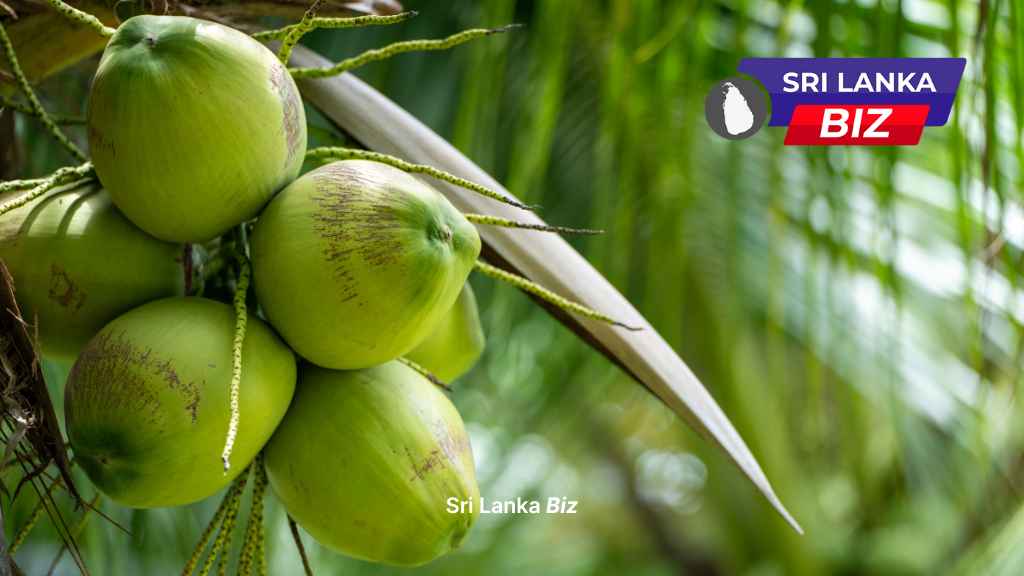
Sri Lanka coconut export revenue crossed the one-billion-dollar mark in the first ten months of 2025, driven by strong global demand for value-added coconut products and a strategic shift away from raw commodity exports, according to official data.
Sri Lanka coconut export revenue surges on strong value-added product demand
Sri Lanka coconut export revenue has achieved a significant milestone, surpassing USD 1 billion during the January to October period of 2025, underscoring the growing strength of the island’s value-added agricultural exports. According to the Ministry of Industry and Entrepreneurship Development, earnings from coconut and coconut-based products reached USD 1,033.9 million during the ten-month period, reflecting a sharp 43.83 percent increase compared to the corresponding period in 2024.
The Ministry, citing data from the Export Development Board, said the growth highlights a structural transformation in the coconut industry, where exporters are increasingly prioritizing processed and diversified products over raw coconut shipments. Officials described the achievement as particularly notable given the broader economic challenges Sri Lanka has faced in recent years, including currency volatility, supply disruptions, and climate-related risks affecting agricultural output.
Deputy Minister Chathuranga Abeysinghe’s office emphasized that the export performance reflects a deliberate policy focus on value addition. Instead of relying solely on traditional coconut exports, producers have expanded into higher-margin segments that cater to evolving global consumption patterns. This shift has allowed the sector to generate stronger foreign exchange inflows while improving resilience against price fluctuations in raw commodities.
A surge in international demand for products such as liquid coconut milk, virgin coconut oil, coconut cream, desiccated coconut, activated carbon, and coco peat has been a key driver of revenue growth. These products are widely used across food and beverage, cosmetics, pharmaceuticals, water purification, and horticulture industries, positioning Sri Lanka as a diversified supplier rather than a single-product exporter.
Industry analysts note that Sri Lanka has benefited from rising global interest in plant-based and natural products, particularly in health-conscious and environmentally aware markets. Coconut-based ingredients are increasingly favored for their perceived nutritional benefits, versatility, and sustainability credentials, creating sustained demand in both developed and emerging economies.
At present, coconut-based products account for approximately 7.2 percent of Sri Lanka’s total exports, making the sector one of the country’s most valuable agricultural foreign exchange earners. Alongside tea, rubber products, and apparel, coconut exports play a crucial role in stabilizing export revenues and supporting rural livelihoods, particularly in coconut-growing regions.
The strong performance of Sri Lanka coconut export revenue also reflects improvements in processing capacity, product quality, and compliance with international standards. Exporters have invested in modern manufacturing facilities, certification processes, and branding initiatives to access premium markets. These efforts have helped Sri Lankan coconut products command better prices and expand their footprint in competitive global supply chains.
Despite the positive momentum, challenges remain. Industry stakeholders continue to flag concerns related to raw material supply constraints, climate variability, and rising production costs. Ensuring consistent coconut output while maintaining quality standards will be critical if export growth is to be sustained over the long term. Policymakers have acknowledged these risks and indicated that productivity enhancement and farmer support programs will be essential to future expansion.
Looking ahead, the Ministry has set an ambitious target of increasing coconut export earnings to USD 2.5 billion by 2030. Achieving this goal will require further diversification into innovative coconut-based products, deeper market penetration, and stronger collaboration between growers, processors, and exporters. Expanding value chains and encouraging research-driven product development are expected to be central to this strategy.
The milestone reached in 2025 signals that Sri Lanka’s coconut industry is moving beyond its traditional role and evolving into a modern, export-oriented sector. With continued policy support and private-sector investment, Sri Lanka coconut export revenue is well positioned to become a major pillar of the country’s long-term export growth and economic recovery.