

Sri Lanka Central Highlands protection has emerged as a national priority after the government acknowledged serious institutional gaps that slowed post-disaster recovery, prompting plans for a unified policy framework and a dedicated authority to safeguard the ecologically sensitive region.
Sri Lanka Central Highlands protection plan to unify agencies after cyclone
Sri Lanka is moving toward a comprehensive national strategy to safeguard its Central Highlands after weaknesses in institutional coordination hampered recovery efforts following Cyclone Ditwah, President Anura Kumara Dissanayake has said. The remarks underscore growing concern over environmental governance in one of the country’s most fragile and economically significant regions.
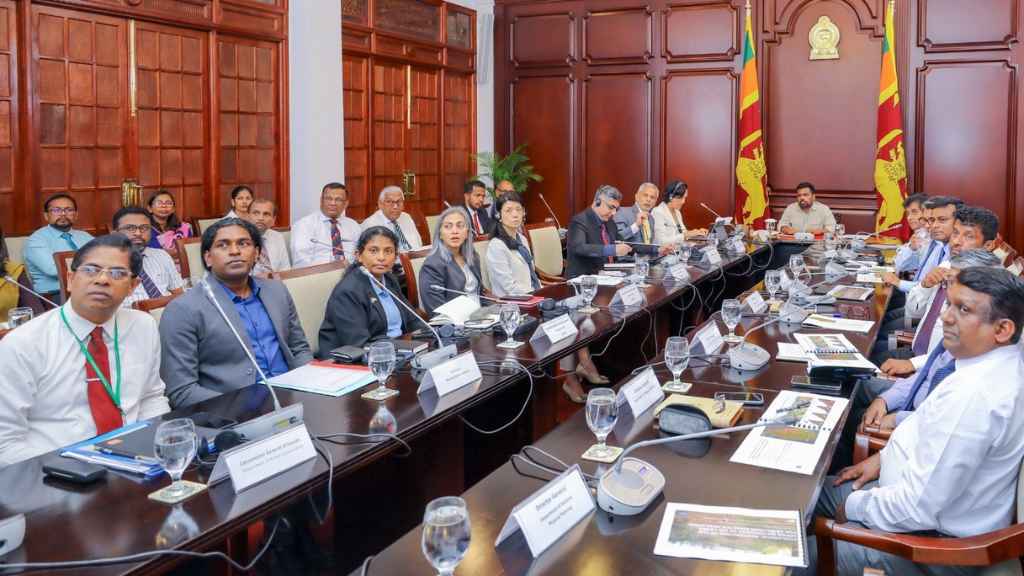
Speaking at a high-level meeting with representatives from the Asian Development Bank, the United Nations Development Programme, and both public and private sector institutions, the President highlighted how fragmented responsibilities across construction, land use, agriculture, livestock management, and conservation agencies undermined effective disaster response. He noted that overlapping mandates and gaps in accountability delayed rehabilitation work and increased environmental risks.
According to a statement issued by the President’s Media Division, efforts are now underway to establish a new integrated framework that brings all relevant stakeholders under a coordinated mechanism. The proposed framework is intended to accelerate protection measures and reconstruction activities while ensuring long-term environmental sustainability across the Central Highlands.
The discussions placed particular emphasis on the need for a clear national policy to secure the region, which is recognised both locally and internationally for its biodiversity, water catchments, and agricultural importance. The Central Highlands play a vital role in regulating water supply to downstream communities and supporting plantation agriculture, making their protection a matter of national economic stability as well as environmental security.
Officials present at the meeting stressed that the absence of a unified policy has historically allowed inconsistent land use practices and unregulated development to take root. These pressures, combined with extreme weather events, have intensified soil erosion, landslides, and ecosystem degradation. The President acknowledged these concerns and called for swift action to prevent further damage.
A key proposal emerging from the discussions was the establishment of a dedicated authority, empowered through appropriate legislation, to oversee conservation, development controls, and recovery initiatives in the Central Highlands. Such an authority would be responsible for coordinating institutions, enforcing standards, and monitoring compliance across sectors that currently operate in silos.
President Dissanayake instructed officials to expedite the implementation process, signalling a sense of urgency in translating policy discussions into operational outcomes. Observers say the move reflects broader efforts by the administration to strengthen institutional coherence and improve disaster preparedness in environmentally sensitive zones.
Representatives from ADB and UNDP also underscored the importance of sustainable financing to support these initiatives. They pointed out that without a dedicated financial fund, long-term protection and rehabilitation efforts risk being undermined by budgetary constraints and shifting priorities. Establishing a ring-fenced funding mechanism, they said, would help ensure continuity and credibility for the proposed reforms.
Development partners have increasingly emphasised integrated environmental governance as climate-related risks intensify across South Asia. In Sri Lanka, the Central Highlands have been repeatedly affected by extreme rainfall, landslides, and flooding, highlighting the need for coordinated planning that links conservation with infrastructure development and community livelihoods.
Analysts note that stronger oversight could also improve investor and donor confidence in climate adaptation projects, particularly those tied to watershed management, sustainable agriculture, and disaster risk reduction. A clearly defined authority and policy framework may help streamline approvals, reduce duplication, and improve accountability across government agencies.
While the proposed reforms remain at an early stage, the emphasis on Sri Lanka Central Highlands protection marks a shift toward more structured environmental management. The success of the initiative will depend on how effectively legislation is drafted, institutions are aligned, and financial resources are mobilised.
As climate pressures mount, the government’s ability to move from policy intent to implementation will be closely watched. For communities living in and around the Central Highlands, timely action could prove decisive in safeguarding livelihoods, ecosystems, and long-term resilience.