

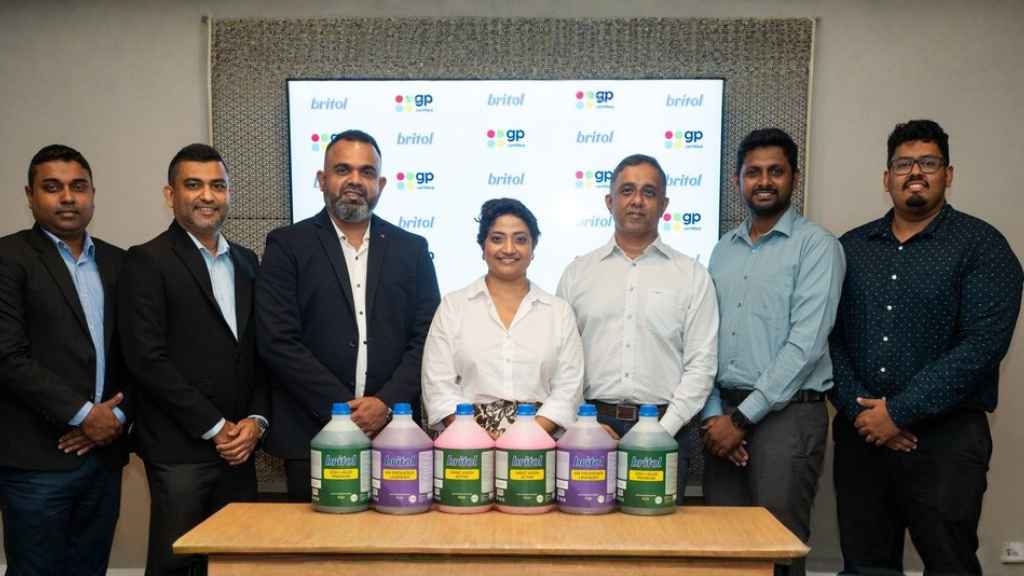
Britol and GP Certified introduce certified recycled plastics in FMCG packaging, marking a major shift in Sri Lanka’s manufacturing sector toward sustainable production and reduced reliance on imported virgin plastic materials.
Britol and GP Certified introduce certified recycled plastics in FMCG packaging
Britol and GP Certified introduce certified recycled plastics in FMCG packaging, signalling a structural shift in how consumer goods are manufactured in Sri Lanka, with a growing emphasis on sustainability, circular economy practices, and local value creation.
The initiative, led by Antler Group of Companies in partnership with GP Certified, integrates certified recycled plastics into large-scale production processes. The move represents a notable departure from the longstanding reliance on imported virgin plastics, which have traditionally dominated packaging across the fast-moving consumer goods sector.
In Sri Lanka, most FMCG products—from personal care items to household cleaning solutions—are packaged using single-use plastic derived from imported raw materials. This linear consumption model has contributed to mounting environmental concerns, particularly in relation to plastic waste and its impact on ecosystems. By contrast, the adoption of certified recycled plastics introduces a circular approach, where materials are reused, reducing waste and dependence on imports.
Under this initiative, up to 40 percent of virgin plastic used in selected Britol products will be replaced with locally sourced, GP Certified recycled plastics. This transition not only reduces environmental impact but also supports domestic recycling industries, creating economic opportunities and strengthening supply chains within the country.
Ashani Jayasinghe, Chairman of the Antler Group of Companies, highlighted that sustainability has been a guiding principle for the organisation over several decades. He noted that the integration of certified recycled plastics aligns with a broader vision of fostering environmentally responsible manufacturing practices while enabling industry-wide participation in sustainable systems.
The initiative also intersects with the emerging regulatory framework around Extended Producer Responsibility (EPR), which is gaining traction in Sri Lanka. EPR policies require manufacturers to take accountability for the lifecycle of their products, particularly in managing post-consumer waste. By incorporating certified recycled materials, companies can move toward compliance while also demonstrating measurable progress in sustainability.
Chaminda Rajapakse, Managing Director of GP Certified, described the collaboration as a critical step in mainstreaming recycled plastics within the FMCG sector. He emphasised that the certification process ensures traceability, accountability, and quality assurance, enabling brands to meet regulatory obligations without relying on less sustainable alternatives such as offsets or non-circular disposal methods.
The concept of Sri Lanka sustainable packaging is gaining increasing relevance as both consumers and regulators place greater emphasis on environmental responsibility. Initiatives such as this contribute to building a credible ecosystem where manufacturers, recyclers, and policymakers collaborate to close the loop on plastic use.
From an economic perspective, the shift toward locally recycled materials also reduces exposure to global price volatility associated with imported raw materials. It encourages investment in recycling infrastructure and supports job creation within the domestic waste management and processing sectors. Over time, such developments can contribute to a more resilient and self-sufficient industrial base.
The collaboration was supported by the Plastic Free Rivers and Seas for South Asia (PLEASE) Project, funded by the World Bank and implemented by the South Asia Co-operative Environment Programme. This backing underscores the broader regional importance of addressing plastic pollution and promoting sustainable manufacturing practices.
Industry analysts note that the adoption of certified recycled plastics could set a precedent for other FMCG manufacturers in Sri Lanka, particularly as regulatory pressures intensify and consumer awareness grows. Companies that proactively transition to sustainable materials are likely to gain competitive advantages, both in terms of brand perception and compliance readiness.
At the same time, the initiative highlights the importance of certification systems in ensuring the credibility of recycled materials. Without robust verification mechanisms, concerns around quality and safety can hinder adoption. GP Certified’s framework addresses these challenges by providing a transparent and accountable system that links producers with certified recyclers.
Britol and GP Certified introduce certified recycled plastics at a time when global supply chains are increasingly prioritising sustainability metrics. For Sri Lanka, this shift represents an opportunity to align with international standards while addressing local environmental challenges.
The move also reflects a broader transformation within the FMCG sector, where sustainability is no longer a peripheral concern but a core business strategy. As companies seek to balance profitability with environmental responsibility, innovations in materials and production processes are becoming central to long-term growth.
Britol and GP Certified introduce certified recycled plastics in FMCG packaging as part of a wider effort to redefine industry norms, demonstrating that sustainable practices can be both commercially viable and environmentally impactful. The initiative sets a benchmark for future developments, reinforcing the role of collaboration in driving systemic change across the manufacturing landscape.