

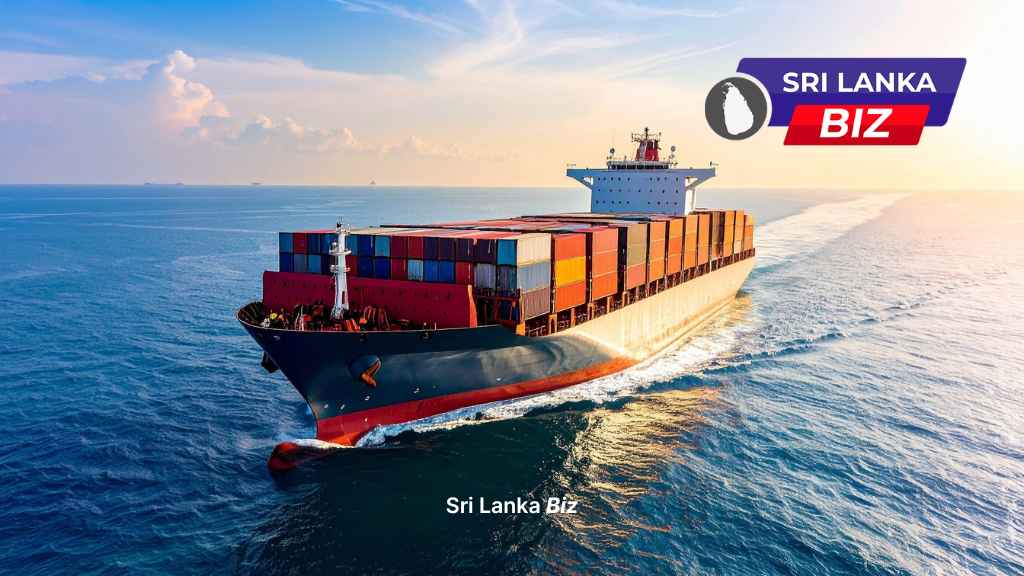
Sri Lanka’s Hambantota Port expands capacity as transshipment volumes increase, highlighting the port’s growing strategic role in global shipping as rerouted maritime traffic boosts demand for logistics and handling infrastructure.
Sri Lanka’s Hambantota Port expands capacity as transshipment volumes increase amid global shifts
Sri Lanka’s Hambantota International Port (HIP) has significantly enhanced its operational capabilities to manage a surge in global shipping volumes, driven in part by disruptions linked to geopolitical tensions in West Asia. The port operator confirmed that container yard capacity has been increased by 30 percent, while Roll-On/Roll-Off (RoRo) yard capacity has doubled to accommodate rising vehicle transshipment volumes.
The expansion comes at a time when global shipping routes are undergoing structural adjustments. According to HIP Chief Executive Officer Wilson Qu, the current shift reflects a broader transformation in maritime logistics. He noted that the port has prioritized both capacity building and operational flexibility to respond effectively to evolving trade patterns.
Yard utilisation at the port has reached the highest levels in its history, underscoring the scale of increased activity. The growth has been particularly evident in vehicle transshipment and container handling, both of which have seen notable gains in recent months. Port authorities said that rapid expansion of yard space across cargo segments has enabled HIP to manage higher throughput without compromising efficiency or causing congestion.
The Sri Lanka’s Hambantota Port expands capacity as transshipment volumes increase development also signals the port’s rising importance within global supply chains. Located just 10 nautical miles from the main East-West shipping route, Hambantota offers a geographically advantageous position that allows vessels to divert with minimal disruption to schedules. This proximity has become increasingly valuable as shipping lines seek alternative routes amid ongoing geopolitical uncertainties.
Industry analysts observe that ports capable of adapting quickly to shifting trade flows are likely to gain a competitive edge. In this context, Sri Lanka’s Hambantota Port has positioned itself as a key transshipment hub, particularly for vehicle logistics. The doubling of RoRo capacity is expected to support continued growth in automobile transshipment, a segment that has shown resilience even during periods of global volatility.
At the same time, the increase in container yard capacity aligns with broader trends in regional trade. As shipping volumes rise, ports must scale their infrastructure to handle larger cargo loads efficiently. HIP’s expansion reflects a proactive approach to these demands, ensuring that operational bottlenecks are minimized even as volumes increase.
The impact of external geopolitical developments has been a significant driver of recent changes in shipping patterns. The ongoing conflict involving the United States, Israel, and Iran has led to rerouting of vessels, with some shipping lines opting for alternative pathways to mitigate risks. This has created opportunities for strategically located ports like Hambantota to capture additional traffic.
In this evolving landscape, the Sri Lanka’s Hambantota Port expands capacity as transshipment volumes increase milestone underscores the country’s potential to strengthen its position in global maritime trade. By enhancing infrastructure and improving operational efficiency, the port is better equipped to serve as a reliable node in international logistics networks.
Market observers also point out that sustained growth will depend on maintaining service quality and operational reliability. As competition among regional ports intensifies, efficiency, turnaround time, and cost competitiveness will remain critical factors in attracting and retaining shipping lines.
Furthermore, the expansion is likely to have positive spillover effects on the broader economy. Increased port activity can drive growth in related sectors such as logistics, transportation, and warehousing, contributing to employment generation and foreign exchange earnings.
Looking ahead, the outlook for Sri Lanka’s Hambantota Port appears favorable, provided that global trade volumes remain robust and geopolitical conditions continue to influence shipping routes. The port’s strategic investments in capacity expansion and operational agility position it well to capitalize on these trends.
Overall, the latest developments reflect a dynamic shift in global shipping, with Sri Lanka emerging as an increasingly relevant player. The continued rise in transshipment volumes, supported by infrastructure upgrades, signals a strengthening of the country’s role in international maritime trade.