

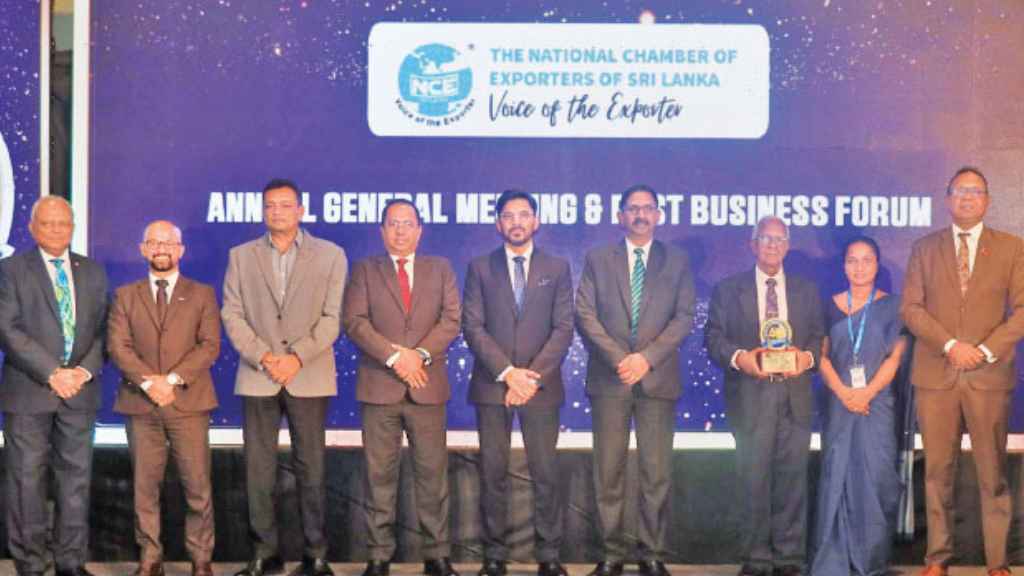
Sri Lanka Ethical Trading Certification marks a significant upgrade with SLAB endorsement, strengthening exporter credibility and global competitiveness. The initiative signals a sharper focus on compliance, sustainability, and responsible business practices across the export sector.
Sri Lanka Ethical Trading Certification gains SLAB endorsement for exporters
The Sri Lanka Ethical Trading Certification has entered a new phase of formal recognition following its endorsement by the Sri Lanka Accreditation Board (SLAB), a move that is expected to reshape how local exporters position themselves in international markets. Introduced initially by the National Chamber of Exporters of Sri Lanka (NCE) in 2019, the certification has now evolved into a nationally accredited framework aimed at strengthening ethical compliance and trade credibility.
Announced at the NCE’s 40th Anniversary celebration and Annual General Meeting, the upgraded certification reflects growing global pressure on exporters to go beyond price competitiveness and demonstrate strong governance, sustainability, and responsible labour practices. With the SLAB endorsement, the Sri Lanka Ethical Trading Certification now carries enhanced institutional weight, improving its acceptance among international buyers and trade partners.
At its core, the certification was developed in response to a clear shift in global procurement standards. Exporters increasingly face scrutiny not only on product quality and pricing but also on how businesses operate internally. Issues such as worker welfare, environmental responsibility, and corporate governance have become central to supply chain decisions in major markets.
NCE President Indhra Kaushal Rajapaksa noted that the upgraded certification aligns Sri Lanka’s export ecosystem with these evolving expectations. He emphasized that the Sri Lanka Ethical Trading Certification is not merely a compliance tool but a strategic instrument to position Sri Lanka as a trusted sourcing destination.
“In today’s highly competitive and conscious global marketplace, ethical compliance is no longer optional. It is a critical requirement,” he stated. “This certification empowers exporters to demonstrate transparency, sustainability, and responsible business practices, enhancing their international competitiveness.”
The SLAB endorsement adds a formal accreditation layer that strengthens the certification’s credibility. It also signals a broader institutional commitment to embedding ethical standards within Sri Lanka’s export framework, particularly at a time when global buyers are increasingly prioritizing ESG-aligned sourcing decisions.
According to NCE CEO and Secretary General S. Marikar, the initiative emerged from practical challenges faced by exporters in global markets. While Sri Lankan products have remained competitive in terms of pricing and quality, buyers have increasingly demanded deeper visibility into operational practices.
He explained that international procurement assessments now frequently include governance audits, labour condition reviews, and environmental impact evaluations. In response to these shifts, the Sri Lanka Ethical Trading Certification was introduced in 2019 to bridge the gap between market expectations and exporter readiness.
Initially limited to NCE member companies, the certification framework was designed based on internationally accepted ethical trading principles. It incorporates standards relating to corporate governance, sustainability practices, labour rights, and environmental protection. Over time, participation and interest from exporters have exceeded initial expectations, reinforcing its relevance in the sector.
Marikar also highlighted that the NCE remains the only private sector chamber in Sri Lanka to develop and implement a structured ethical trading certification programme of this nature. With the SLAB endorsement, the initiative now transitions from a chamber-led framework to a nationally recognized accreditation system.
The Sri Lanka Ethical Trading Certification is also expected to play a role in strengthening investor and buyer confidence at a time when global supply chains are becoming more risk-sensitive. Companies that adopt the certification are likely to benefit from improved market access, particularly in regions where compliance-driven procurement is becoming standard practice.
Support for the initiative is further reinforced through partnerships with Colombo West International Terminal (CWIT) and Sampath Bank, both of which contribute to strengthening the operational and financial ecosystem around exporters. These collaborations are expected to improve awareness and uptake of the certification across different export sectors.
Industry observers note that the certification could become increasingly relevant as global trade policies continue to shift toward sustainability-linked frameworks. In this context, Sri Lanka’s exporters are being encouraged to adopt structured compliance systems that align with international expectations rather than reacting to them retrospectively.
The introduction of SLAB endorsement is also seen as a step toward institutionalizing ethical trade practices within national export policy. It reflects a broader attempt to formalize standards that were previously voluntary, ensuring consistency and accountability across participating companies.
For exporters, the practical implications are significant. The certification provides a structured mechanism to demonstrate compliance during buyer evaluations, audits, and tender processes. It also reduces reputational risk by ensuring that ethical and environmental standards are independently assessed and verified.
As global supply chains continue to evolve, the Sri Lanka Ethical Trading Certification is expected to serve as a key differentiator for exporters seeking to move up the value chain. With increasing emphasis on transparency and sustainability, certified companies may find stronger positioning in high-value markets where ethical sourcing is a prerequisite rather than a preference.
The NCE has indicated that it will continue to expand awareness and adoption of the certification across the export community, with the aim of embedding ethical trade practices more deeply into Sri Lanka’s economic framework. The SLAB endorsement marks a critical milestone in that journey, reinforcing the country’s commitment to responsible and competitive global trade.