

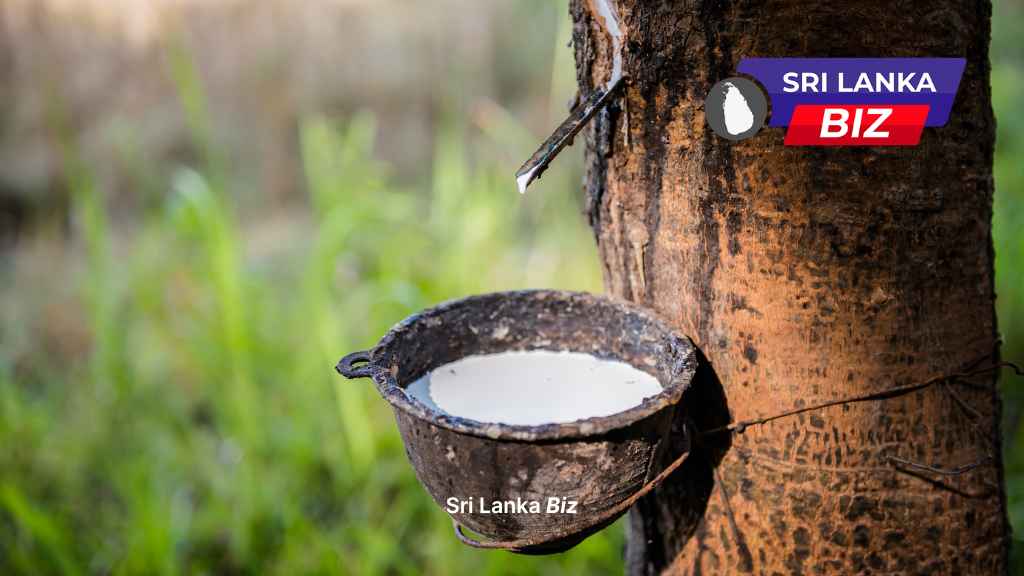
East Asia currency volatility To benefit SL rubber manufacturers as shifting foreign exchange trends across major Asian manufacturing economies continue to create pricing advantages for Sri Lankan exporters in the global rubber products market.
East Asia currency volatility To Benefit SL Rubber Manufacturers amid FX shifts
According to a recent sector report published by First Capital Holdings
, currency movements in major rubber manufacturing countries including Malaysia, Thailand, and China are providing favourable conditions for Sri Lanka’s rubber glove manufacturers and plantation-related companies.
The report, titled Impact of Rising Rubber Prices on Listed Counters, noted that appreciation in regional currencies against the US dollar, combined with the depreciation of the Sri Lankan rupee, has improved the relative competitiveness of Sri Lankan rubber exports in international markets.
Analysts at the research unit stated that foreign exchange movements in the Malaysian Ringgit (MYR), Thai Baht (THB), and Chinese Yuan (CNY) have created significant tailwinds for Sri Lankan exporters operating in the rubber sector. The report highlighted that the MYR, THB, and CNY appreciated by 8.0%, 2.0%, and 6.1%, respectively, against the US dollar over the observed period, while the Sri Lankan rupee weakened by 6.7%.
This divergence in currency performance has effectively made Sri Lankan rubber gloves and related exports relatively more affordable to overseas buyers compared to products manufactured in competing regional markets. As a result, Sri Lanka’s rubber glove manufacturers could experience improved export demand and enhanced market positioning amid continued currency volatility across East Asia.
The report further observed that global rubber futures have continued their upward trajectory, with prices surpassing 216.3 Singapore dollar cents per kilogram, moving closer to a 10-year high. Analysts attributed the rally largely to fluctuations in global oil markets and the relationship between crude oil prices and synthetic rubber production costs.
Natural rubber prices generally move in tandem with crude oil trends because synthetic rubber, a competing product, becomes more expensive when oil prices rise. This dynamic tends to support stronger pricing for natural rubber in global commodity markets.
However, the report also pointed to recent volatility in crude oil markets. Brent crude prices reportedly dropped by more than 10% on Tuesday, falling below the US$100 per barrel mark amid renewed hopes of a diplomatic agreement between the United States and Iran. Market participants believe any easing in geopolitical tensions could stabilise global energy markets and influence commodity pricing trends in the coming months.
Despite short-term fluctuations in oil prices, the outlook for the Sri Lanka rubber industry remains cautiously optimistic, particularly for plantation firms with significant exposure to rubber-related revenue streams. Several listed plantation companies are expected to benefit directly from rising rubber prices and favourable export conditions.
Among the companies identified in the report were Kegalle Plantations PLC, Agalawatte Plantations PLC, Kotagala Plantations PLC, and Horana Plantations PLC. According to the research note, these firms are well positioned to capitalise on the current market environment because the rubber segment contributes approximately 15% or more of their overall revenues.
The report stated that rising rubber prices, coupled with supportive currency movements, could improve earnings prospects for these plantation counters in the near term. Investors have also been closely monitoring commodity-linked stocks as global demand patterns and pricing dynamics continue to evolve.
Industry observers note that Sri Lanka’s rubber sector has been gradually regaining momentum following several years of economic challenges and supply chain disruptions. Improved global demand, stronger commodity prices, and export competitiveness are now contributing to renewed optimism within the sector.
The latest findings reinforce expectations that East Asia currency volatility To benefit SL rubber manufacturers could remain a key theme for the industry over the coming months, especially if regional currencies continue to strengthen against the US dollar while Sri Lanka maintains export pricing competitiveness.