

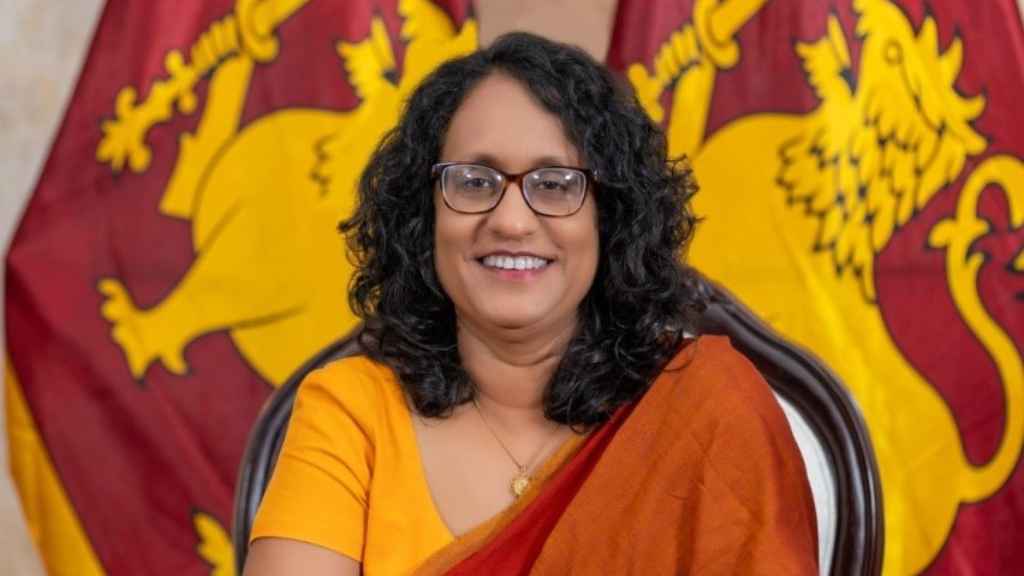
Higher education reforms in the offing were highlighted by the Government as Sri Lanka prepares to introduce wide-ranging changes to universities and early childhood education alongside broader national education reforms.
Higher education reforms in the offing alongside education changes
Prime Minister and Education and Higher Education Minister Harini Amarasuriya stated in Parliament that reforms are being planned to align the higher education sector with ongoing changes in primary and secondary education systems.
Responding to questions raised by Parliamentarian Manjula Sugath Rathnayaka, the Prime Minister explained that a special expert committee appointed by the Government has been working over the past six months to identify challenges affecting the university sector and recommend structural reforms.
According to the Government, the committee’s findings will be used to guide policy decisions aimed at modernising the country’s Sri Lanka higher education framework, improving academic opportunities, and addressing long-standing institutional issues.
The reforms come at a time when demand for university placements continues to rise sharply. Official figures presented in Parliament showed that 281,810 students sat for the 2025 General Certificate of Education Advanced Level Examination, while 176,538 students qualified for university admission.
However, only 42,937 students are expected to gain admission to state universities, highlighting the continuing gap between qualification rates and available higher education opportunities in Sri Lanka.
The breakdown of qualified candidates included 32,935 students in Biological Sciences, 23,012 in Physical Sciences, 39,608 in Commerce, 58,269 in Arts, 4,199 in the General Stream, 12,472 in Engineering Technology, and 6,043 in Bio-Systems Technology.
The Government also announced the introduction of new academic programmes as part of efforts to diversify educational opportunities. University of Ruhuna has introduced a new course in Geographic Information Systems, while University of Peradeniya has launched a programme in Electronic and Intelligent Systems Engineering for the 2025/2026 academic year. Fifty students are expected to be enrolled in each programme.
Officials stated that cut-off marks and registration lists for university admissions are currently being finalised and forwarded to respective universities.
In addition to university sector reforms, the Government also outlined plans for major changes within the preschool education sector. Responding to a question raised by MP K. Kader Masthan, Prime Minister Amarasuriya said a comprehensive reform programme for preschool education is expected to be introduced by 2027.
She explained that most preschools currently operate under private management structures, limiting the Education Ministry’s ability to directly provide permanent appointments or salaries for staff. However, authorities are reportedly working on measures to support volunteer teachers attached to selected Provincial Council preschools through financial allowances.
The proposed preschool education reforms are expected to be implemented jointly by the Education Ministry and the Women and Child Affairs Ministry, with the aim of creating a nationally regulated and standardised early childhood education system.
Government officials stated that a national preschool policy is scheduled to be introduced in 2026 based on recommendations submitted by the National Education Commission. The policy is expected to establish teacher guidelines, model activity manuals, and provincial-level teacher training programmes.
Deputy Education Minister Madhura Seneviratne stated that authorities are also preparing to regulate certificate courses, diplomas, and training programmes related to preschool education qualifications.
According to officials, the move is intended to improve educational standards and ensure quality learning environments for children across the country. Early childhood development centres, including preschools, are also being requested to complete mandatory registration by 1 July.
A source attached to the Women and Child Affairs Ministry noted that regulating preschools remains complex because many institutions currently operate as private businesses registered under different administrative frameworks. Authorities say future regulations will require minimum educational qualifications for teachers as well as safe and child-friendly infrastructure standards.
Deputy Women and Child Affairs Minister Namal Sudarshana explained that registration requirements may vary slightly between provinces because preschools are largely administered through local government institutions and provincial education departments.
Officials further indicated that the Government intends to gradually raise the minimum qualification standard for preschool teachers to diploma level in the future.
Education analysts note that the proposed reforms signal a broader effort by the Government to modernise Sri Lanka’s education system from early childhood to university level. Policymakers are increasingly focusing on improving quality standards, expanding access, strengthening workforce readiness, and aligning education systems with future economic and technological demands.
The latest announcement regarding Higher education reforms in the offing reflects growing pressure on policymakers to address capacity limitations, improve institutional governance, and ensure that Sri Lanka’s education system remains competitive and accessible in the years ahead.