

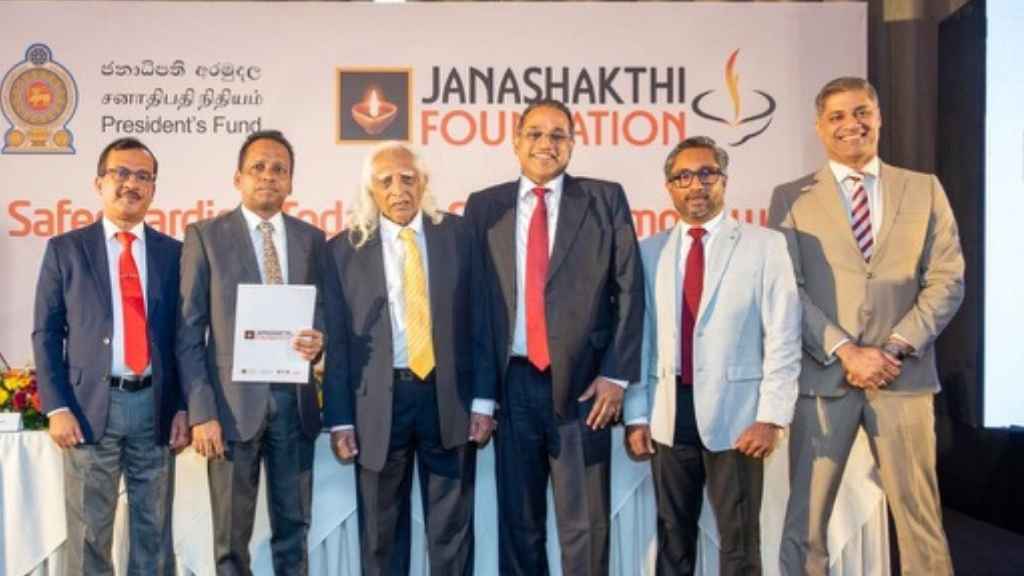
Healthcare for children is set to receive stronger support in Sri Lanka through a new collaboration between the President’s Fund and the Janashakthi Foundation aimed at assisting children under 18 who require critical medical treatment.
Healthcare for children receives boost through new partnership
The initiative, launched under the theme “Safeguarding Today to Shape Tomorrow,” seeks to strengthen financial assistance for vulnerable families by bridging gaps between available public funding and the actual cost of medical care.
According to officials, the partnership will allow the President’s Fund to continue identifying, screening, and approving beneficiaries requiring medical support, while the Janashakthi Foundation provides supplementary financial assistance for approved cases.
The programme has been designed to reduce the financial burden on families struggling to access specialised treatment for children facing serious medical conditions. Under the arrangement, the Foundation will match the amount disbursed by the President’s Fund or provide the remaining balance of the treatment cost, depending on whichever amount is lower.
Officials said the initiative reflects a broader effort to strengthen healthcare for children through public-private sector collaboration at a time when rising medical expenses continue to place pressure on many households.
The partnership also introduces a structured process for handling urgent and overseas medical cases. In situations requiring immediate intervention, payments may be issued before treatment through letters of liability, while other approved cases will be processed through a monthly payment cycle.
Authorities stated that post-treatment reimbursements may also be provided directly to guardians after verification and approval procedures are completed. The mechanism is intended to improve efficiency while ensuring that critically ill children are able to access timely treatment without prolonged financial delays.
The programme specifically targets children under the age of 18 who require medical assistance beyond the level currently covered by the President’s Fund. Officials noted that many families often struggle to meet remaining treatment costs even after receiving Government support, particularly in cases involving specialised surgeries, long-term care, or overseas medical procedures.
Through this collaboration, the President’s Fund aims to expand the reach and effectiveness of its medical assistance programmes while leveraging private sector support to strengthen social welfare delivery.
Applicants seeking additional assistance through the Janashakthi Foundation will be required to complete a designated consent form when submitting their primary application to the President’s Fund. According to programme guidelines, the consent form will authorise the sharing of applicant information with the Foundation as a third-party partner for funding evaluation purposes.
Officials clarified that only applicants who provide consent for data sharing will be eligible to receive supplementary financial support from the Foundation. The process is expected to ensure transparency while maintaining coordination between both institutions involved in the initiative.
The additional funding mechanism will apply to applications submitted to the President’s Fund from 15 May onwards, according to the programme announcement.
The collaboration also reflects the increasing role played by private sector organisations in supporting healthcare and social protection initiatives in Sri Lanka. Corporate foundations and charitable entities have become increasingly active in contributing toward healthcare access, education support, and welfare programmes, particularly during periods of economic strain.
Analysts note that partnerships between Government institutions and private sector organisations can help address funding limitations while improving access to essential services for vulnerable communities. In healthcare, such collaborations are often seen as critical in supporting low-income families facing expensive treatment costs.
The Janashakthi Foundation’s involvement is expected to complement the Government’s existing healthcare assistance framework by providing targeted financial relief to families requiring urgent medical care for children.
Healthcare advocates have repeatedly stressed the importance of ensuring equitable access to treatment for children, particularly in cases where delayed medical intervention can significantly affect long-term health outcomes. Rising healthcare expenses and economic pressures have made financial assistance schemes increasingly important for many Sri Lankan households.
The latest initiative comes amid growing calls for stronger social protection systems capable of supporting families dealing with serious health challenges. Observers say collaborative programmes such as this may also encourage broader private sector participation in public welfare initiatives in the future.
Officials involved in the programme emphasised that the long-term goal is to ensure that financial hardship does not become a barrier preventing children from receiving essential medical treatment.
By combining state welfare mechanisms with private sector contributions, the initiative seeks to create a more sustainable support structure focused on improving healthcare for children and strengthening access to life-saving treatment for vulnerable families across Sri Lanka.