

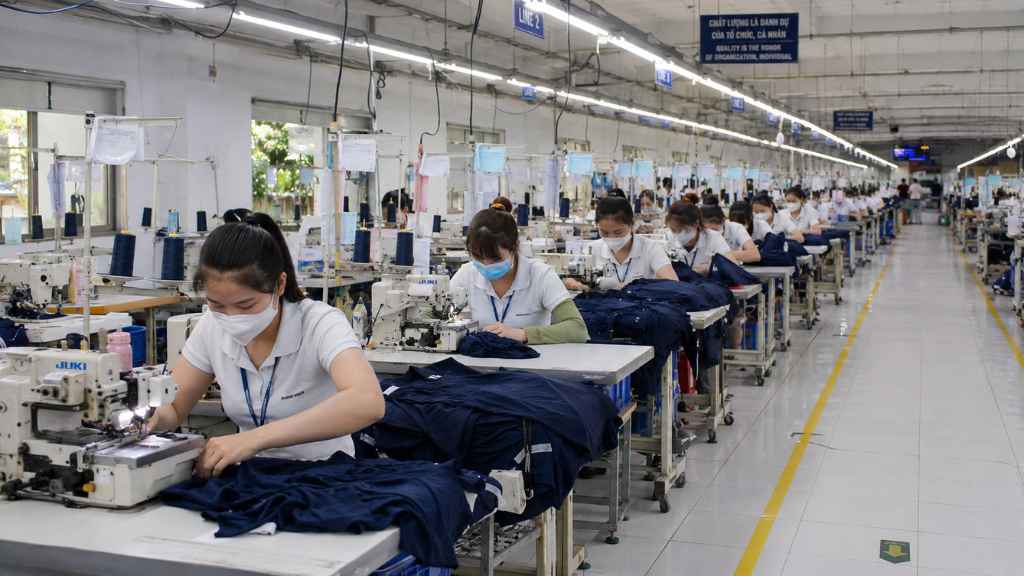
Vietnam apparel growth has emerged as a key example of how strategic trade policy and Free Trade Agreements (FTAs) can transform an export industry, with Sri Lanka’s apparel sector now being urged to study and adapt lessons from Vietnam’s success.
Vietnam apparel growth highlights FTA lessons for Sri Lanka
According to the Joint Apparel Association Forum (JAAF), Vietnam’s rapid rise in global apparel trade over the past 15 years demonstrates how coordinated trade negotiations, market access, and investment-focused policies can accelerate industrial growth and strengthen integration into global supply chains.
Vietnam has built one of the world’s most extensive trade networks through 19 bilateral and multilateral FTAs covering nearly 60 economies. This aggressive trade strategy has significantly increased the country’s trade openness, which rose from 19 percent of GDP in 1988 to 184 percent in 2022. By comparison, Sri Lanka’s trade openness remains around 50 to 55 percent, reflecting a more inward-looking economic structure.
Industry analysts say Vietnam apparel growth has been largely driven by access to major export destinations through agreements such as the Comprehensive and Progressive Agreement for Trans-Pacific Partnership (CPTPP), the EU-Vietnam Free Trade Agreement (EVFTA), and the Regional Comprehensive Economic Partnership (RCEP). Vietnam also maintains bilateral agreements with markets including the United Kingdom, Israel, and the United Arab Emirates.
These agreements have enabled Vietnam to strengthen its position as a preferred global sourcing hub for apparel manufacturing. JAAF noted that Vietnam’s apparel exports are projected to reach around 46 billion US dollars by 2025, supported by a trade surplus estimated at 21 billion dollars.
The country has also benefited from the global “China+1” sourcing strategy, where international brands diversify manufacturing operations beyond China to reduce supply chain risks. Over the last 15 years, Vietnam’s apparel exports have expanded from 13 billion dollars to approximately 45 billion dollars, representing growth of nearly 250 percent.
In contrast, Sri Lanka apparel exports have increased more modestly during the same period, rising from 3.4 billion dollars to 5.4 billion dollars, equivalent to growth of around 58 percent.
JAAF highlighted that Vietnam’s success is not based solely on market access, but also on the country’s centralized and technically capable trade negotiation framework. Vietnam’s chief trade negotiator operates at deputy-minister level, giving the position significant political authority and coordination power across ministries.
For major trade negotiations, including discussions with the United States, Vietnam reportedly forms specialized multi-ministry teams led by senior ministers. This approach has enabled the country to negotiate and implement numerous Free Trade Agreements efficiently while attracting foreign direct investment tied to export manufacturing.
Like Sri Lanka, Vietnam exports around 40 percent of its apparel products to the United States. However, Vietnam recently secured tariff-related understandings with the US following reciprocal tariff measures introduced in April 2025, helping preserve competitive access to one of its largest export markets.
Vietnam’s trade ties with Japan also illustrate the depth of its strategy. The country currently maintains three separate trade agreements with Japan, facilitating both exports and Japanese investment into Vietnam’s manufacturing sector.
JAAF noted that similar long-standing agreements exist between Vietnam and key markets such as the European Union, the United Kingdom, and South Korea, all of which contribute significantly to the country’s export performance.
Despite the differences in economic scale and structure, the association said Sri Lanka can still draw valuable lessons from Vietnam’s experience. Industry experts argue that market access alone is insufficient unless accompanied by policy consistency, investor confidence, infrastructure development, and the ability of exporters to meet evolving compliance standards.
Sri Lanka’s apparel industry currently generates around 5 billion dollars in export earnings and provides employment to approximately 350,000 people. However, sector stakeholders believe stronger trade policy direction and better utilization of FTAs are necessary if the country hopes to expand export revenue and attract strategic investments.
JAAF has recommended that Sri Lanka establish a dedicated full-time institutional mechanism focused specifically on identifying, negotiating, and managing FTAs. The association also emphasized the need to prioritize agreements with countries capable of becoming major export destinations while simultaneously driving foreign investment into Sri Lanka’s manufacturing industries.
Industry representatives say Vietnam’s experience demonstrates that aligning trade access, infrastructure, sustainability standards, investment promotion, and workforce development can significantly strengthen a country’s position in global supply chains.
As Sri Lanka’s apparel sector plans its next phase of growth, JAAF stressed that adopting a coordinated national strategy focused on competitiveness and trade integration will be critical to unlocking long-term opportunities in international markets.