

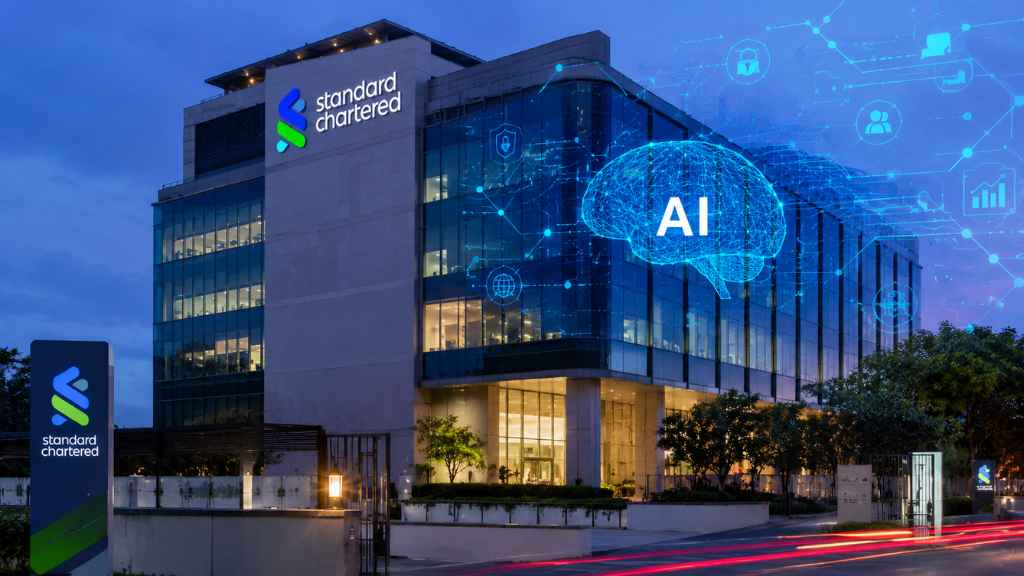
Standard Chartered to cut thousands of roles as AI use increases, becoming the latest global financial institution to restructure its workforce as artificial intelligence technologies rapidly transform business operations. The banking giant plans to reduce more than 15 percent of its back-office workforce by 2030 as part of a broader efficiency and profitability strategy.
Standard Chartered to cut thousands of roles amid rising AI adoption
The UK-headquartered bank announced that approximately 7,800 roles will be affected over the coming years, with the reductions primarily linked to the growing use of automation, advanced analytics, and artificial intelligence across its operations.
While the company confirmed the planned cuts, it also indicated that some affected employees may be redeployed into other positions within the organisation as the bank adapts to evolving operational requirements.
The move forms part of Chief Executive Bill Winters’ latest long-term strategy for the Asia and Africa-focused bank, which aims to strengthen profitability while modernising internal systems and improving productivity through technology integration.
In a statement, the company said it is “scaling practical uses of automation, advanced analytics and artificial intelligence to streamline processes, improve decision-making and enhance both client service and internal efficiency.”
Standard Chartered to cut thousands of roles as AI use increases reflects a broader global trend across the banking sector and technology industries, where companies are increasingly replacing repetitive administrative and analytical tasks with AI-driven systems.
The bank did not specify which regions or departments would be most affected. However, Standard Chartered maintains significant back-office operations in countries including India, China, Malaysia, and Poland, raising concerns about potential impacts on employees across these locations.
Industry analysts note that financial institutions have been accelerating investment in artificial intelligence following rapid advancements in machine learning, automation, and generative AI technologies. Banks are increasingly using AI tools for tasks such as fraud detection, customer support, compliance monitoring, risk analysis, document processing, and operational decision-making.
Supporters argue that these technologies can significantly improve efficiency, reduce costs, and enhance customer experiences. However, the growing adoption of AI has also intensified concerns regarding long-term job displacement, workforce restructuring, and the future of administrative and operational roles within the banking sector.
Standard Chartered is not the only major financial institution to announce workforce reductions linked to artificial intelligence adoption. Earlier this year, Singapore’s largest bank, DBS, stated that it expected to cut approximately 4,000 contract and temporary positions over the next three years as AI capabilities become more integrated into its business processes.
The impact of artificial intelligence is also being felt beyond financial services, particularly within the global technology industry. Several major technology firms have announced significant layoffs while simultaneously increasing investments in AI infrastructure and product development.
Meta, the parent company of Facebook, revealed plans in April to reduce roughly 10 percent of its workforce, affecting around 8,000 employees, while continuing to increase spending on AI-related projects and technologies.
The company also indicated that thousands of vacant roles previously planned for recruitment would remain unfilled as part of broader operational restructuring measures.
Similarly, Amazon announced earlier this year that it would cut more than 30,000 jobs, while Oracle reportedly reduced its workforce by more than 10,000 employees amid changing business priorities and increased focus on AI technologies.
Standard Chartered to cut thousands of roles as AI use increases highlights the accelerating pace at which artificial intelligence is reshaping employment structures across industries. Experts believe that routine and repetitive functions are likely to face the highest risk of automation, while demand may grow for employees with skills related to data analysis, AI oversight, digital transformation, and technology management.
Economists and labour market analysts have warned that AI-driven workforce transformation could disproportionately affect younger workers, graduates, and administrative employees unless organisations invest more heavily in reskilling and workforce adaptation programmes.
At the same time, many businesses argue that AI adoption is becoming increasingly necessary to remain competitive within rapidly evolving global markets.
As companies continue balancing efficiency gains with workforce challenges, the debate surrounding artificial intelligence and employment is expected to intensify further in the coming years, particularly across industries where automation can significantly reduce operational costs.