

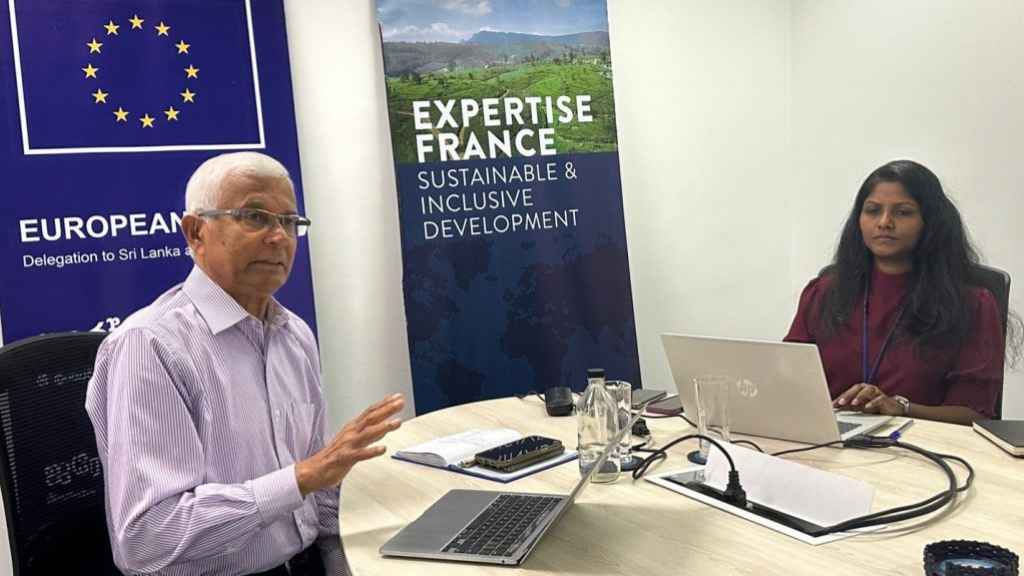
Eco-Industrial Park development in Sri Lanka is receiving a major boost through a new European Union-funded initiative aimed at accelerating the transition towards resource-efficient, environmentally sustainable, and globally competitive industrial zones.
Eco-Industrial Park initiative backed by EU targets greener and more competitive industries
The capacity-building programme, launched under the Green Recovery Facility project in partnership with the National Cleaner Production Centre (NCPC) and German consultancy Adelphi, seeks to strengthen sustainable industrial growth while supporting Sri Lanka’s broader environmental and economic development objectives.
The initiative is designed to promote Eco-Industrial Park practices across the country and engage more than 1,100 stakeholders, including policymakers, industrial park operators, manufacturers, and representatives from neighbouring communities. Organizers say the programme will help create a collaborative framework for industrial transformation while enhancing awareness of sustainable industrial development principles.
Sri Lanka’s industrial sector plays a significant role in the national economy, comprising approximately 75 industrial parks and more than 1,200 industries that collectively employ over 126,000 people. As industries face increasing pressure to improve environmental performance, resource efficiency, and competitiveness, policymakers and development partners are placing greater emphasis on sustainable industrial development models.
The programme brings together around 25 policymakers, 32 industrial park operators, 475 tenant industries, and 640 members of surrounding communities. By involving a broad range of stakeholders, the initiative aims to ensure that environmental and economic improvements are achieved through cooperation and shared responsibility.
Speaking on the importance of the initiative, Dr. Johann Hesse, Head of Cooperation at the Delegation of the European Union to Sri Lanka and the Maldives, highlighted the role that industrial parks can play in driving economic recovery while supporting sustainability goals.
According to Hesse, Sri Lanka’s industrial sector has the potential to contribute to a greener and more resilient economic recovery, particularly in export-oriented industries. He noted that international experience demonstrates how Eco-Industrial Park models can foster innovation, encourage the adoption of cleaner technologies, improve market access, and attract investment while promoting circular economy practices.
He further emphasized that successful industrial transformation often emerges through voluntary collaboration among businesses rather than purely regulatory approaches. By encouraging cooperation among government institutions, industrial park operators, businesses, and local communities, the programme aims to support low-carbon industrial growth and long-term competitiveness.
The capacity-building initiative was developed following extensive stakeholder consultations and pre-assessment surveys. Organizers said these assessments helped identify practical challenges, operational priorities, and knowledge gaps across different stakeholder groups, allowing the training programme to be tailored to real-world industry needs.
Training activities are being delivered through a combination of virtual sessions, in-person workshops, and follow-up engagements. Initial virtual sessions introduced participants to key concepts and implementation frameworks, while upcoming workshops are expected to focus on practical applications, peer learning, and experience sharing.
Participants will receive training on a range of subjects critical to industrial sustainability. These include policy and regulatory frameworks, environmental management and compliance, industrial symbiosis, stakeholder engagement, and green financing strategies designed to support investment in environmentally responsible industrial operations.
Interactive workshops will provide opportunities for participants to examine case studies, discuss implementation challenges, and identify practical solutions that can be adapted to their own industrial parks and organizations. The programme also seeks to improve collaboration between industries and surrounding communities, helping to address environmental concerns while strengthening local relationships.
The initiative is expected to enhance policy-level understanding of industrial sustainability, improve the operational capabilities of industrial park managers, and support manufacturers in adopting more efficient production practices. Through these efforts, Sri Lanka aims to gradually transform industrial zones into more resource-efficient, environmentally responsible, and economically competitive hubs.
As the country continues its green development journey, the Eco-Industrial Park programme represents a significant step toward aligning industrial growth with environmental sustainability, strengthening resilience, and improving Sri Lanka’s attractiveness as a destination for sustainable investment.