

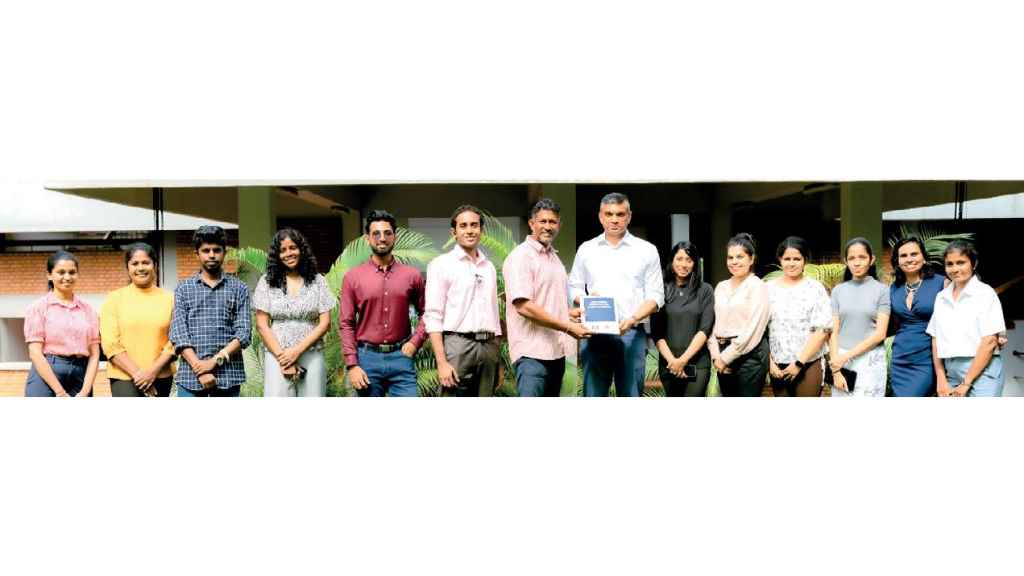
Hirdaramani Apparel has partnered with the University of Moratuwa on a three-year research initiative to transform textile waste into environmentally friendly ceiling panels, supporting Sri Lanka’s growing commitment to circular economy innovation and sustainable manufacturing.
Hirdaramani Apparel partners University of Moratuwa on sustainable building materials
The collaboration combines industry expertise with academic research to develop practical, scalable building materials that reduce waste while creating new commercial opportunities.
The project, titled “From Waste to Wonder,” will be led by the Pro Green Lab research team from the Faculty of Engineering at the University of Moratuwa. Over the next three years, researchers will investigate how discarded textile waste can be converted into durable, lightweight and environmentally responsible ceiling panels capable of meeting growing global demand for sustainable construction materials.
The initiative addresses two major environmental challenges simultaneously: the increasing volume of textile waste generated by the apparel industry and the need for biodegradable alternatives to conventional building materials.
The partnership aligns closely with Hirdaramani Apparel’s Future First Sustainability Roadmap, reinforcing the company’s long-term strategy of embedding circular economy principles into its manufacturing operations. By combining research expertise, industry knowledge and innovation, both partners aim to identify commercially viable solutions that convert industrial waste into valuable resources.
Hirdaramani Apparel Managing Director Madhawa Atapattu said the project demonstrates how science, sustainability and industry requirements can come together to produce meaningful environmental outcomes.
“This initiative represents bringing science, sustainability and industry need into one effort. By turning textile waste into viable building material, we are rethinking what is possible and moving towards solutions that deliver real environmental impact. We believe this project can set a new benchmark for circular innovation across multiple industries,” he said.
Researchers will evaluate the technical performance of the new material, including its durability, long-term usability and suitability for commercial production. The study will also assess whether the ceiling panels can be manufactured at an industrial scale while maintaining strong environmental credentials.
Senior Professor Rangika Halwathura of the Faculty of Engineering at the University of Moratuwa said the collaboration demonstrates the value of partnerships between academia and industry in addressing real-world sustainability challenges.
He noted that redesigning textile waste into practical building solutions contributes to the development of sustainable materials capable of addressing global environmental concerns while creating opportunities for innovation within Sri Lanka.
The project is expected to strengthen Sri Lanka’s position in sustainable materials research by showcasing how engineering expertise and manufacturing experience can be combined to develop environmentally responsible products with commercial potential.
As international markets increasingly demand sustainable construction materials and circular manufacturing practices, initiatives such as this could create new value chains for the apparel sector while reducing waste destined for landfills.
By leveraging the University of Moratuwa’s engineering expertise alongside Hirdaramani Apparel’s experience in sustainable manufacturing, the partnership seeks to demonstrate how research-driven innovation can generate practical solutions for industry while supporting global climate and circular economy objectives.
The initiative also highlights the growing role of collaboration between universities and private enterprises in accelerating green innovation, positioning Sri Lanka as a contributor to global sustainability research and the development of next-generation eco-friendly construction materials.