

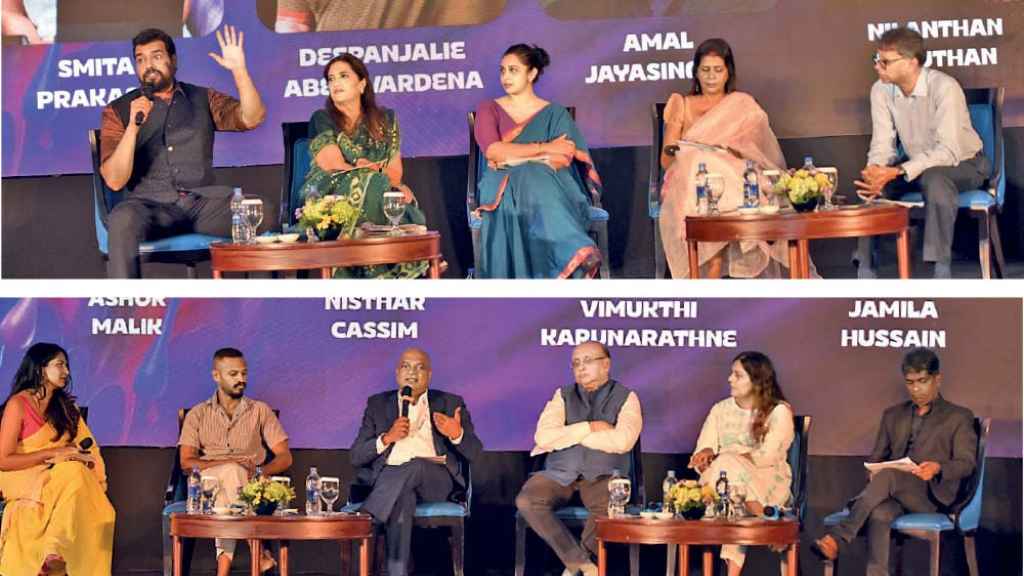
SLIMFA MediaFest 2026 underscored the importance of trust, credibility and responsible innovation as media leaders from Sri Lanka and India called for journalism to adapt to artificial intelligence without compromising editorial integrity. Speakers at the event stressed that public confidence remains the industry’s greatest asset in an era of misinformation and rapid technological change.
SLIMFA MediaFest 2026 highlights AI journalism, trust and India–Sri Lanka media collaboration
Held at the Taj Samudra Colombo under the theme “Staying Relevant in a Changing World,” the day-long event, organised by the Sri Lanka–India Media Friendship Association (SLIMFA), brought together editors, journalists, media executives, academics and digital creators from both countries. Discussions focused on how news organisations can respond to the challenges posed by AI journalism, changing audience behaviour, misinformation and evolving business models.
Indian High Commissioner to Sri Lanka Santosh Jha described the event as an emerging flagship platform for professional dialogue between Indian and Sri Lankan journalists. He said the close democratic traditions and cultural ties shared by the two countries provide a strong foundation for deeper media collaboration through journalist exchanges, institutional partnerships and newsroom engagement.
Jha noted that while artificial intelligence, digital platforms and social media have transformed the way news is produced and consumed, the core values of journalism remain unchanged. He said accuracy, fairness, verification, integrity and public trust are now more important than ever, urging journalists to work together to counter misinformation and promote informed, people-centric narratives.
Mass Media Minister Dr. Nalinda Jayatissa, who attended as Chief Guest, said journalism must embrace technological change while safeguarding editorial independence and professional ethics. He observed that audiences are no longer passive consumers of news but increasingly participate in creating, sharing and verifying information.
Despite these shifts, he maintained that society continues to expect journalism that is accurate, fair and accountable. The Minister said governments should create an environment where independent journalism can flourish rather than influence editorial decision-making. He also emphasised that artificial intelligence should strengthen reporting by improving research, investigation and verification instead of replacing editorial judgement.
SLIMFA President Nisthar Cassim highlighted the association’s rapid growth since its establishment in 2024, describing it as a unique professional platform that encourages dialogue, knowledge-sharing and training between the Sri Lankan and Indian media communities. He said MediaFest has become an important forum where journalists, editors, corporate communication professionals and academics can exchange ideas and build stronger professional networks.
Delivering the keynote address titled “Trust, Truth and the Battle for Credibility,” Asian News International (ANI) Chief Editor and Deputy CEO Smita Prakash argued that journalism is facing one of its greatest tests as artificial intelligence makes deception faster, cheaper and increasingly convincing.
She warned that algorithms are creating ideological bubbles while AI-generated text, images and videos are blurring the distinction between fact and falsehood. Drawing a clear distinction between misinformation and deliberate disinformation, Prakash cautioned that governments, political actors and commercial interests are increasingly using digital platforms to shape public opinion.
She urged journalists to resist sacrificing accuracy for speed, insisting that verification has become as important as reporting itself. Modern newsrooms, she said, must increasingly rely on tools such as metadata analysis, reverse image searches and geolocation techniques to verify digital content before publication. Her central message to journalists was clear: “Trust, but verify.”
The Asia Group Partner Ashok Malik reflected on journalism’s enduring importance as a profession that develops future leaders while continuing to expose weaknesses in governance, public policy and business. He said journalism remains one of society’s most important mechanisms for holding institutions accountable and encouraging informed public debate.
Meanwhile, India Today Managing Editor Marya Shakil highlighted the dramatic shift in audience behaviour, noting that news consumption has increasingly moved from traditional platforms to digital feeds and individual personalities. She encouraged news organisations to combine the speed and creativity of digital creators with the discipline, verification and editorial standards that define professional journalism.
The event also featured three panel discussions involving senior editors, digital media professionals, researchers and policy experts who examined the future of journalism, the sustainability of media organisations and the evolving relationship between technology and news.
A common theme throughout SLIMFA MediaFest 2026 was that while artificial intelligence will continue transforming the media industry, the long-term relevance of journalism will ultimately depend on its ability to preserve credibility, strengthen public trust and embrace innovation responsibly. Participants agreed that maintaining these principles will be essential as news organisations navigate an increasingly fragmented and fast-changing information landscape.