


The result ends four straight months of deficits, helped by lower import spending, but the external account remains in deficit for the year to date.
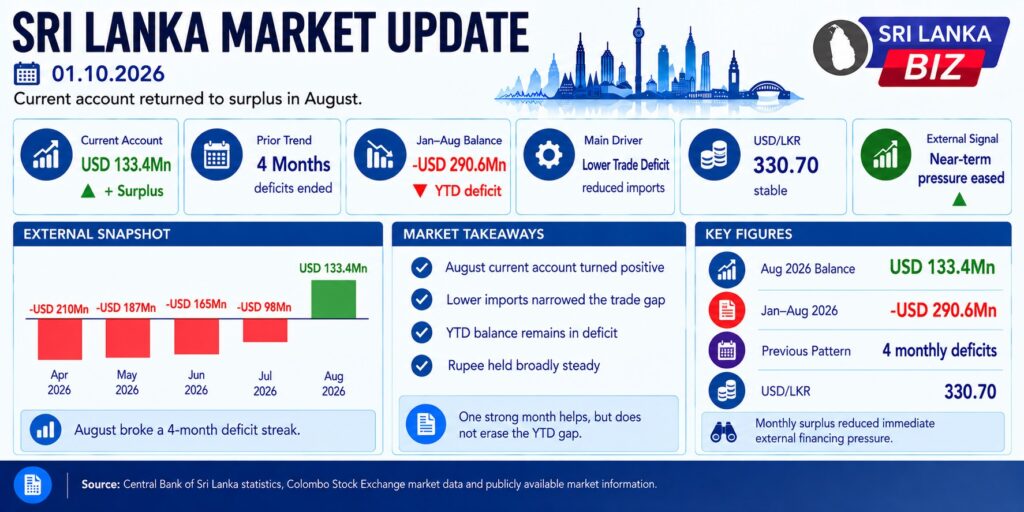
Sri Lanka’s external current account moved into surplus in August, recording USD 133.4 million after four consecutive months of deficits.
The improvement was mainly supported by a narrower trade deficit, which in turn reflected lower spending on imports during the month.
The monthly surplus does not change the broader picture for the year. For January to August 2026, the current account still shows a cumulative deficit of USD 290.6 million, meaning the external sector remains under pressure even after August’s turnaround.
The result is a notable data point because the current account captures the country’s trade in goods and services, along with income and transfers. A surplus indicates that Sri Lanka earned more from these flows in the month than it paid out, reducing the need for external financing.
On the currency front, the rupee was steady at LKR 330.70 per US dollar on October 1, compared with LKR 330.83 earlier in the session.
Key Numbers
| Indicator | Figure |
|---|---|
| Current account balance, August 2026 | Surplus of USD 133.4 Mn |
| Preceding trend | Deficits for four consecutive months |
| Cumulative balance, January to August 2026 | Deficit of USD 290.6 Mn |
| Main driver cited | Lower trade deficit on reduced import expenditure |
| USD/LKR (October 1) | 330.70 |
Business Impact
For importers, the figures show that import spending fell in August. For exporters and executives managing foreign currency exposure, a surplus month eases near-term external pressure, but the year-to-date deficit means a single month is not yet evidence of a sustained trend. Businesses with dollar obligations will likely look to the coming monthly releases to see whether the surplus holds and whether it is driven by stronger earnings or continued restraint in imports.
Source Attribution: Central Bank of Sri Lanka statistics, Colombo Stock Exchange market data and publicly available economic information.