


Official figures show about 340,000 people out of work, with the jobless rate for women more than double the rate for men.
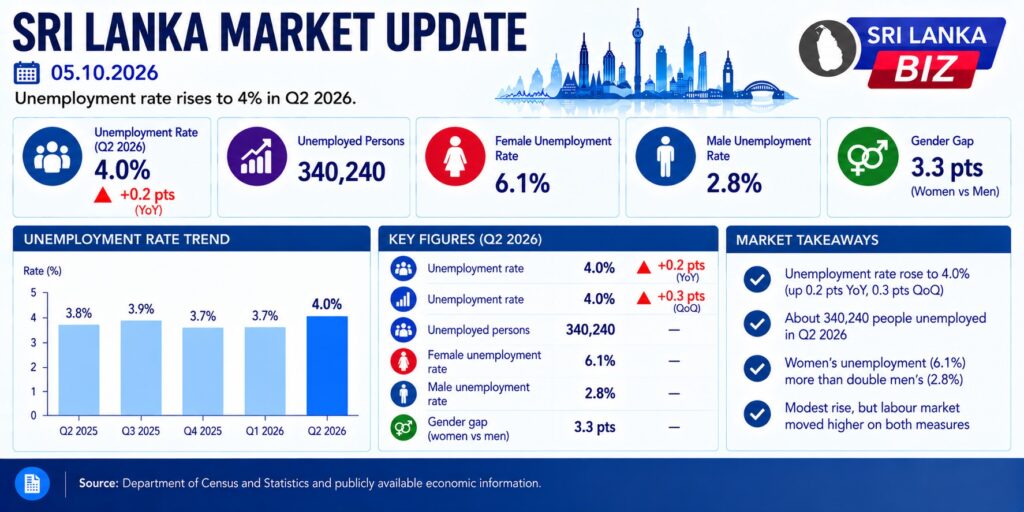
Sri Lanka’s unemployment rate edged up to 4% in the second quarter of 2026, according to the Department of Census and Statistics. The rate is 0.3 percentage points higher than in the first quarter and 0.2 points higher than in the same quarter last year.
An estimated 340,240 people were unemployed during the quarter.
The data shows a large gap between women and men. The unemployment rate for women was 6.1%, against 2.8% for men. Women were therefore jobless at more than twice the rate of men, and the gap between the two rates is 3.3 percentage points.
The rise is modest, and a 4% rate is low by many international standards. But the increase over both the previous quarter and the previous year means the labour market moved in the wrong direction on both measures. The figures reflect the number of people without work who are available for and seeking it, so the headline rate does not capture people who are employed but underemployed or in low-paid informal work.
The release does not say why unemployment rose. It also does not break the increase down by sector, age group or region in the data available to us. The next quarterly survey will show whether the second-quarter rise was a one-off or the start of a trend.
Key Numbers
| Indicator | Q2 2026 | Change |
|---|---|---|
| Unemployment rate | 4.0% | +0.2 pts year-on-year |
| Unemployment rate | 4.0% | +0.3 pts quarter-on-quarter |
| Estimated unemployed persons | 340,240 | n/a |
| Unemployment rate, women | 6.1% | n/a |
| Unemployment rate, men | 2.8% | n/a |
| Gap between women and men | 3.3 pts | n/a |
Business Impact
For employers, a 4% national rate points to a labour market that has loosened slightly, though one quarter’s movement is too small to show a change in hiring conditions. The more lasting point for recruiters and HR leaders is the gender gap. Women are far more likely than men to be looking for work without finding it, which matters for businesses reviewing hiring practices, flexible working arrangements or access to talent. SMEs and exporters that depend on labour-intensive operations should watch the next release for signs of a sustained trend before drawing conclusions about wages or availability of workers.
Source: Department of Census and Statistics and publicly available economic information.