

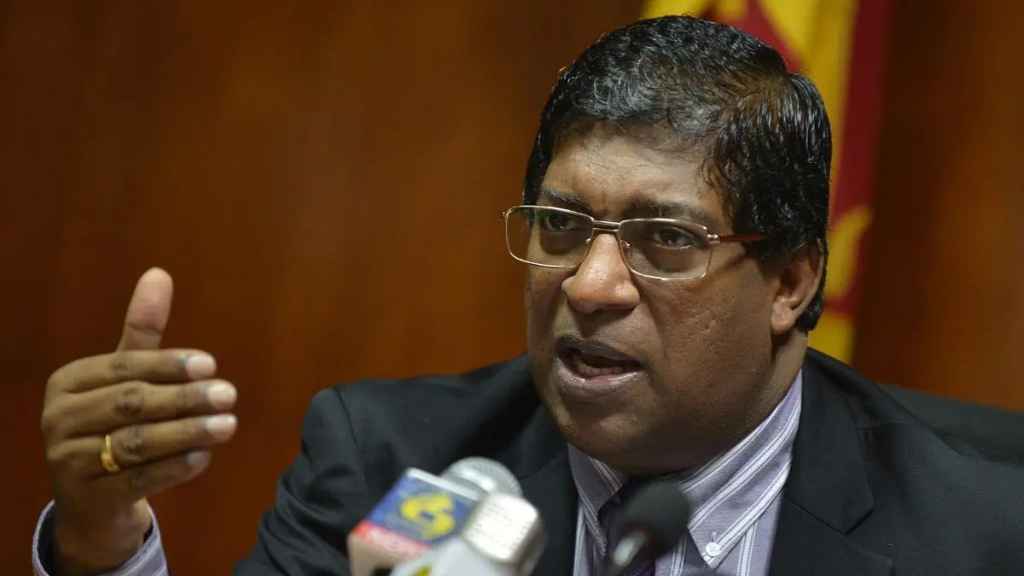
The Central Bank oversight under fire after NDB fraud has triggered intense political and regulatory scrutiny in Sri Lanka. Concerns over supervision, accountability, and systemic weaknesses are now at the center of a broader financial governance debate.
Central Bank oversight under fire after NDB fraud, raising serious regulatory concerns
The Central Bank oversight under fire after NDB fraud has placed Sri Lanka’s financial regulatory framework under an intense spotlight, raising questions about supervision, accountability, and the effectiveness of internal controls within the banking sector. The controversy stems from a reported Rs.13.2 billion internal fraud at National Development Bank (NDB), prompting strong criticism from former Finance Minister and Member of Parliament Ravi Karunanayake.
At the core of the debate is the role of the Central Bank of Sri Lanka as the primary regulatory authority responsible for maintaining financial stability and enforcing compliance. Karunanayake’s criticism focuses on the Bank Supervision Department, which he argues failed to detect or prevent the fraudulent activity despite having access to supervisory tools and reporting mechanisms.
From a systems perspective, this incident exposes potential breakdowns in three critical areas: internal bank controls, external audit mechanisms, and regulatory oversight. The fact that the financial impact escalated rapidly—from an initial Rs.300 million figure to Rs.13.2 billion—suggests either a delayed detection process or insufficient escalation protocols within the supervisory framework.
Karunanayake’s remarks in Parliament highlight concerns about regulatory transparency. He accused officials of withholding key information under the justification of depositor protection, raising a governance dilemma: how to balance confidentiality with accountability. This tension is central to modern financial regulation, where excessive secrecy can erode trust, while overexposure may trigger panic or systemic instability.
A notable aspect of the discussion is the issue of internal controls within NDB itself. Banking systems are typically designed with strict segregation of duties, rotational policies, and layered approval mechanisms to prevent fraud. The alleged breach of these rotational principles indicates a failure not only at the operational level but also at the governance level. Such failures often point to either weak enforcement or potential internal collusion.
Karunanayake further questioned the visibility of red flags within publicly available financial data. He cited the sharp increase in gross financial assets from Rs.3.1 billion in 2024 to Rs.12.2 billion in 2025 as an example of a potential anomaly that should have prompted deeper scrutiny. In efficient regulatory environments, such deviations typically trigger automated alerts or mandatory audits.
The broader implication of his critique extends to the Central Bank oversight under fire after NDB fraud as a systemic issue rather than an isolated incident. Karunanayake drew parallels with past financial failures, including the collapses of Pramuka Bank and Seylan Savings, as well as the sovereign default in April 2022. These references suggest a pattern of recurring vulnerabilities within Sri Lanka’s financial ecosystem.
Another layer of concern involves the governance structure of the Central Bank itself. The institution not only regulates the financial system but also manages significant public funds, including the Employees’ Provident Fund (EPF). Karunanayake pointed to this dual role as a potential conflict of interest, particularly when such funds are invested in institutions like NDB. This creates a scenario where the regulator is also a stakeholder, raising questions about independence and impartiality.
From an institutional economics standpoint, this represents an agency problem, where the interests of the regulator may not fully align with those of the public. If not properly managed, such conflicts can weaken enforcement and reduce the credibility of oversight mechanisms.
Karunanayake also referenced the International Monetary Fund’s (IMF) 2023 Governance Diagnostic Assessment, which reportedly highlighted weaknesses in the Central Bank’s supervisory framework. External assessments like these are critical because they provide independent evaluations of institutional performance and highlight structural gaps that may not be visible internally.
The parliamentary exchange also underscores a key governance challenge: the accountability of regulatory bodies to elected representatives. Karunanayake criticized the information provided to the Parliamentary Committee on Public Finance as insufficient, arguing that it lacked depth and failed to address critical questions. This raises concerns about the effectiveness of legislative oversight over independent institutions.
At a policy level, the incident could have significant implications for financial sector reforms. Strengthening the Central Bank’s supervisory capabilities may require investments in advanced monitoring systems, data analytics, and real-time risk assessment tools. Additionally, improving audit independence and enhancing whistleblower protections could help detect irregularities earlier.
However, structural reform alone may not be sufficient. Institutional culture plays a crucial role in enforcement. Without a strong culture of accountability and ethical compliance, even the most advanced systems can fail. This includes ensuring that regulators are empowered to act independently while remaining accountable to the public and Parliament.
Karunanayake’s call to either strengthen or reconsider the Central Bank Supervision Department reflects a broader debate about regulatory design. On one hand, strengthening the existing framework may preserve institutional continuity and leverage existing expertise. On the other hand, a more radical restructuring could address systemic inefficiencies but may introduce transition risks.
Ultimately, the Central Bank oversight under fire after NDB fraud represents more than just a regulatory lapse—it highlights deeper structural challenges within Sri Lanka’s financial governance ecosystem. The outcome of this debate will likely shape the future of banking regulation, investor confidence, and economic stability in the country.