

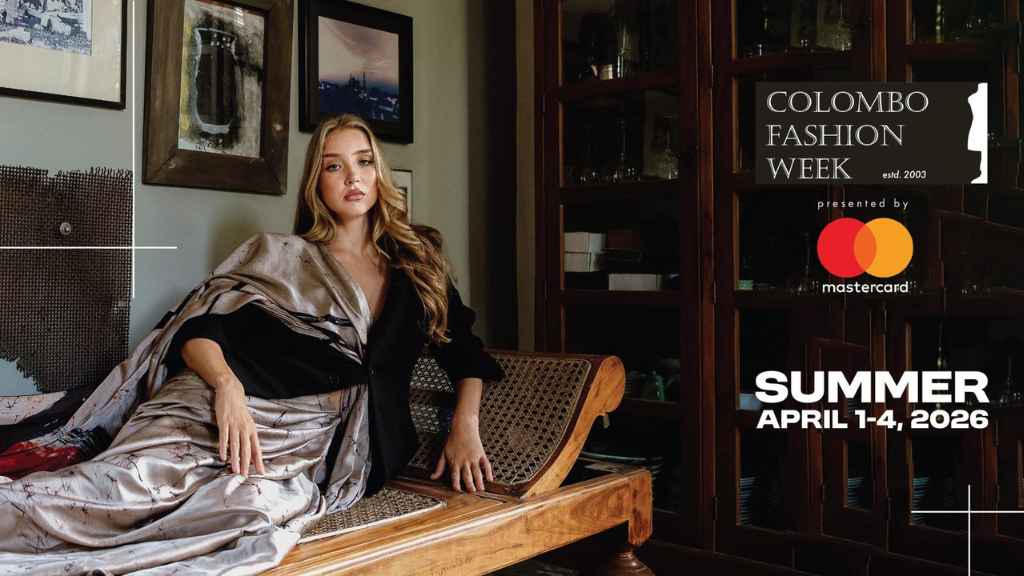
Colombo Fashion Week is set to return for its 23rd edition this summer, with organizers aiming to strengthen Colombo’s position as a high-end tourism destination built around fashion, lifestyle, and global cultural events.
Colombo Fashion Week aims to position Colombo as a luxury tourism and lifestyle destination
Scheduled to take place from April 1 to 4, the four-day event will be hosted at the integrated resort complex City of Dreams, part of the Cinnamon Life development by John Keells Holdings. Organizers say the event is designed not only as a fashion showcase but also as an initiative to deepen Colombo’s tourism appeal and economic activity.
The annual Colombo Fashion Week has gradually evolved into one of South Asia’s most recognized fashion platforms, drawing designers, artists, buyers, and media from across the world. Its organizers believe the event can play a wider economic role by encouraging visitors to spend more time and money in the city.
Ajai Vir Singh, Founder and Managing Director of Colombo Fashion Week, said global fashion events often work closely with city tourism strategies in major destinations such as Milan and Venice. According to Singh, these collaborations help transform cities into lifestyle destinations where fashion, art, and culture contribute directly to economic growth.
“Historically, fashion weeks work closely with city tourism in major capitals, like Milan or Venice. They work because they really impact the city economy,” Singh said in an interview.
For Colombo, the objective is to address a long-standing challenge in the tourism sector — encouraging visitors to spend more time in the capital rather than using it merely as a transit hub on their way to beach resorts or cultural sites elsewhere in the country.
Singh explained that increasing what he called “stickiness” in Colombo is a key goal. Tourists who remain in the city longer are more likely to spend on hospitality, dining, entertainment, and retail, providing broader economic benefits to local businesses.
“In Colombo, we see that tourists don’t spend too much time, and that affects the city economy,” Singh said. “There needs to be more stickiness, for them to be here for more hours.”
This year’s event will take place at City of Dreams within the Cinnamon Life complex, an integrated resort development designed to combine hospitality, retail, entertainment, and lifestyle experiences under one location. Organizers believe the venue’s infrastructure will allow visitors to experience multiple activities beyond the fashion shows themselves.
The integration of the event with the resort environment is expected to create what Singh described as a “soft power” advantage for Colombo Fashion Week. Fashion events often serve as global cultural showcases, bringing together creative industries and tourism in ways that extend far beyond the runway.
“City of Dreams, as South Asia’s first vertically integrated resort, brings soft power to CFW,” Singh said. “When people come to watch fashion, there are other experiences they can avail of at the same time.”
Kamal Munasinghe, General Manager of Cinnamon Life at City of Dreams, said the property represents a significant step in Colombo’s evolution as an international events destination. Large-scale developments capable of hosting global conferences, cultural shows, and fashion events are seen as essential for cities seeking to compete in the international tourism market.
“I think this property is important for Colombo to emerge as a destination where these kinds of international-level events can take place,” Munasinghe said. “Fashion, art, and culture are a big part of what puts the ‘Ritz’ into this city.”
Organizers are also targeting regional tourism markets as part of the broader strategy to elevate Colombo Fashion Week. For the first time, specialized hospitality packages have been curated specifically for visitors from India, Sri Lanka’s largest source market for tourist arrivals.
Munasinghe said the packages were already being promoted in the Indian market, reflecting the importance of attracting high-spending regional travelers who may combine fashion events with leisure tourism in Sri Lanka.
“India being the closest market and our biggest tourism driver for Sri Lanka will help us establish Sri Lanka as a global destination for fashion,” he said.
Beyond tourism, Colombo Fashion Week also serves as a platform for local creative talent. The event regularly highlights Sri Lankan designers, artists, and fashion entrepreneurs, giving them exposure to international buyers and media outlets.
This year’s edition will feature designers and industry professionals from ten countries, including Australia, Italy, India, the United Kingdom, and the United States. Organizers say this international participation reflects the growing recognition of Colombo within the global fashion community.
Fashion events are increasingly viewed as tools for economic diplomacy and city branding. Major fashion capitals such as Dubai and Singapore have leveraged cultural and lifestyle events to strengthen their global identities while attracting high-value tourism.
For Colombo, the organizers of Colombo Fashion Week believe the event can play a similar role by linking the fashion industry with hospitality, entertainment, and tourism development. If successful, the initiative could contribute to positioning the Sri Lankan capital as a destination where global fashion, culture, and luxury tourism intersect.