

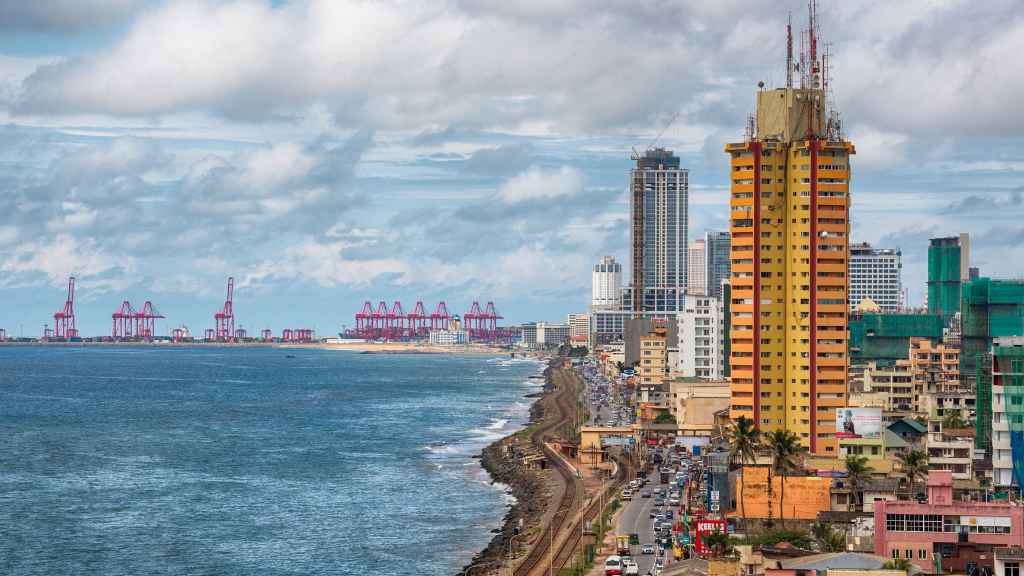
Colombo Port City Duty-Free Rules have been amended to allow overseas travellers to make purchases on two occasions within four days of arrival, following Cabinet approval aimed at enhancing retail flexibility and visitor convenience.
Colombo Port City Duty-Free Rules allow two shopping visits within four days
The decision, approved by the Cabinet of Ministers earlier this week, introduces a revised framework for duty-free shopping at Colombo Port City, one of the country’s flagship economic zones. The move is expected to improve the overall consumer experience while maintaining existing regulatory limits on spending.
Cabinet Spokesman and Minister Dr. Nalinda Jayatissa confirmed that under the updated rules, travellers arriving from abroad will be permitted to shop twice within a four-day window from the date of arrival. This marks a shift from previous restrictions that limited duty-free access to a single visit within a specified timeframe.
Importantly, the amendment does not alter the annual duty-free entitlement, which remains capped at $2,000 per passenger. Authorities have emphasized that while the frequency of access has been increased, the overall spending ceiling remains unchanged to ensure regulatory consistency and fiscal discipline.
The regulatory changes were formalized through Extraordinary Gazette Notification No. 2475/28, issued on 13 February 2026. These amendments fall under the provisions of the Colombo Port City Economic Commission Act, which governs the operation and regulatory framework of the Port City project.
The proposal to amend the regulations was submitted by President Anura Kumara Dissanayake in his capacity as Minister of Finance, Planning and Economic Development. Cabinet approval has now cleared the way for the revised regulations to be presented to Parliament for final endorsement, ensuring compliance with legislative procedures.
The introduction of more flexible duty-free access is seen as part of broader efforts to enhance the attractiveness of Colombo Port City as a regional commercial and tourism hub. By allowing travellers multiple opportunities to shop within a limited timeframe, policymakers aim to stimulate retail activity and increase footfall in the duty-free complex.
Industry observers note that such policy adjustments are particularly relevant as Sri Lanka continues to rebuild its tourism sector and strengthen foreign exchange inflows. Duty-free retail has traditionally been a key component of the travel experience, and greater convenience could encourage higher spending by inbound passengers.
At the same time, maintaining the existing duty-free cap ensures that the policy does not significantly impact government revenue or distort local market dynamics. The balance between consumer flexibility and fiscal prudence appears to be a central consideration in the revised framework.
The Colombo Port City project itself is positioned as a strategic development designed to attract international investment and create a modern urban and financial center. Enhancing its retail offering, including duty-free facilities, aligns with broader objectives to position the zone as a competitive destination for both business and leisure visitors.
The decision also reflects a measured approach by the Government to refine regulatory frameworks in response to evolving economic conditions. By introducing targeted amendments rather than sweeping changes, authorities can test the impact of policy adjustments while maintaining stability.
While the immediate impact of the revised Colombo Port City Duty-Free Rules is likely to be seen in increased consumer activity within the complex, the longer-term implications may extend to broader investor confidence. A well-functioning and visitor-friendly retail environment can contribute to the overall perception of Port City as a dynamic and accessible destination.
In recent years, Sri Lanka has taken several steps to modernize its economic infrastructure and regulatory environment, particularly in special economic zones. The Port City initiative plays a central role in these efforts, with a focus on creating a globally competitive ecosystem supported by transparent and efficient governance.
The amended regulations are therefore not only a consumer-focused measure but also part of a wider strategy to align Sri Lanka’s economic policies with international standards. As the proposal moves to Parliament for approval, stakeholders will be closely monitoring its implementation and potential impact on retail performance and tourism-related revenue.
Overall, the updated Colombo Port City Duty-Free Rules signal a pragmatic policy adjustment aimed at enhancing convenience without compromising regulatory safeguards, reinforcing the Government’s commitment to incremental economic reform.