

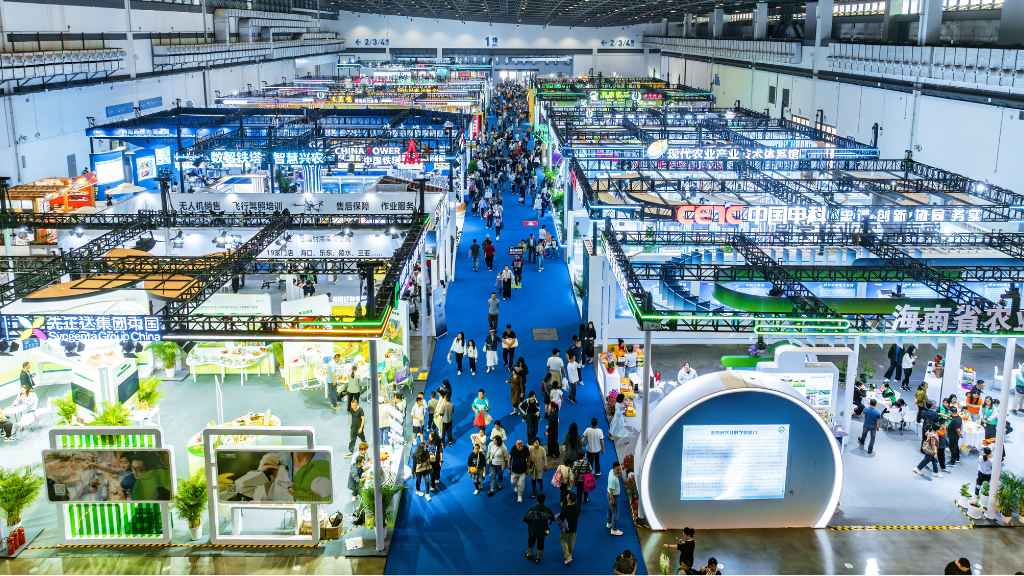
Hainan Winter Trade Fair has emerged as a pivotal platform linking global agricultural markets, showcasing how China’s southern island province is using Free Trade Port policies to expand tropical agriculture, modernize production, and strengthen international trade partnerships.
Hainan Winter Trade Fair highlights Free Trade Port farm opportunities
Hainan Winter Trade Fair concluded in Haikou after four days of intense commercial activity, reinforcing the island’s growing role as a gateway between global agricultural markets and China’s domestic demand. The 28th China (Hainan) International Winter Trade Fair for Tropical Agricultural Products brought together more than 2,000 enterprises and over 10,000 professional buyers, drawing nearly 200,000 visits and highlighting the expanding influence of tropical agriculture within international trade networks.
Exhibitors from 16 countries and regions gathered in Haikou to present a broad range of products, technologies, and solutions across aquaculture, livestock, fruits, vegetables, and modern farming equipment. For buyers and policymakers alike, the scale and diversity of participation underscored Hainan’s ambition to position itself as a central hub for agricultural exchange under the Hainan Free Trade Port framework.
One of the most widely discussed highlights of the fair was a live yellowfin tuna cutting demonstration, which attracted large crowds of buyers eager to assess quality, freshness, and market potential. The presentation was more than a visual attraction; it symbolized the progress Hainan has made in developing a high-value aquaculture sector supported by scientific research, smart breeding techniques, and integrated production models that link companies, farming bases, and local farmers.
The South China Sea, a key migratory route for yellowfin tuna, has enabled Hainan to explore sustainable offshore aquaculture on a commercial scale. Lingshui Li Autonomous County has become a testing ground for these efforts, with the South China Sea Fisheries Research Institute under the Chinese Academy of Fishery Sciences establishing the country’s first offshore demonstration base for yellowfin tuna farming. After years of experimentation, breakthroughs in artificial spawning, breeding stability, and market cultivation have allowed production to scale, with the Lingshui County Agricultural Investment Group alone successfully farming more than a thousand tuna.
This vertically integrated industry, spanning breeding, cultivation, processing, and cold-chain logistics, reflects a broader push toward agricultural modernization in Hainan. By combining natural tropical advantages with policy incentives, the province is building resilience, value addition, and brand recognition across multiple product categories. The provincial public brand “Hainan Fresh Products” has been positioned as a vehicle to bring winter melons and vegetables, Wenchang chicken, tilapia, and other tropical specialties to consumers well beyond China’s borders.
The international dimension of the Hainan Winter Trade Fair was reinforced by the participation of Thailand and Pakistan as guest countries of honor. Alongside exhibitors from Africa, Southeast Asia, South Asia, Europe, and North America, the event highlighted the fair’s role as a neutral meeting ground where emerging producers and established buyers could explore long-term cooperation. Many overseas exhibitors described the fair as an efficient entry point into the Chinese market, particularly for value-added agricultural goods.
Ugandan exhibitor Stephen Kise noted strong interest in his coffee and soapstone craft products, emphasizing hopes for full-chain collaboration that would extend beyond simple trade. Similarly, Vietnamese food producer VINAPIA Food Joint Stock Company reported multiple distribution inquiries for its durian, coffee, and bird’s nest products, reflecting sustained demand for premium agricultural imports in China.
Professional buyers attending the fair included major Chinese wholesalers, retailers, and digital commerce platforms such as JD.com and Douyin, as well as international procurement groups from Thailand, Bulgaria, Pakistan, Canada, and Singapore. Beyond exhibition halls, many buyers visited local production bases to assess supply stability, quality control, and logistics readiness. These visits were designed to evaluate how Hainan Free Trade Port advantages, including simplified taxation, low tariff structures, and streamlined customs procedures, could support long-term sourcing strategies.
As the final major agricultural exhibition before the launch of island-wide special customs operations under the Free Trade Port, the Hainan Winter Trade Fair carried additional strategic significance. It served as a live demonstration of the “buy global, sell global” concept that underpins the port’s development vision, showing how policy design can translate into tangible commercial outcomes.
Economic results from the event reflected this momentum. On-site retail and wholesale transactions exceeded 595.98 million yuan, while confirmed orders surpassed 1.546 billion yuan. In addition, 36 cooperation projects were signed during the fair, with a combined value exceeding 5.167 billion yuan, indicating confidence in Hainan’s agricultural ecosystem and its long-term growth prospects.
For policymakers, producers, and investors, the fair offered a clear message: Hainan is no longer positioning itself solely as a regional supplier of tropical produce. Instead, it is evolving into a globally connected agricultural platform where innovation, branding, and trade facilitation converge. As Free Trade Port policies continue to mature, the outcomes showcased at the Hainan Winter Trade Fair suggest that agricultural cooperation will remain a cornerstone of the island’s international economic strategy.