

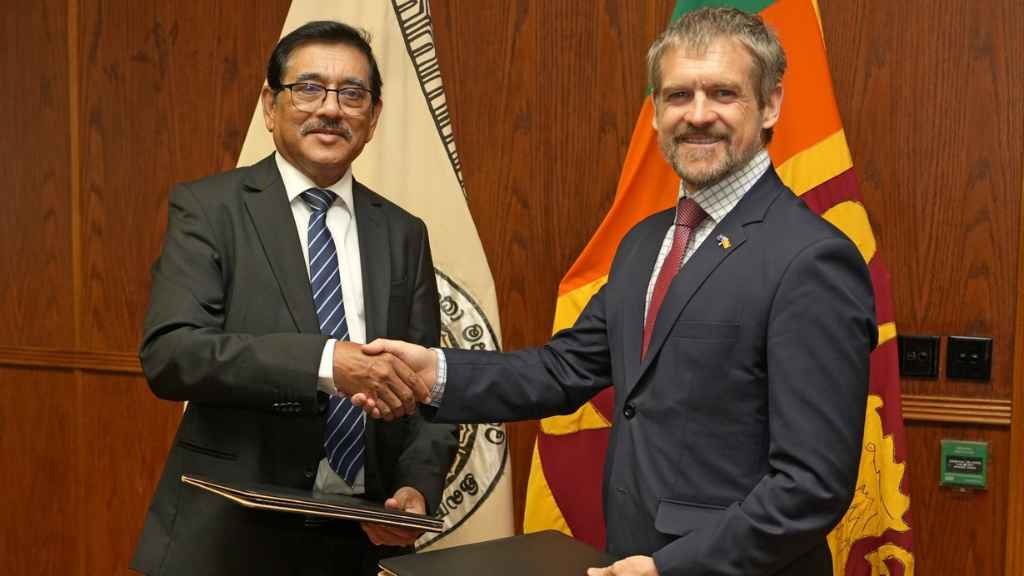
MSMEs CBSL and Australia partner to boost digital financial literacy through a new pilot initiative aimed at strengthening access to finance, improving institutional coordination, and supporting inclusive economic recovery in Sri Lanka.
MSMEs CBSL and Australia Partner to Boost Digital Financial Literacy through pilot
The initiative was formalised through a Memorandum of Understanding (MoU) signed between the Central Bank of Sri Lanka and Australia’s Skills for an Inclusive Economy programme, reflecting a broader effort to empower micro, small and medium enterprises with practical digital and financial capabilities.
According to officials, the pilot programme has been designed to test targeted approaches that can improve financial access for businesses while enhancing the institutional framework supporting the MSME sector. The findings and lessons gathered through the initiative are expected to inform future policymaking and larger-scale programmes aimed at strengthening the country’s entrepreneurial ecosystem.
The initiative comes at a time when Sri Lanka MSMEs continue to face challenges linked to financing constraints, market access, and digital adoption following recent economic disruptions. Policymakers increasingly view the sector as a critical driver of employment generation, economic resilience, and inclusive growth.
Speaking at the signing event, Dr. P. Nandalal Weerasinghe said the collaboration reflects the Central Bank’s focus on practical and evidence-based policy solutions.
“This pilot will allow us to test and refine approaches that can be expanded over time to deliver sustainable outcomes for MSMEs across the country,” he stated.
The programme is expected to explore ways to strengthen digital financial literacy among entrepreneurs and small business operators, particularly in areas related to digital banking tools, financial management, and access to formal financial services. Improving financial literacy is increasingly viewed as an essential component of supporting small businesses in adapting to changing economic and technological environments.
Australian High Commissioner to Sri Lanka Matthew Duckworth also highlighted the importance of long-term sustainability and institutional partnerships in ensuring the success of the programme.
“Australia is pleased to partner with the Central Bank of Sri Lanka on this initiative. From the outset, the focus has been on building systems and partnerships that can be sustained and scaled, ensuring the benefits extend well beyond the pilot phase,” he said.
The partnership aligns with broader cooperation between Sri Lanka and Australia in supporting economic reforms, institutional capacity building, and inclusive development initiatives. Australian-supported programmes in Sri Lanka have increasingly focused on strengthening governance systems, economic participation, and sustainable development outcomes.
Officials noted that the pilot initiative will also seek to improve coordination among institutions involved in supporting the MSME sector. This includes identifying gaps in policy implementation, strengthening collaboration mechanisms, and developing scalable solutions that can improve long-term financial inclusion.
Representing the Australian High Commission at the event were Zoe Kidd and R. Sivasuthan, who reaffirmed Australia’s commitment to supporting practical and sustainable outcomes through the programme.
The officials emphasised that the lessons learned through the pilot would contribute to future policy design and programme expansion, with the goal of creating lasting benefits for entrepreneurs and small business owners across Sri Lanka.
Economic analysts have repeatedly highlighted the importance of improving financial inclusion and digital capabilities within the MSME sector, particularly as businesses increasingly rely on digital platforms and formal banking systems to remain competitive. Enhanced financial literacy is also expected to support better decision-making, stronger financial management, and improved resilience among smaller enterprises.
The latest initiative further demonstrates how international partnerships are being used to support Sri Lanka’s economic recovery efforts while encouraging long-term institutional reforms and private sector development. Stakeholders believe that strengthening digital financial literacy and improving access to finance could play a significant role in accelerating growth opportunities for small businesses in both urban and rural regions.
The agreement between the Central Bank and Australia’s Skills for an Inclusive Economy programme also reflects growing recognition of the importance of sustainable, scalable, and data-driven approaches in shaping future MSME development strategies in Sri Lanka.
As Sri Lanka continues its broader economic recovery process, initiatives focused on MSMEs CBSL and Australia partner to boost digital financial literacy are expected to contribute toward creating a more inclusive and resilient business environment for entrepreneurs nationwide.