

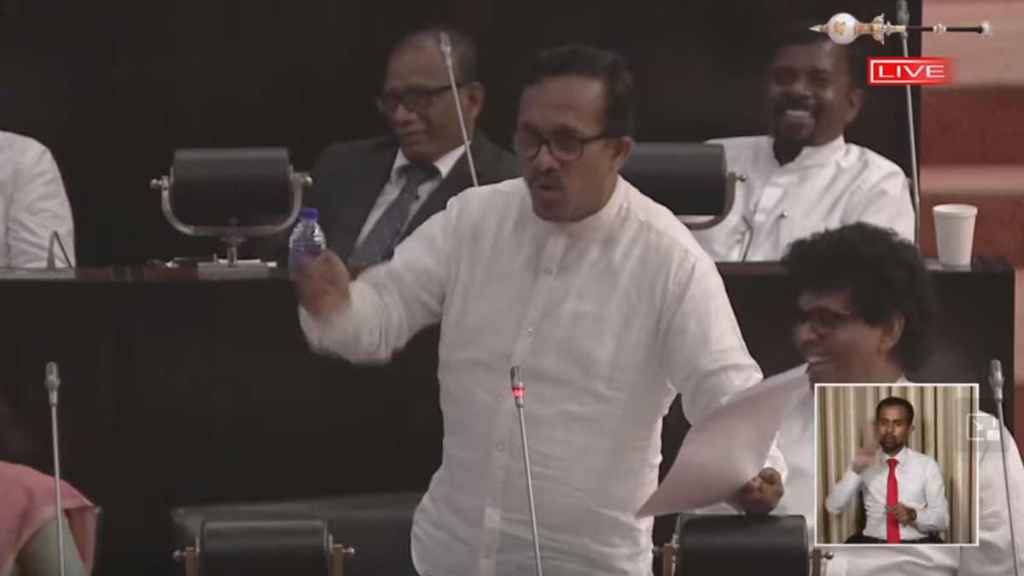
Over 29,600 industries in Sri Lanka have been affected by recent disasters, Minister Sunil Handunnetti confirmed. Micro, small, and medium enterprises, along with tourism and agriculture-linked businesses, face severe losses, highlighting urgent recovery and support needs.
Sri Lanka disaster impacts SMEs, agriculture, and tourism sectors
Sri Lanka’s economy has been significantly impacted following Cyclone Ditwah, with over 29,600 industries now registered as disaster-affected, Industries Minister Sunil Handunnetti told Parliament. The registered businesses span micro, small, medium, and large enterprises, reflecting the broad scale of destruction across multiple sectors.
As of 17 December, the government has received reports from 29,649 affected industries. Minister Handunnetti noted that out of these, assessments of damages have already been completed for over 10,000 businesses. “I think there are more than 29,000 businesses. They have to fill a small form to get registered,” he said, emphasizing ongoing efforts to document the full impact.
Breaking down the affected industries, 12,300 are micro enterprises, 9,844 are small enterprises, 6,644 are medium-sized, and 861 fall under large enterprises. Of the total, 685 are export-oriented businesses, illustrating how Cyclone Ditwah has disrupted both domestic and international supply chains.
Small and medium-sized enterprises (SMEs), which form the backbone of Sri Lanka’s economy and account for substantial employment, were among the hardest hit. Flooding, landslides, and infrastructure damage destroyed workshops, retail outlets, warehouses, and small factories across several districts, wiping out machinery, raw materials, and inventories almost overnight.
Many SME operators, particularly those engaged in agriculture-linked processing, textiles, tourism services, and informal trade, lacked adequate insurance or savings, leaving them unable to resume operations quickly. Disrupted transport networks, prolonged power outages, and delays in accessing credit further compounded their losses, raising concerns about permanent closures and job cuts.
The widespread impact has intensified fears of a slow and uneven economic recovery, especially in rural and semi-urban areas that rely heavily on small businesses for livelihoods. Minister Handunnetti highlighted that out of the affected industries, 2,498 are involved in agriculture-related businesses, while 634 are in the tourism sector, both of which have been severely disrupted by the cyclone.
To support recovery, the government has already released 1 billion rupees to assist affected industries in resuming operations. “Each industry, whether registered previously or not, will receive 200,000 rupees soon after they report their damages,” the Minister said. This immediate financial support aims to help businesses stabilize and restart their operations as quickly as possible.
Further measures include providing low-interest loans for registered SMEs. Under the government’s 2026 budget allocation of 80 billion rupees, the Industries Ministry has approved a 3 percent interest rate loan facility to aid disaster-affected businesses. These initiatives demonstrate the government’s commitment to safeguarding the SME sector and mitigating long-term economic disruption.
Cyclone Ditwah’s devastation underscores the vulnerability of Sri Lanka’s micro, small, and medium enterprises to natural disasters. Strengthening disaster preparedness, enhancing insurance coverage, and improving access to credit and emergency funds are critical to protecting the nation’s economic backbone.
As the government accelerates recovery efforts, cooperation between public authorities, financial institutions, and local communities will be key. Restoring SMEs, particularly in agriculture and tourism, is vital for preserving jobs, stabilizing rural economies, and ensuring continuity in domestic and export-oriented supply chains.
While challenges remain, Minister Handunnetti’s announcements signal proactive steps to rebuild industries and protect livelihoods. The combined approach of immediate cash assistance, low-interest loans, and thorough damage assessments aims to revive Sri Lanka’s small business sector and support a broader economic recovery in the aftermath of Cyclone Ditwah.