

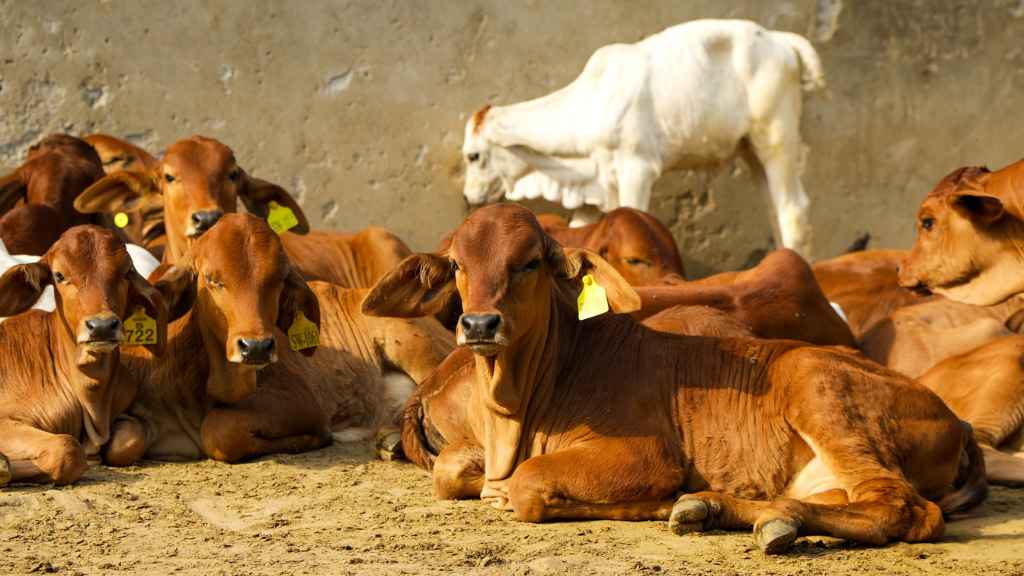
Sahiwal bulls are set to transform Sri Lanka dairy industry development after seven high-quality animals were imported from Pakistan to enhance genetics, increase milk yields, and improve climate resilience in local livestock systems.
Sahiwal bulls strengthen Sri Lanka dairy industry through genetic upgrade initiative
Sri Lanka has imported seven elite Sahiwal bulls from Pakistan as part of a strategic effort to modernize its dairy sector and reduce reliance on milk powder imports. The consignment, transported via a special SriLankan Cargo chartered freighter from Lahore to Colombo, was delivered to the Department of Animal Production and Health earlier this month.
The introduction of Sahiwal bulls represents a targeted genetic intervention aimed at raising national dairy productivity. These animals are globally recognized for superior milk-producing lineage, tropical adaptability, and disease resistance. Officials say the programme will focus on semen collection and artificial insemination to multiply the genetic impact across Sri Lanka’s cattle population.
Sahiwal cattle originate from the dry regions of Pakistan and northern India and are widely regarded as one of the most productive dairy breeds in tropical climates. Average milk yields frequently exceed 2,500 liters per lactation, accompanied by relatively high butterfat content, making the breed commercially valuable. Unlike temperate breeds such as Holstein Friesian, which often experience heat stress and health challenges in humid climates, Sahiwal cattle maintain productivity under high temperatures and variable forage conditions.
For Sri Lanka, where climatic conditions are predominantly tropical and feed resources can be inconsistent, adaptability is a critical variable in dairy economics. Imported temperate breeds have historically required higher feed inputs, veterinary intervention, and cooling infrastructure, increasing production costs for smallholder farmers. By contrast, Sahiwal bulls offer a low-input, climate-resilient alternative aligned with local farming realities.
The genetic upgrade strategy involves crossbreeding Sahiwal bulls with local cattle to produce hybrids combining enhanced milk yield with indigenous hardiness. Local breeds possess strong survival traits, including the ability to forage on low-quality tropical grasses and tolerate endemic diseases. By integrating high-yield genetics with local adaptability, policymakers aim to create a sustainable production model suited to rural Sri Lanka.
The broader economic rationale is clear. Sri Lanka continues to rely heavily on imported powdered milk to meet domestic demand, placing pressure on foreign exchange reserves. Strengthening local dairy output reduces external dependency while improving rural incomes. Dairy farming supports thousands of smallholder households, particularly in semi-urban and rural districts, where livestock functions as both income source and financial security buffer.
Officials state that semen from the imported bulls will be distributed through artificial insemination programs nationwide, enabling rapid multiplication of improved genetics without the need for widespread live animal imports. This approach minimizes biosecurity risks while maximizing scalability. Over time, improved herd genetics are expected to lift national average milk yields, reduce per-unit production costs, and enhance competitiveness.
The collaboration between Sri Lanka and Pakistan also reflects strengthening agricultural ties between the two countries. Beyond livestock trade, the partnership underscores shared objectives in food security, knowledge exchange, and technical capacity building. Agricultural cooperation of this nature often extends beyond a single shipment, potentially opening avenues for veterinary training, genetic research, and breeding program optimization.
From a production systems perspective, genetic enhancement alone does not guarantee transformation. Successful outcomes depend on parallel improvements in feed management, veterinary services, farmer training, and milk collection infrastructure. However, upgrading breed quality is a foundational intervention with compounding long-term benefits. Once superior genetics are integrated into national herds, productivity gains persist across generations.
Another important dimension is resilience. Climate variability poses increasing risks to livestock sectors across South Asia. Heat stress reduces milk yield, fertility rates, and animal health in many high-output breeds. Sahiwal cattle demonstrate natural tolerance to heat and tick-borne diseases, lowering veterinary costs and mortality risks. This resilience strengthens the viability of small-scale dairy enterprises operating with limited capital.
For policymakers, the importation of Sahiwal bulls signals a shift toward sustainable intensification rather than expansion through costly infrastructure. Improving output per animal is often more efficient than expanding herd sizes, particularly in land-constrained environments. Higher productivity per cow translates into better feed conversion, reduced environmental footprint per liter of milk, and stronger farmer profitability.
Sri Lanka dairy industry modernization requires coordinated policy support, including credit access, cold-chain improvements, and farmer advisory services. The genetic infusion provided by these bulls creates a platform upon which broader reforms can be built. If managed effectively, the initiative may contribute meaningfully to national goals of food security, rural development, and reduced import expenditure.
The arrival of Sahiwal bulls therefore represents more than a livestock shipment. It marks a calculated intervention in the structural productivity of Sri Lanka’s dairy ecosystem. With careful implementation and sustained technical oversight, the initiative could help reshape domestic milk production capacity over the coming decade.