

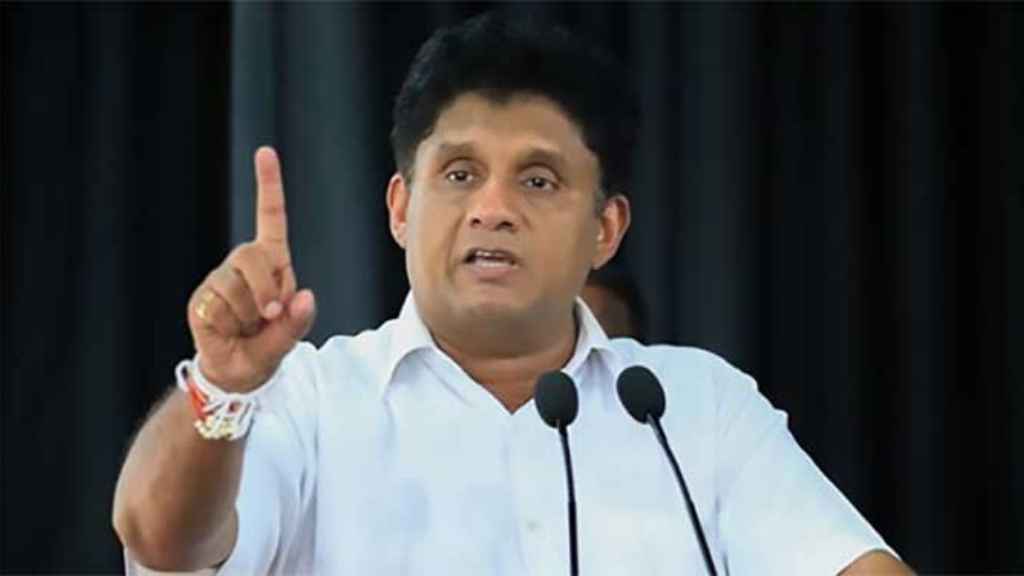
Sajith warns VAT changes will ‘suffocate’ businesses as concerns mount over the Government’s proposed overhaul of Sri Lanka’s indirect tax framework, with critics arguing the reforms could intensify pressure on already strained enterprises.
Sajith warns VAT changes will suffocate businesses amid tax overhaul
Opposition Leader Sajith Premadasa has strongly criticised the proposed amendments to the Value Added Tax (VAT) regime, cautioning that the sweeping changes scheduled to take effect from 1 July could have far-reaching consequences, particularly for small and medium enterprises (SMEs). His remarks come in response to the publication of the VAT (Amendment) Bill on 29 April, which outlines a series of structural adjustments to taxation in Sri Lanka.
In a statement shared on social media platform X, Premadasa argued that the Government is simultaneously expanding the tax base, increasing rates, and tightening enforcement mechanisms at a time when businesses are still navigating economic recovery challenges. He warned that such a multi-pronged approach risks undermining business sustainability and economic growth.
The proposed reforms include a reduction in the annual VAT registration threshold from Rs. 60 million to Rs. 36 million. This move is expected to bring a significantly larger number of businesses into the tax net, particularly SMEs that previously operated below the threshold. While policymakers may view this as a step toward broadening revenue collection, critics argue it could impose additional compliance burdens on smaller enterprises with limited administrative capacity.
Premadasa emphasised that SMEs, which form the backbone of Sri Lanka’s economy, are particularly vulnerable to such policy shifts. He noted that increasing tax obligations while also tightening enforcement could lead to higher operational costs, reduced profitability, and potential business closures. According to him, economic expansion cannot be achieved through aggressive taxation strategies that constrain business activity.
Another key component of the Bill is the proposed increase in VAT on financial services from 18% to 20.5%. This adjustment is expected to affect banks and other financial institutions, potentially influencing the cost of financial services across the economy. While some analysts suggest that the net impact may be neutral due to the removal of other levies, concerns remain about the broader perception of rising tax pressure within the sector.
The legislation also introduces VAT on digital services provided by non-resident companies to Sri Lankan consumers. This reflects a global trend toward taxing cross-border digital transactions, as governments seek to capture revenue from the growing digital economy. However, businesses reliant on such services may face increased costs, which could be passed on to consumers.
In addition to rate changes and base expansion, the Bill proposes stricter compliance measures aimed at enhancing tax enforcement. These include fines of up to Rs. 1 million for tax-related offences and potential imprisonment of up to six months for serious violations. Furthermore, VAT-registered businesses will be required to adopt Inland Revenue Department-approved secure Point of Sale (POS) systems to enable real-time transaction reporting.
Premadasa warned that these measures collectively represent a significant escalation in regulatory oversight, adding to the compliance burden faced by businesses. He argued that such requirements could be particularly challenging for smaller firms, which may lack the resources to implement new systems and processes efficiently.
The Bill also includes provisions for the public disclosure of registered taxpayers, revisions to input tax credit rules, and the continuation of concessions for selected strategic enterprises operating under the Colombo Port City Economic Commission framework. While these elements aim to improve transparency and support targeted sectors, they further contribute to the complexity of the overall tax structure.
From a policy perspective, the Government’s approach appears to be focused on strengthening revenue generation and improving compliance within the tax system. However, critics argue that the timing and scale of the reforms could have unintended consequences, particularly in a fragile economic environment.
Sajith warns VAT changes will ‘suffocate’ businesses reflects a broader debate over the balance between fiscal consolidation and economic growth. While tax reforms are often necessary to stabilise public finances, their design and implementation can significantly influence business confidence and investment activity.
Premadasa questioned whether an economy can achieve sustainable growth under increasing tax pressure, suggesting that excessive taxation may discourage entrepreneurship and limit expansion opportunities. He stressed that businesses require a supportive environment to recover and thrive, particularly in the aftermath of economic disruptions.
As the proposed legislation moves toward parliamentary consideration, stakeholders across the business community are likely to closely monitor developments and assess potential implications. The outcome of this debate will play a critical role in shaping Sri Lanka’s fiscal landscape and its broader economic trajectory in the coming years.