

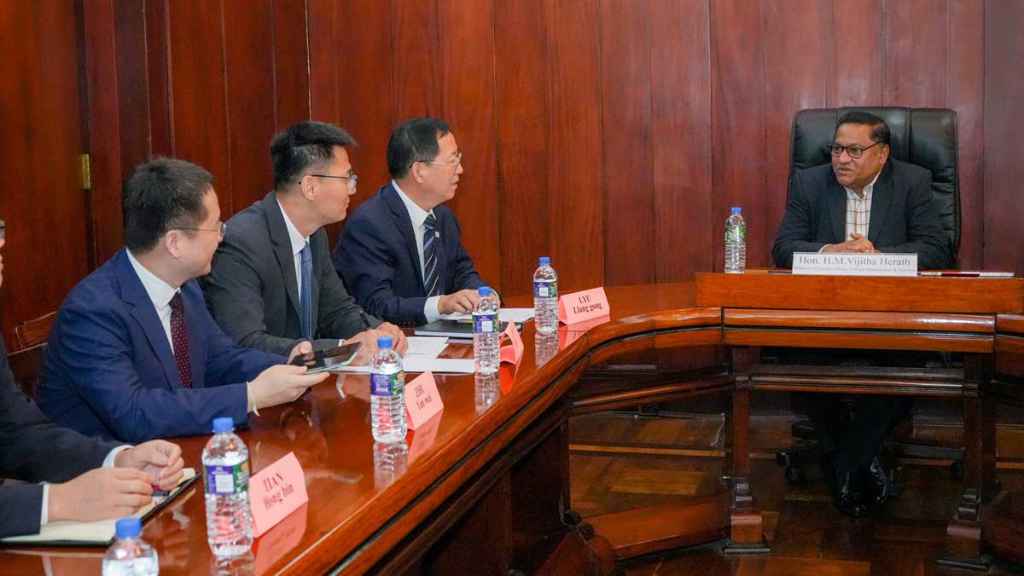
Sinopec investment in Sri Lanka’s Hambantota oil refinery project is gaining momentum as Vice President Liu Liangong met with Foreign Minister Vijitha Herath to address outstanding concerns and push forward the multi-billion-dollar energy venture.
Sinopec investment aims to fast-track Sri Lanka oil refinery project through key diplomatic talks
Sri Lanka’s energy sector is set for a major transformation with Sinopec’s planned investment of USD 3.7 billion in a large-scale oil refinery in Hambantota. This week, a pivotal diplomatic meeting took place between Sri Lanka’s Foreign Minister Vijitha Herath and Sinopec Vice President Liu Liangong to iron out the last remaining issues delaying the official launch of the ambitious project.
According to an official statement, the Sri Lankan government has already resolved a significant number of concerns linked to initiating the refinery’s construction. During the meeting, Vice President Liu expressed his appreciation for the progress made so far but emphasized the need to clear a few remaining hurdles swiftly to ensure the refinery project can commence without further delay.
The refinery, with a planned capacity of 200,000 barrels per day, is considered one of the most important foreign direct investments in the country’s recent history. Beyond addressing immediate energy supply demands, the Sinopec investment is expected to boost Sri Lanka’s energy independence, create employment opportunities, and strengthen trade relations between Colombo and Beijing.
For China, this project aligns with its strategic Belt and Road vision, particularly in the Indian Ocean region, while for Sri Lanka it represents a critical infrastructure investment at a time of economic rebuilding. The Hambantota port, where the refinery will be located, is already a key maritime hub, making the refinery a natural extension of ongoing development in the region.
During the talks, Liu Liangong requested Minister Herath’s personal intervention to accelerate the clearance of the remaining procedural and regulatory issues. Sinopec’s leadership reiterated their commitment to advancing the investment once these concerns are resolved. Herath, in turn, assured the delegation of the government’s full cooperation, recognizing the project’s strategic importance for both nations.
In the coming days, Sinopec’s delegation is scheduled to meet with senior officials from the Ministry of Energy and the Board of Investment. These meetings aim to finalize key operational agreements and streamline the next steps, ensuring that construction can begin on schedule. The Sri Lankan government has made clear that the refinery’s timeline is a priority, seeing the project as a cornerstone of its broader economic revival efforts.
Energy experts note that a refinery of this scale could not only reduce Sri Lanka’s reliance on imported refined petroleum but also position the country as a potential export hub for fuel products in the region. By processing crude oil domestically, the refinery could enhance foreign exchange savings, stabilize energy supply chains, and support industrial growth.
Moreover, the deal strengthens Sri Lanka–China relations at a time when strategic partnerships are increasingly vital. Sinopec, one of the world’s largest oil and gas companies, brings not just capital but also technological expertise and operational capacity. This collaboration marks a step forward in Sri Lanka’s efforts to modernize its energy infrastructure and attract foreign investment in high-value sectors.
With diplomatic and technical discussions progressing, both sides are optimistic that the refinery will move from planning to groundbreaking soon. If successful, the project will mark a significant chapter in Sri Lanka’s energy and investment landscape, potentially setting the stage for further international collaborations.