

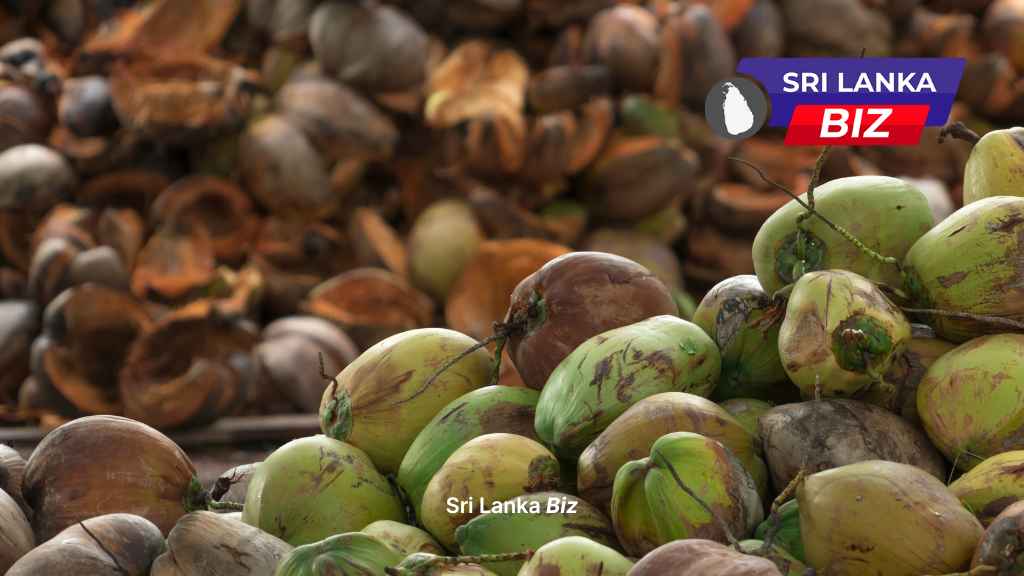
Sri Lanka average coconut prices declined 5 percent for the third consecutive week, reflecting tighter supply and weaker demand at weekly auctions, according to the latest data from the Coconut Development Authority (CDA).
Sri Lanka average coconut prices drop for the third consecutive week, impacting farmers and markets
Sri Lanka’s coconut market is facing continued downward pressure as average prices fell 5 percent at the weekly auction, marking the third consecutive week of decline. Data released by the Coconut Development Authority (CDA) shows that the average price for 1,000 nuts last week settled at 128,060 rupees.
The CDA has not disclosed the highest and lowest prices for individual nuts in the auction since July 19, leaving industry stakeholders to rely on general price trends. However, the auction volumes indicate a noticeable reduction in market activity. The number of nuts offered fell to 302,679 from 361,926 in the previous week, while the number of nuts sold dropped to 214,469 from 272,939.
This contraction in both supply and demand is reflected in the local wholesale and farmgate prices. In the domestic market, wholesale prices for large coconuts ranged between 175 and 185 rupees per nut, while smaller nuts sold for 150 to 165 rupees each. Farmgate prices in key producing regions such as Kurunegala were reported at 130 to 145 rupees per nut.
Coconut derivatives are also seeing price adjustments. Copra, the dried kernel of the coconut used in oil production, was priced between 115,000 and 132,500 rupees per 250 kilograms. Meanwhile, local wholesale prices for coconut oil ranged from 870,000 to 900,000 rupees per metric ton, indicating some stability in the processed sector despite the decline in raw nut prices.
Supermarket retail prices for coconuts reflect the higher end of the market spectrum, with nuts sold at 195 to 205 rupees apiece. These figures suggest that while end consumers face relatively moderate increases, producers and intermediaries are absorbing much of the price contraction, highlighting pressures on margins within the value chain.
Industry experts note that multiple factors are contributing to this sustained price decline. Seasonal fluctuations, reduced production in key districts, and the continuing impacts of domestic demand shifts are combining to limit upward price movement. Additionally, competition from imported coconut products and alternative oils may be affecting buyer behavior, keeping wholesale prices subdued.
“The current market shows a tightening in supply and weaker demand at auction levels,” said a CDA spokesperson. “Farmers are facing a challenging season, with price drops translating into narrower profit margins, particularly for smaller producers.”
Historical trends indicate that such price fluctuations are not uncommon in Sri Lanka’s coconut industry. Prices often react sharply to changes in auction volumes, export demand, and seasonal production cycles. Analysts caution that while a short-term drop of 5 percent may seem minor, persistent declines over multiple weeks could influence long-term investment decisions in the sector, including planting, harvesting, and processing strategies.
Despite the challenges, the sector retains significant importance for Sri Lanka’s agricultural economy. Coconut cultivation supports thousands of smallholder farmers and is integral to both domestic consumption and export-oriented industries. The CDA continues to monitor market dynamics closely and provide guidance to stakeholders on pricing trends and supply management.
In response to the ongoing price fluctuations, industry stakeholders are exploring measures to stabilize the market, including improved post-harvest handling, storage solutions, and enhanced coordination between producers and wholesalers. Experts argue that ensuring transparency in auction pricing and promoting value addition in copra and oil production could help cushion the impact of short-term price drops.
As the coconut season progresses, all eyes are on the weekly auctions and local market trends. With average prices continuing to dip, producers and traders alike are seeking ways to adapt to changing supply-demand conditions, maintain profitability, and secure a sustainable future for Sri Lanka’s coconut industry.