

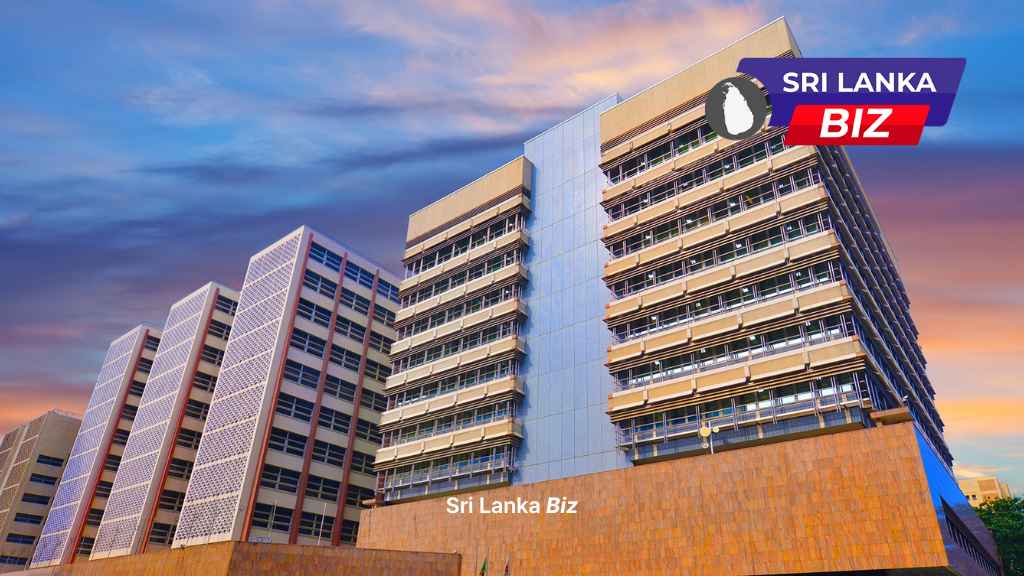
Sri Lanka Central Bank dollar purchases will continue in January as authorities press ahead with efforts to strengthen foreign exchange reserves under the IMF programme. The Governor confirmed ongoing market interventions following several consecutive months of reserve accumulation.
Sri Lanka Central Bank dollar purchases to support IMF reserve targets
Sri Lanka Central Bank dollar purchases are set to continue into January, reinforcing the monetary authority’s commitment to rebuilding foreign exchange reserves after years of external sector stress. Governor Dr. Nandalal Weerasinghe confirmed that the Central Bank has maintained its presence in the foreign exchange market and will persist with dollar buying in the current month.
Speaking to reporters after the Central Bank announced its latest monetary policy decision, the Governor said authorities have been consistently intervening in the currency market to strengthen reserves. Policy rates were kept unchanged at the most recent review, signalling a steady policy stance while reserve accumulation remains a key priority.
According to Dr. Weerasinghe, the Central Bank’s actions over recent months reflect a deliberate and transparent strategy. He pointed out that even in December, when market conditions were relatively stable, the monetary authority continued purchasing foreign exchange in significant volumes. These interventions, he said, are visible in official data and align with broader macroeconomic objectives.
The primary objective of Sri Lanka Central Bank dollar purchases is to rebuild official reserves to levels agreed with the International Monetary Fund under the country’s 3 billion dollar Extended Fund Facility programme. Reserve accumulation is a central pillar of the IMF-supported reform agenda, aimed at restoring confidence, ensuring external debt sustainability, and reducing vulnerability to external shocks.
Official figures show that the Central Bank has purchased a net 2 billion US dollars from the domestic market over the past 12 months. This steady accumulation has contributed to a notable improvement in Sri Lanka’s reserve position, which had been severely depleted during the height of the balance of payments crisis.
As a result of these interventions, gross official foreign currency reserves rose to 6.8 billion dollars by the end of 2025. This marks a significant recovery compared to earlier years, when reserves fell to critically low levels, constraining imports and undermining investor confidence.
Economists note that reserve accumulation through market-based purchases differs from administrative controls or short-term borrowing. By buying dollars from the market when inflows are strong, the Central Bank aims to smooth volatility while avoiding undue pressure on the exchange rate. This approach is generally viewed as more sustainable, provided interventions remain consistent with overall monetary conditions.
The continuation of Sri Lanka Central Bank dollar purchases also reflects improved foreign currency inflows, supported by stronger tourism earnings, higher worker remittances, and a gradual stabilisation of the external sector. These inflows have given the Central Bank room to intervene without creating distortions or triggering excessive currency appreciation.
However, analysts caution that reserve-building must be carefully balanced with domestic liquidity management. Large-scale dollar purchases inject local currency into the system, which may require sterilisation measures to prevent inflationary pressures. The Central Bank’s decision to keep policy rates unchanged suggests confidence that liquidity conditions remain manageable.
From an IMF programme perspective, reserve targets serve as a key performance benchmark. Meeting these targets helps unlock future disbursements and reinforces credibility with external creditors. Continued dollar buying in January signals Sri Lanka’s determination to stay on track with programme commitments amid a fragile global environment.
Market participants are closely watching how long the Central Bank maintains its intervention strategy and whether reserve accumulation continues at the same pace in coming months. Much will depend on external inflows, global financial conditions, and domestic demand for foreign exchange.
For now, the Governor’s remarks indicate policy continuity rather than a shift in direction. Sri Lanka Central Bank dollar purchases remain an essential tool in rebuilding buffers, stabilising expectations, and supporting the country’s gradual economic recovery after a prolonged period of financial stress.