

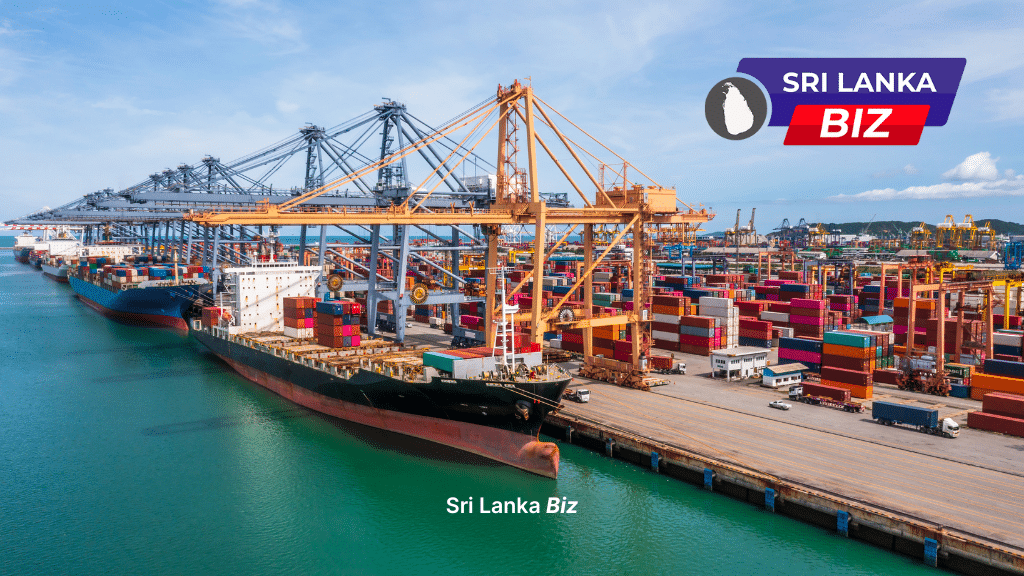
Sri Lanka West Container Terminal plans are advancing as the government prepares to call investors for the second terminal by August 2025. Officials say the move will ensure Colombo Port continues expanding its capacity to meet rising regional demand.
Sri Lanka West Container Terminal plans move forward as investor call set for 2025
Sri Lanka is pushing ahead with an ambitious expansion of its maritime infrastructure, with authorities confirming plans to invite investors for the second phase of the West Container Terminal by August 2025. The strategy, centred on Sri Lanka West Container Terminal development, reflects the government’s long-term commitment to strengthening Colombo Port’s role as a regional transshipment hub. Deputy Minister of Ports and Civil Aviation Janitha Ruwan Kodithuwakku explained that the new phase of expansion comes at a time when existing terminals are nearing completion and the port is operating close to its upper limits.
The Adani–John Keells–Sri Lanka Ports Authority partnership is expected to complete West Container Terminal 1 in 2026, alongside the state-controlled East Container Terminal. Kodithuwakku emphasized that stopping after these projects would undermine Colombo’s competitive momentum, which depends on sustained capacity growth to handle escalating regional cargo volumes. He noted that detailed designs for the second West Container Terminal have already begun, allowing the government to call Expressions of Interest once the interim report is finalized.
Officials describe this upcoming infrastructure phase as essential for positioning Sri Lanka as a resilient, modern maritime gateway. With regional shipping routes becoming more competitive and demand for transshipment services rising, maintaining sufficient port capacity is crucial. Kodithuwakku stressed that the new terminal must be ready to absorb additional demand as soon as ongoing construction projects are completed, ensuring the country does not face a bottleneck in future cargo handling.
Sri Lanka Ports Authority is also advancing a feasibility study into the proposed Colombo North Port, a large-scale development expected to complement future container handling requirements. This broader vision is part of a multi-year, multi-terminal expansion plan designed to transform Colombo into a world-class logistics centre. By pairing the West Container Terminal plan with long-term studies for further port development, the government aims to avoid capacity constraints that could jeopardize transshipment flows.
Minister of Ports and Civil Aviation Anura Karunathilaka highlighted that Colombo Port is currently operating near its capacity of eight million twenty-foot equivalent units. This, he noted, reinforces the need for continuous expansion to ensure that growing shipping traffic can be accommodated without delays. With global freight patterns changing and major shipping lines consolidating routes, efficiency and port readiness are key determinants of competitiveness.
The East Container Terminal continues to move through its construction phases, with the quay wall and yard now underway. The terminal is expected to be fully operational by September 2026 and will add 2.5 million TEUs to Colombo’s annual capacity. According to Karunathilaka, this addition will significantly ease congestion while creating new revenue potential for the state-owned terminal operator. However, operational challenges remain as the tender for straddle carriers was delayed due to cancellations. As a result, the terminal will initially function using prime movers until the required equipment arrives.
Straddle carriers, essential for efficient container yard operations, are expected to be delivered within eleven months. This temporary workaround, although not ideal, ensures that construction timelines remain on schedule. Port officials believe that once the equipment arrives, terminal productivity will increase sharply, enabling more flexible yard operations and improved ship turnaround times.
As Sri Lanka prepares to open investor participation for the second West Container Terminal, stakeholders in the maritime and logistics sectors are closely watching how the government coordinates financing, construction, and long-term oversight. Large port infrastructure projects typically require a blend of public–private investment, and the success of West Container Terminal 1 provides a model for future collaborations. The government’s emphasis on transparency, modern engineering standards, and efficient stakeholder engagement is expected to shape investor confidence.
More broadly, the expansion of the Sri Lanka West Container Terminal infrastructure plays a critical role in supporting economic recovery. Transshipment operations have long been one of Colombo’s most resilient income streams, attracting regional carriers that consider Sri Lanka a strategic point along Indian Ocean trade routes. Continued expansion ensures that the country remains competitive against rising regional ports, especially those backed by large-scale investments across South Asia.
The timeline for the investor call suggests that the government intends to maintain steady momentum across all major port projects. As construction progresses on the East and West terminals, and planning continues for Colombo North Port, Sri Lanka’s broader maritime strategy is becoming increasingly aligned with global logistics trends. For exporters, importers, shipping lines, and logistics operators, the next several years will be crucial in determining how the nation’s ports adapt to rising demand.
If the expansion remains on track, the country could significantly enhance its shipping throughput and strengthen its position as a vital logistics centre. With regional transshipment competition intensifying, the success of Sri Lanka West Container Terminal expansion will be pivotal for shaping the island’s economic future.